
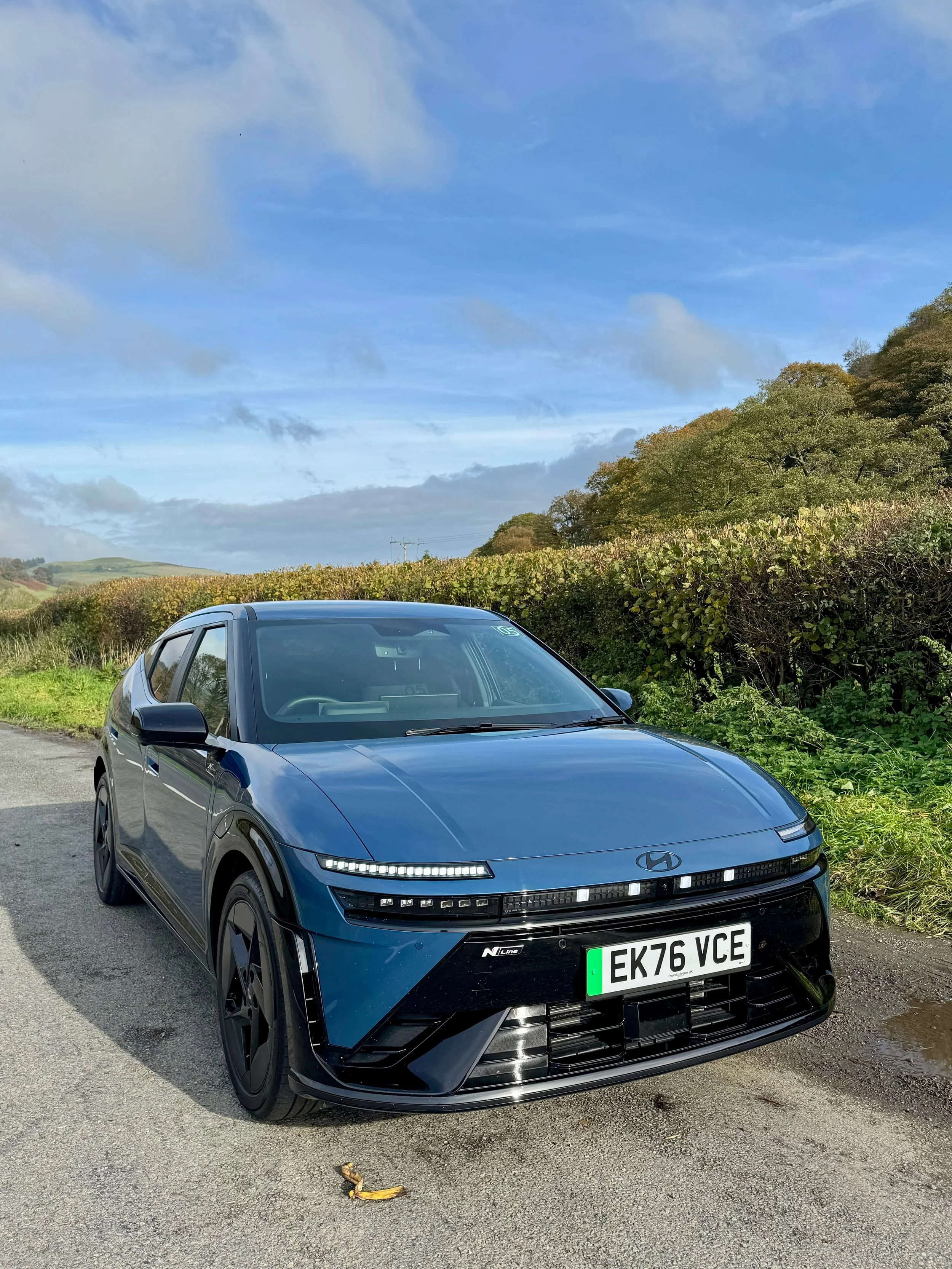
Welcome to the newest member of the Hyundai family, the Ioniq 3. At the recent press launch, I managed to get my hands on this new compact b-segment electric car which utilises Hyundai’s new ‘Art of Steel’ design language coupled with an ‘Aero hatch’ profile. The real talking point for the Ioniq 3 is up to 308 miles of range, and the super reasonable £18k price tag. Yes, you read that correctly. Let me tell you more:
Specs
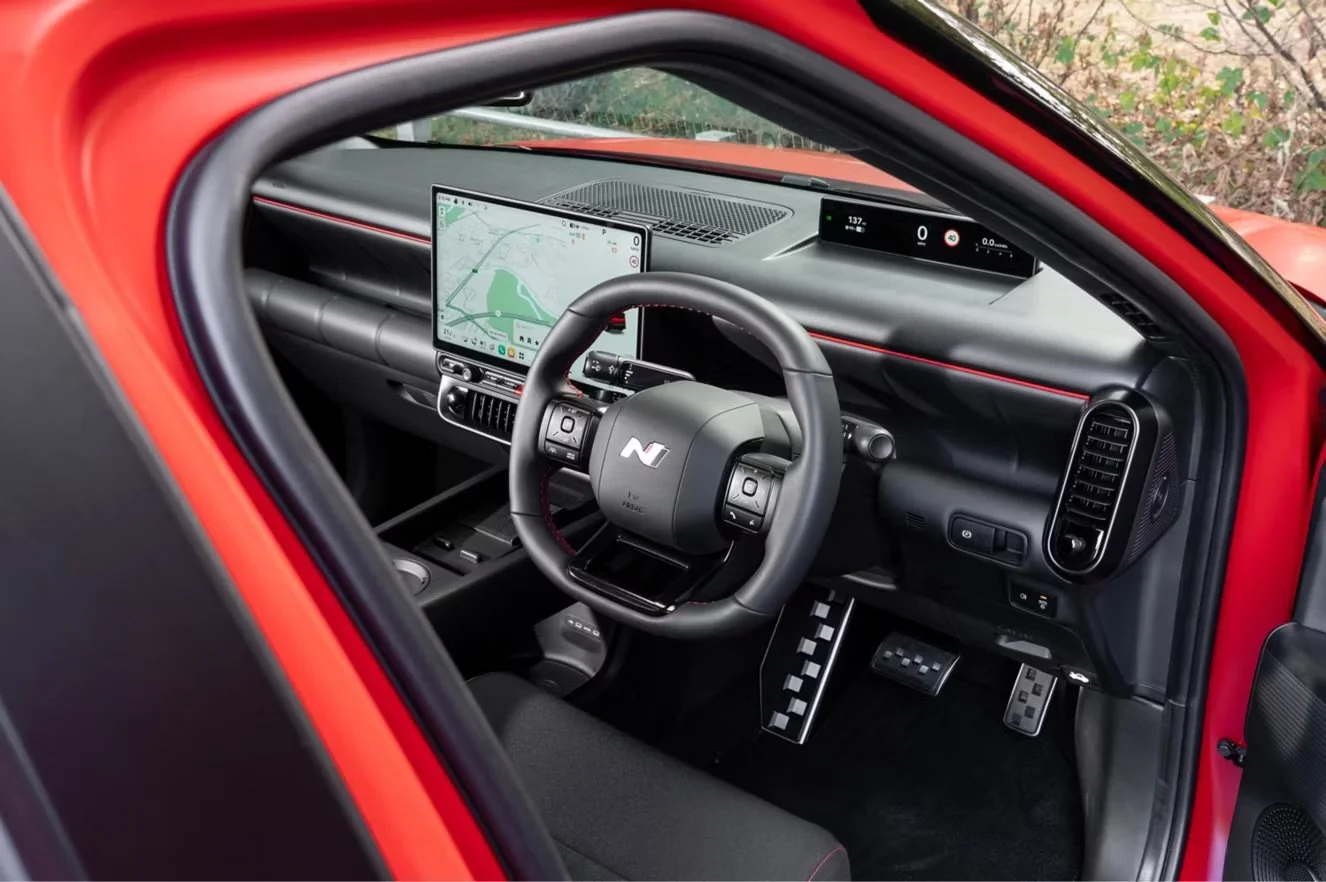
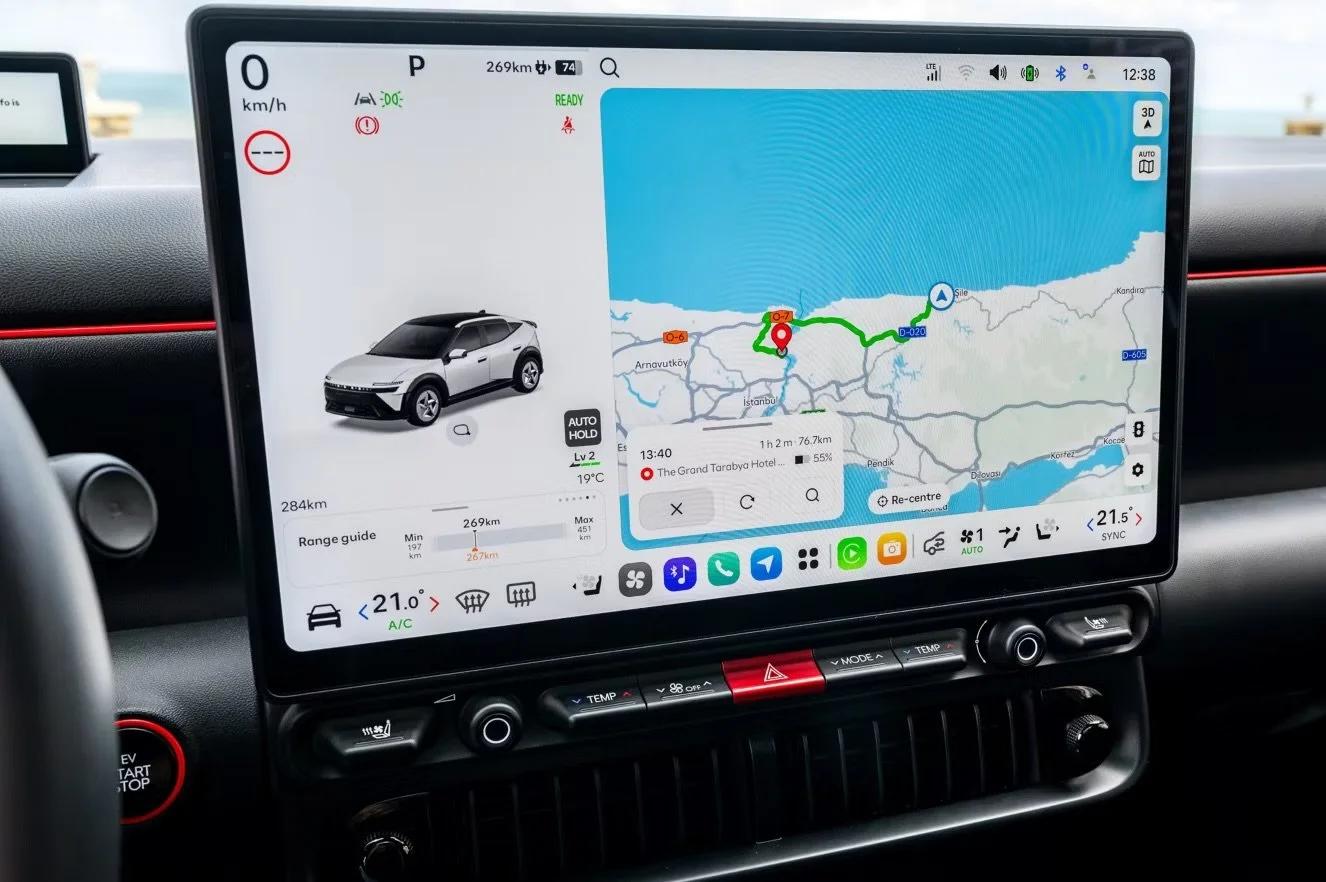
There are currently 4 trim levels to choose from; Advance, Premium, Ultimate and N-Line Evo. All models come with automatic lights, keyless start, a 12.9” touchscreen with Bluelink connectivity and parking sensors. All bar the Advance model, receive a 9.9” digital instrument cluster as well as automatic wipers and wireless phone charging. On higher trim levels, the Ioniq 3 receives ambient lights, heated and ventilated front seats as well as heated rear seats and a heated steering wheel. If you want your Ioniq 3 to look more aggressive, choose the N-Line Evo trim. This adds N-Line exterior touches as well as interior flourishes with red accents. In addition, you will receive a larger 14.6” touchscreen and a remote remote park assist function.
Prices
Prices start from £18,495, including the UK electric car grant, for an entry Advance trim.
Premium starts from £23,695, which adds a useful 9.9” digital display for the driver as well as privacy glass.
Ultimate is priced from £26,195; this trim is well equipped with useful features such as a heated steering wheel and electric lumbar support for the driver.
N-Line Evo is priced from £28,195 and comes generously equipped, on top of the sportier cosmetic changes to the exterior and interior. The Bose speakers are in particular are worth the upgrade.
Battery, Range and Charging
All models are front wheel drive and there are two battery sizes on offer, a 42 kWh and a 61 kWh.
The standard battery claims up to 213 miles WLTP range and interestingly is more powerful than the 61 kWh battery with 147 PS claimed. The 61 kWh battery claims up to 308 miles of WLTP range, for the non N-Line variant. Power is decent at 135 PS with acceleration to 60mph in 9.5 seconds, fractionally slower than the 8.7 seconds claimed when the smaller battery is equipped.
Torque is strong for both variants, which is quoted at 250 Nm.
Charging is competitive with 110 kW DC fast charging available with 61 kWh battery and 11 kW AC charging. Hyundai claim a 30% to 80 % charge in 30 minutes when using a 350 kW fast charger. An AC 7kW 10% to 100% charge will take 8 hours 35 minutes.
The 42 kWh battery is capable of 119 kW, equating to 29 minutes for 10% to 80% charge. A home charge at 7 kW will take 6 hours 20 minutes for 10 to 100% charge.
Heat pump and V2L are part of a £1,250 ‘EV’ pack, which may be useful to you.
Exterior
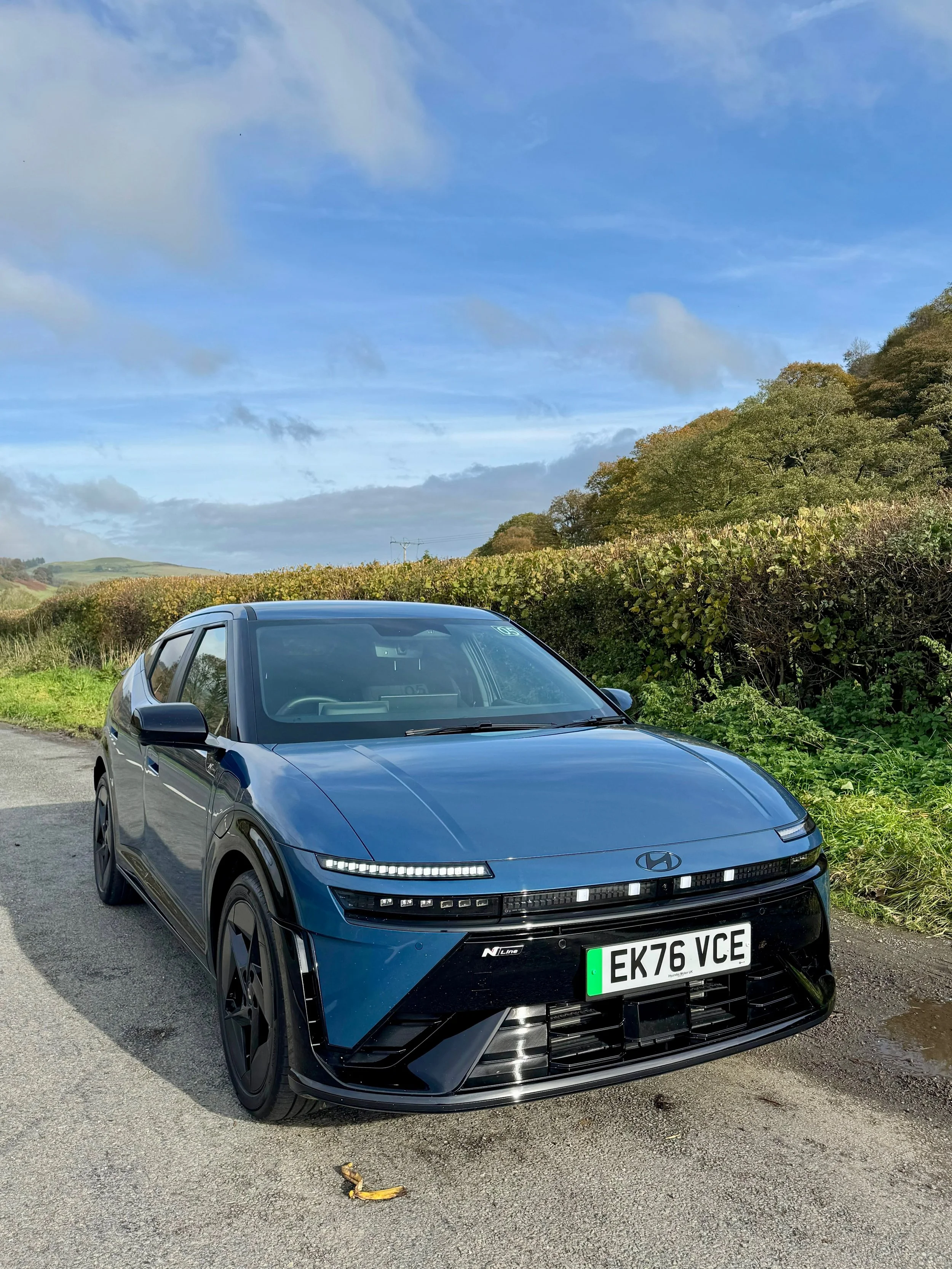
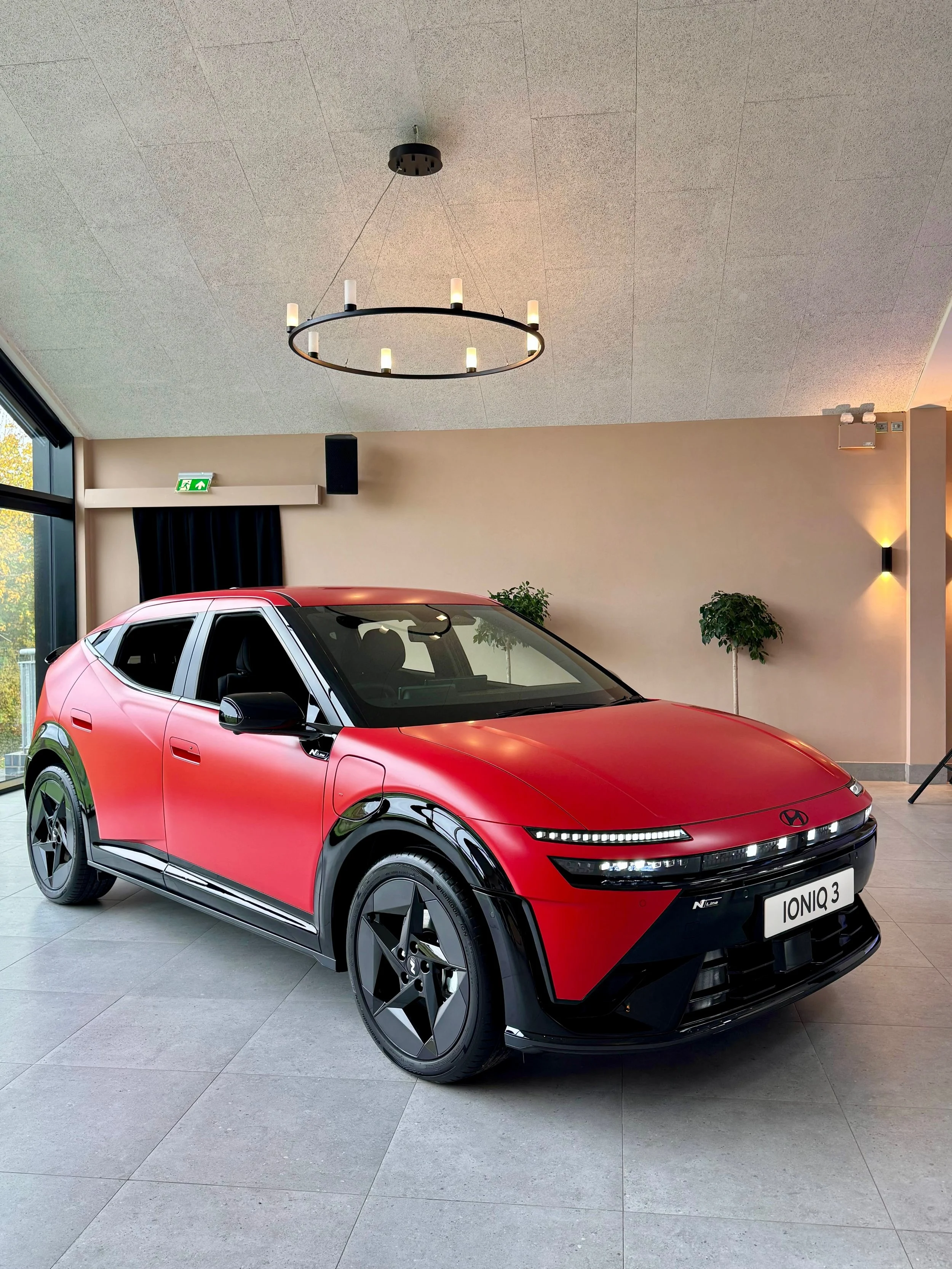
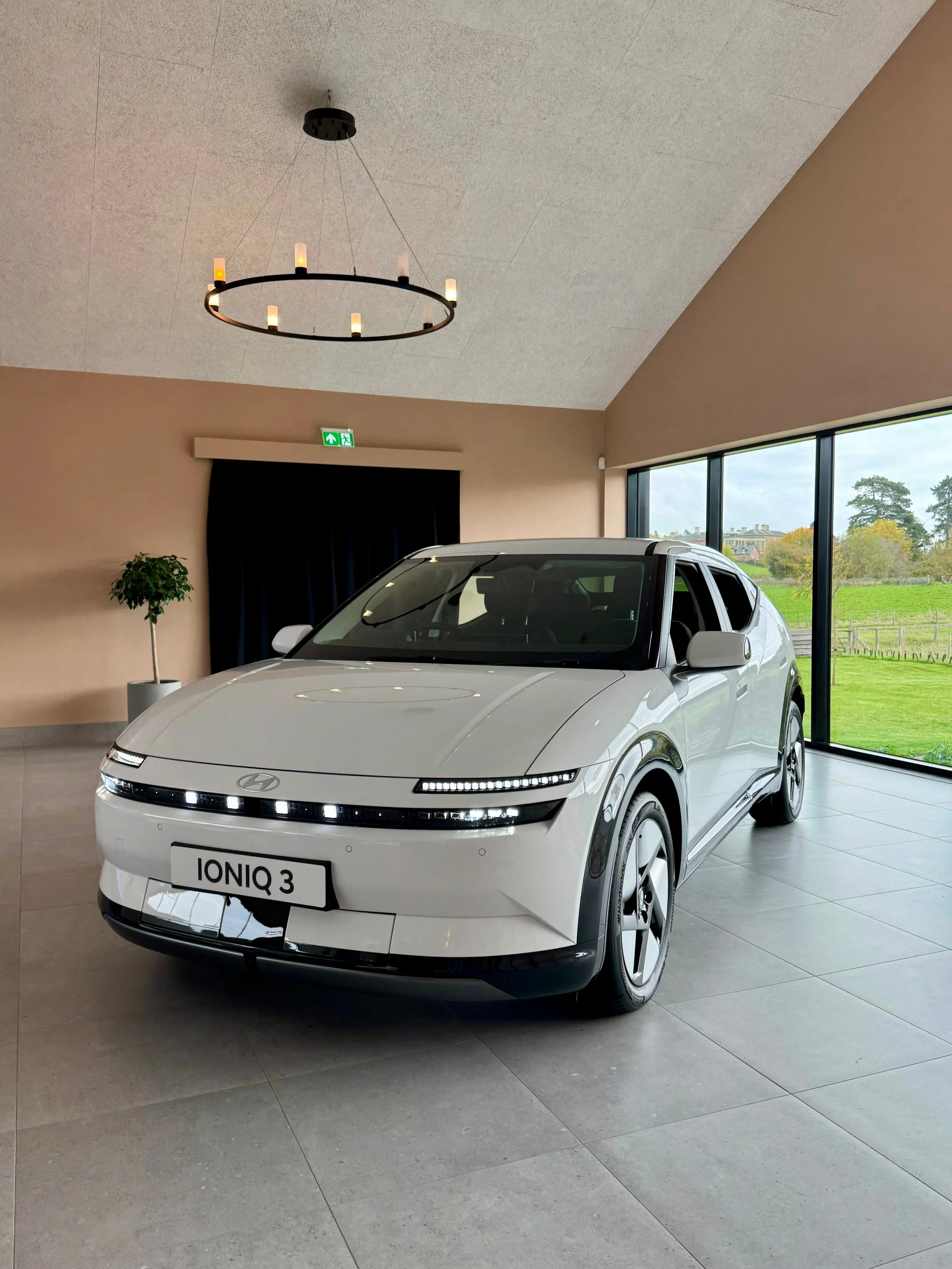
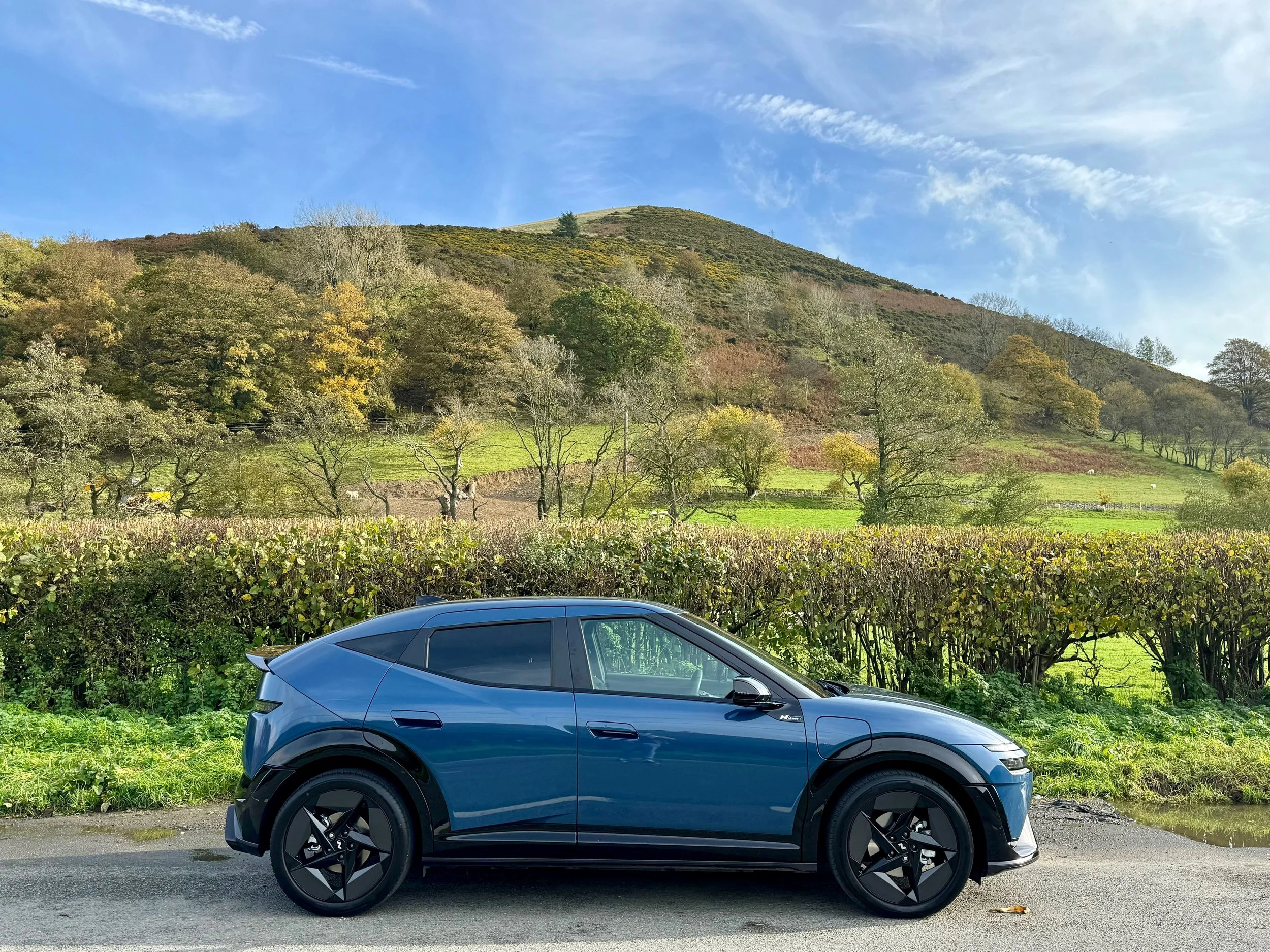
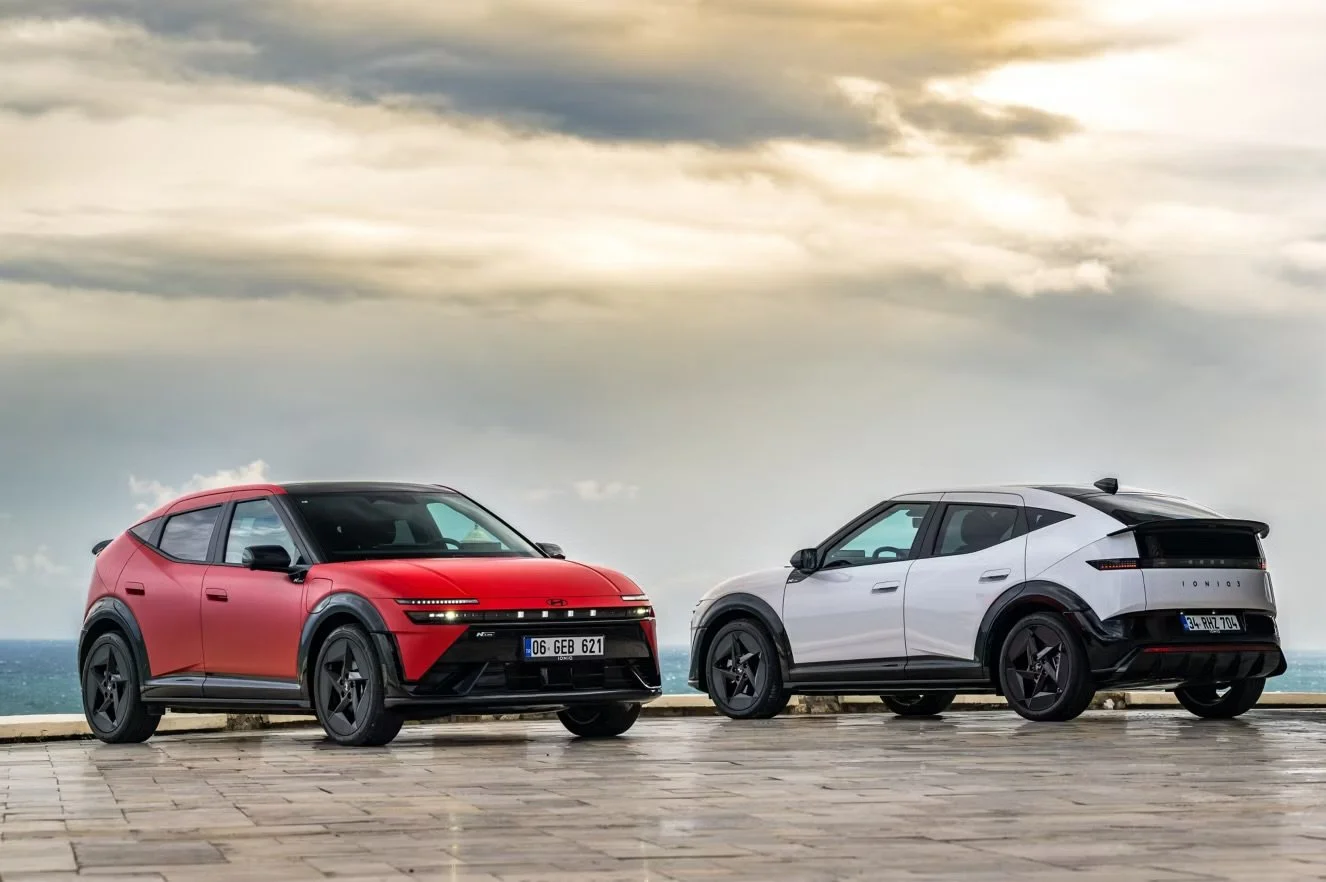
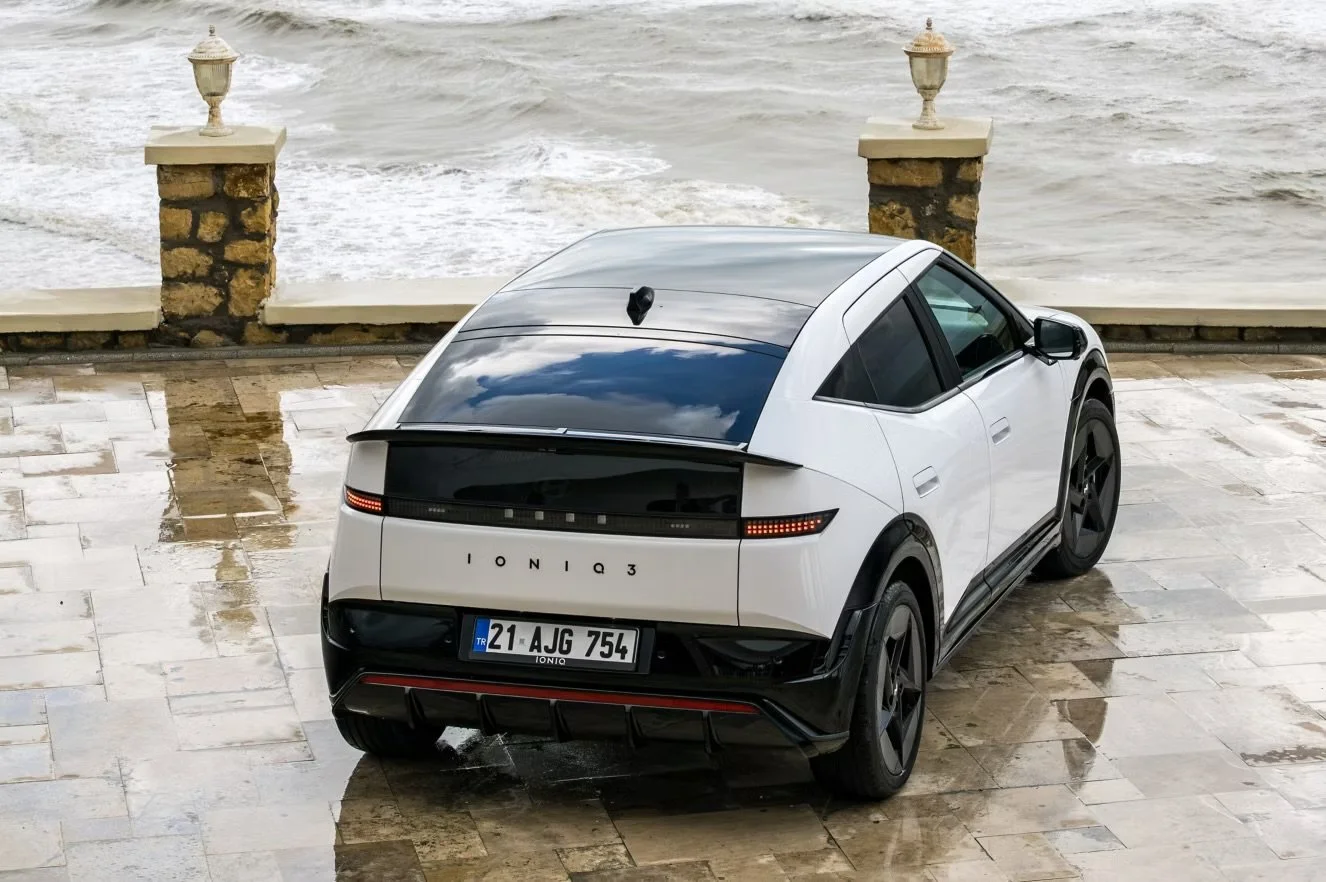
The styling of the Ioniq 3 is sharp and there is some family resemblance with the larger Ioniq 5. However, the overall profile of the Ioniq 3 is sleek and aerodynamic, with a drag coefficient of 0.263 claimed (0.288 for the N-Line Evo).Depending which trim level you go for, the exterior of the car changes slightly. The N-Line Evo has an aggressive looking bumper with more black accents and a small rear spoiler. However, if you opt for a non N-Line variant, the Ioniq 3 is transformed with a smooth more rounded appearance. Up front there are 4 squares, which illuminate when the car is on. These resemble ‘H’ in morse code. The square theme continues through to the head lights, which provide a more pixelated appearance on higher trims. A string of illuminated squares makes up the split head light design. The pixel theme continues round the rear for the taillights with a striking line extending from the rear wheel arch towards the centre of the tail fate, where the two panels of glass meet.
A range of colours are available including my test cars, ‘Vibrant Blue Pearl’ – an £795 option. Of course, there are various white, black and grey paints to choose from. A few of the press cars at launch were equipped with the £1,295 ‘Fierce Red Matte’ paint, which did add to the character of the Ioniq 3 – I wouldn’t rule that out if I was choosing an Ioniq 3.
Space and Practicality
The Ioniq 3 has a trick up its sleeve; the standard boot capacity is 310 litres. However, lurking underneath the boot floor is a mega box which reveals a generous amount of room – ideal spot for a small suitcase. Including this storage, the total boot capacity is 441 litres. To put this into perspective, a Renault 5 has 326 litres and a KIA EV2 offers 362 litres.
There is no frunk or froot with the Ioniq 3 sadly.
It measures in just over 4.15m in length, 2.1m in width including mirrors and 1.5m in height. The wheelbase is just over 2.6m which should mean that there is a decent amount of interior room. This is a small car, but it feels ‘bigger’.
Interior
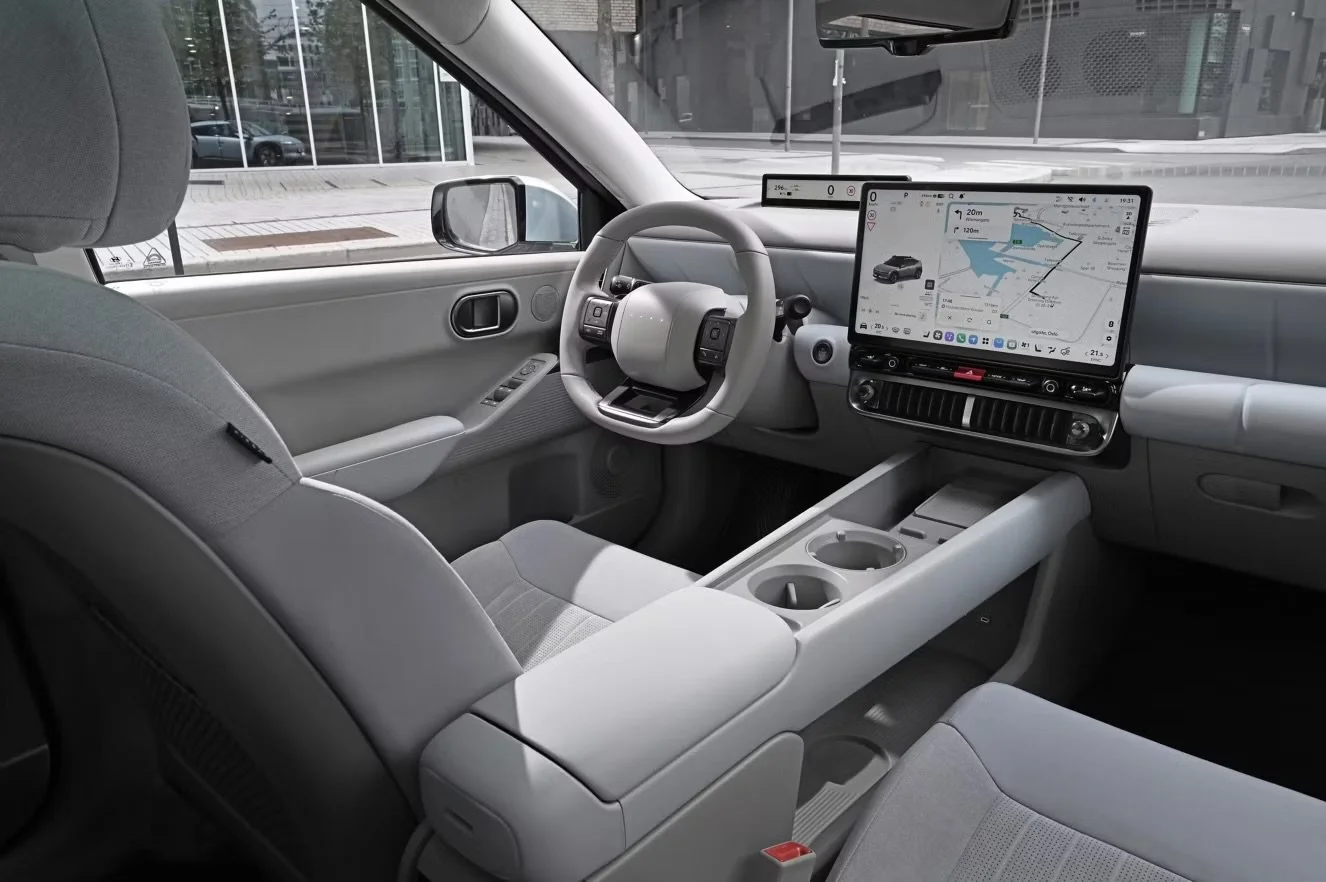
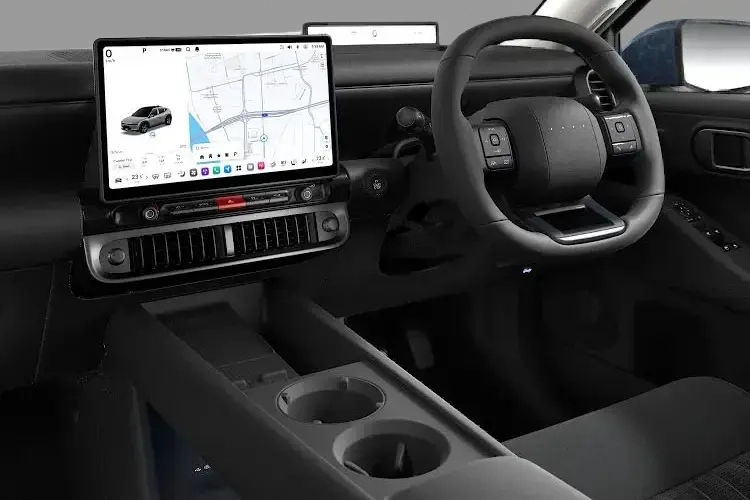
The big news here is that the Ioniq 3 launches Hyundai’s new Pleos Connect system, which is their new infotainment setup. It has useful features such as intelligent EV route planning, apps which can be downloaded to help pass time whilst you are charging. Pet mode is also part of this system as well as a clever program which remembers the last 50m of steering inputs. A useful reverse feature for those tight and uncomfortable situations. You also have the ability to split the screen and customise it.
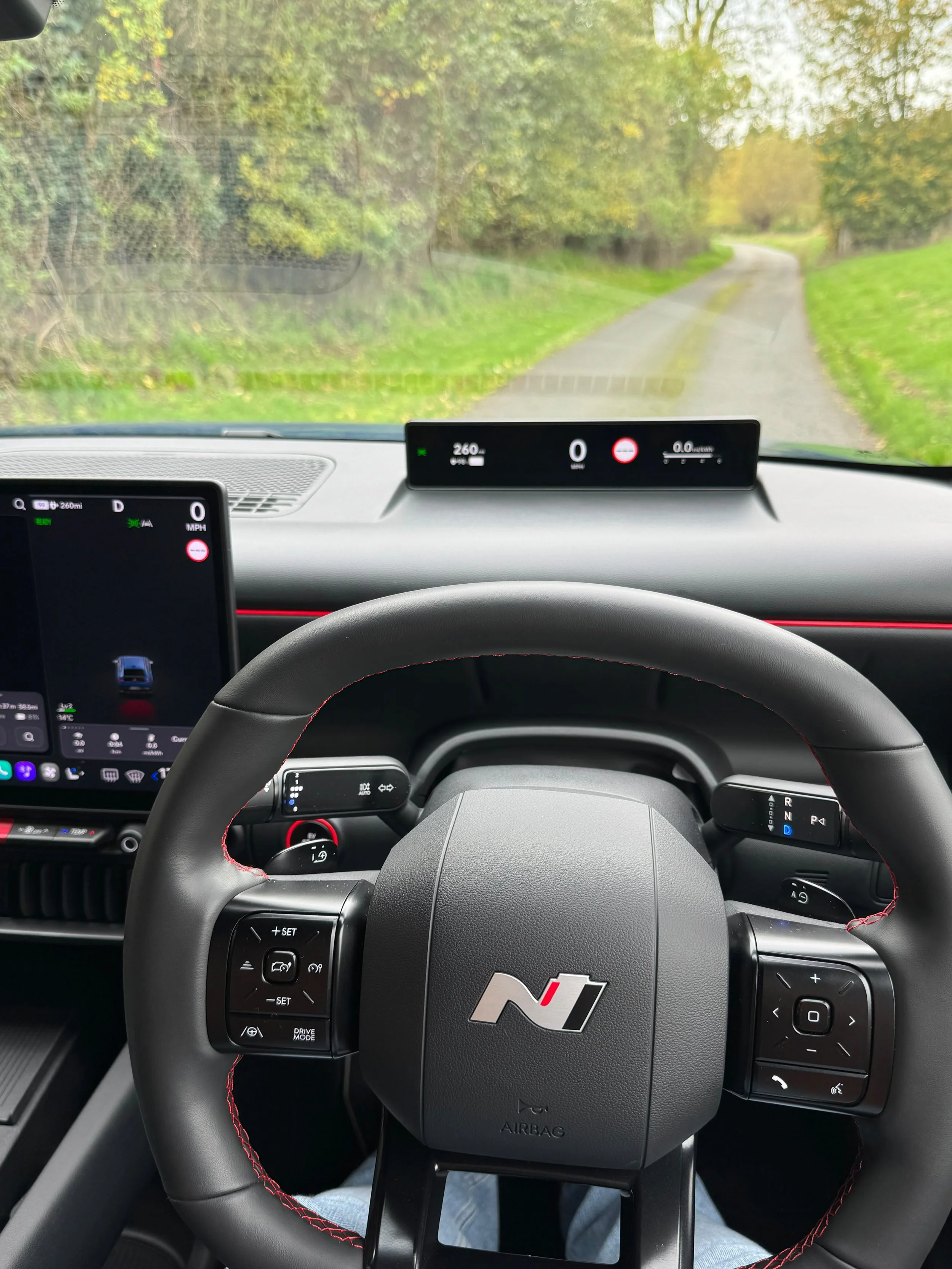
The N-Line Evo car which I tested was equipped with the £2,500 comfort pack. Which includes a rather fantastic 8 speaker Bose sound system as well as strong 3-stage ventilated front seats. It is also worth mentioning that the drivers’ seat has electric adjustment and 2 stage memory positions – ideal if you are sharing the car. I want to take a moment to applaud Hyundai who have decided to use physical buttons for key features within the car, such as climate controls and heat temperature. With more manufacturers putting emphasis on everything going through a touchscreen, physical buttons need to be celebrated!
The N-Line trim has a dark interior with black seats and dark plastics used throughout the cabin, with the occasional flashing of red. From the driver’s seat, the atmosphere feels more drivers focused. It is worth mentioning that one of the N-Line cars at the launch was equipped with a sunroof. If additional daylight into your cabin is preferred, tick that option when ordering.
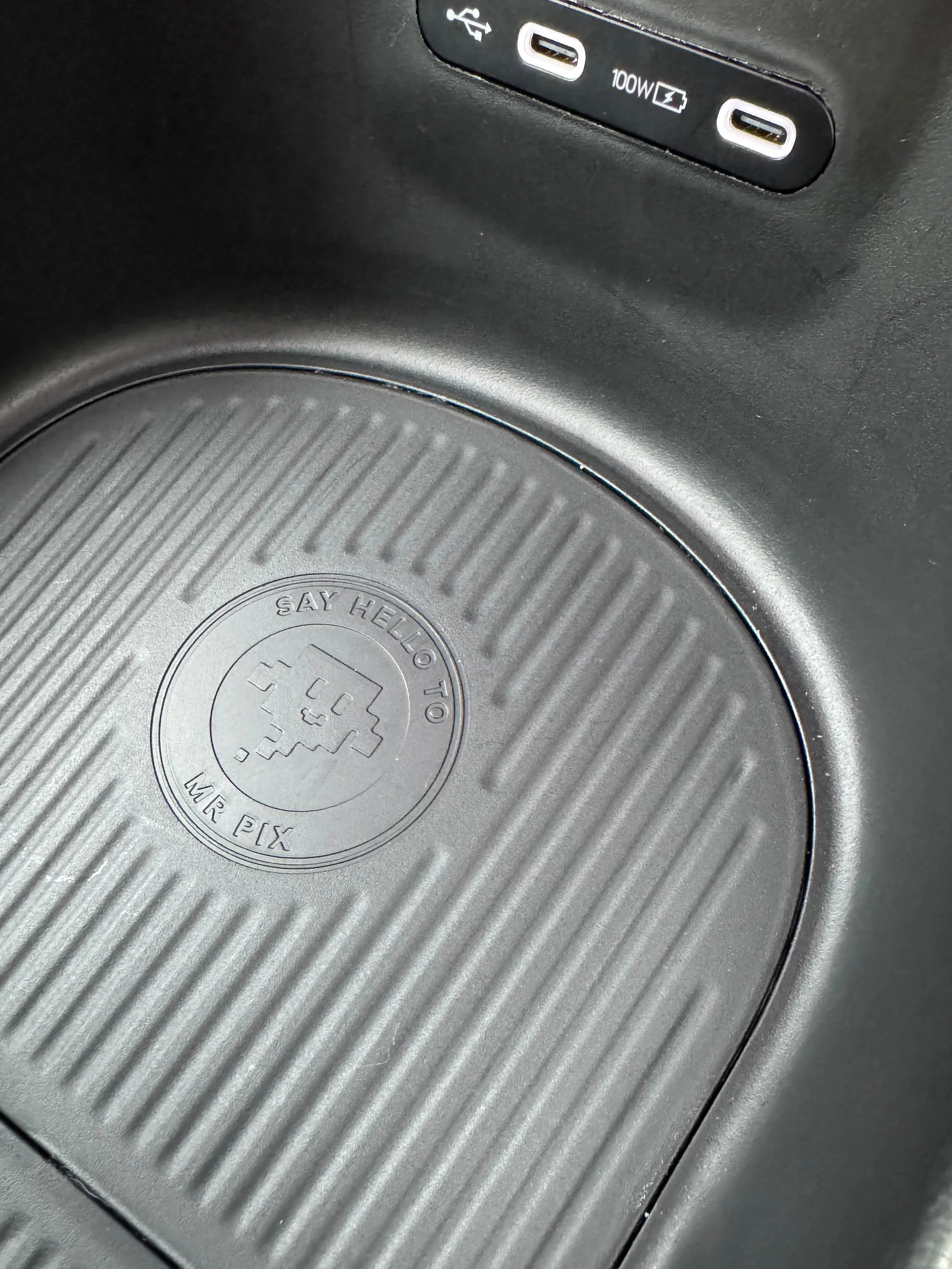
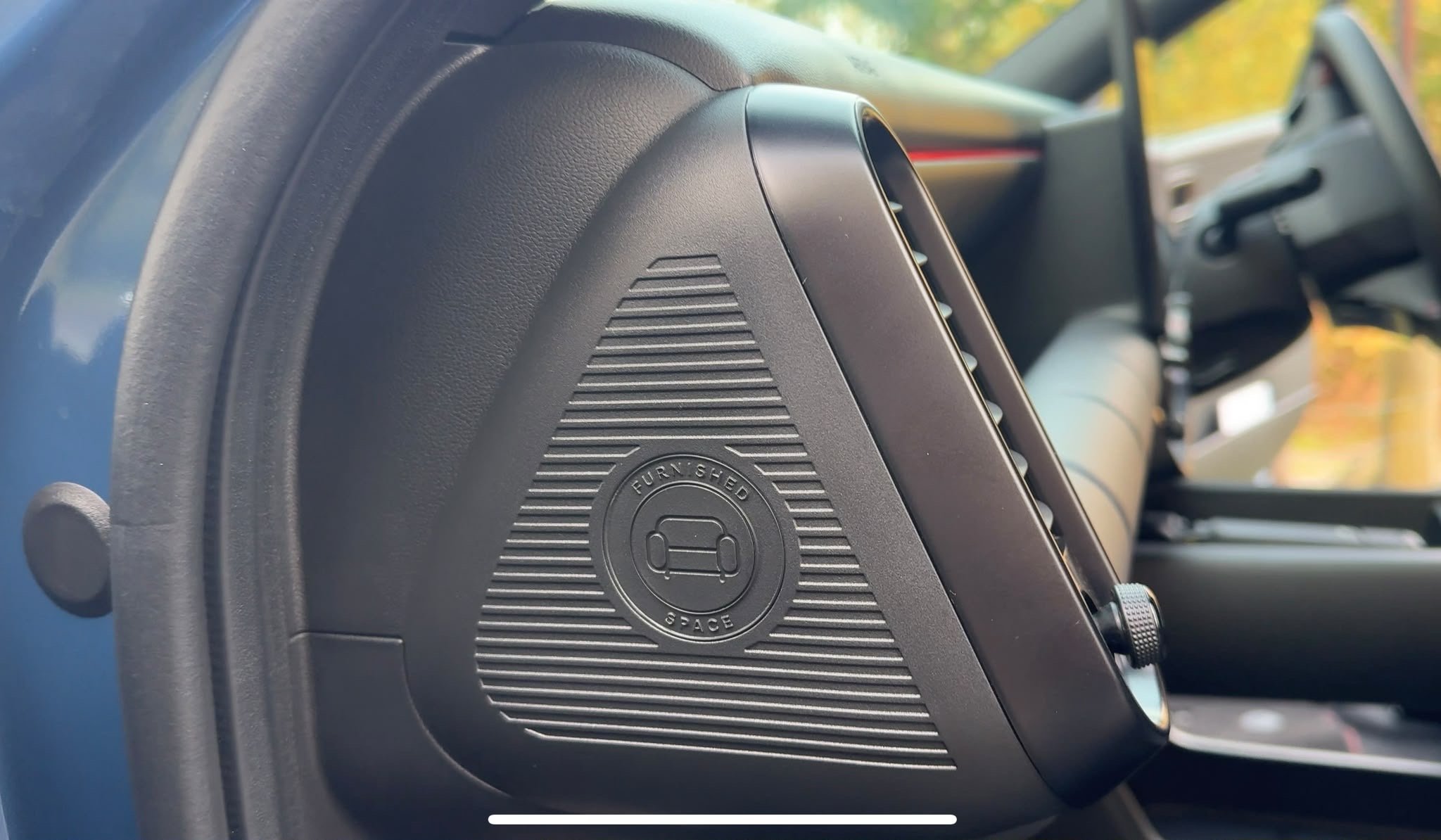
I was also able to test drive an ‘Ultimate’ version of the Ioniq 3. The cabin of this car created a sense of calm and airiness. Between the light colours used and the gentle green accents, I was happy to drive in the slow lane on the motorway and just enjoy the car. There are thoughtful touches too including a label with a pixel font which reads ‘IONIQ 3’ on the side of the front seat. There are ‘easter eggs’ too, which include a ‘Mr Pix’ on the front centre storage of the cabin. Others include ‘furnished space’ on the side of the dashboard and ‘stay hydrated’ in the door bins.
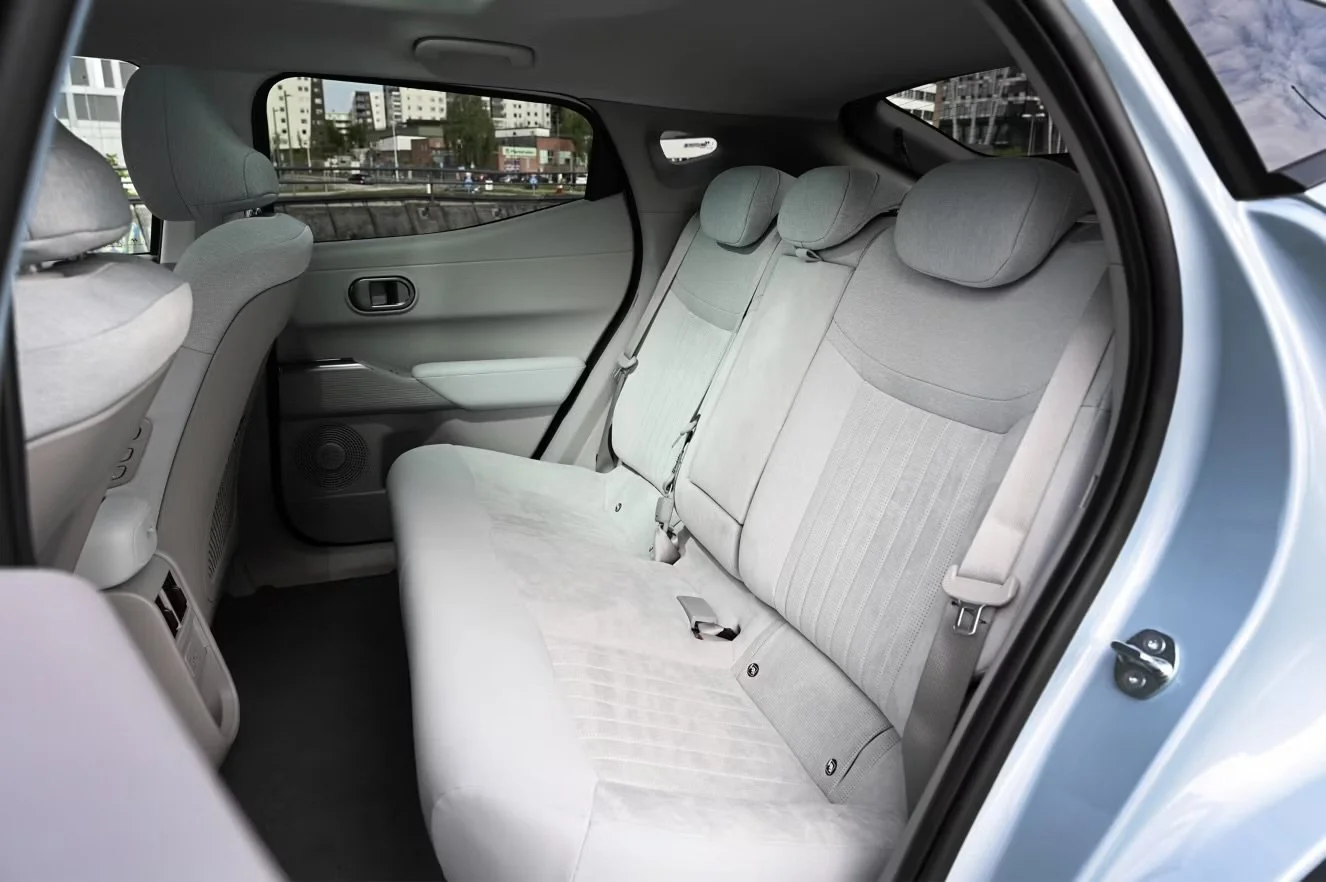
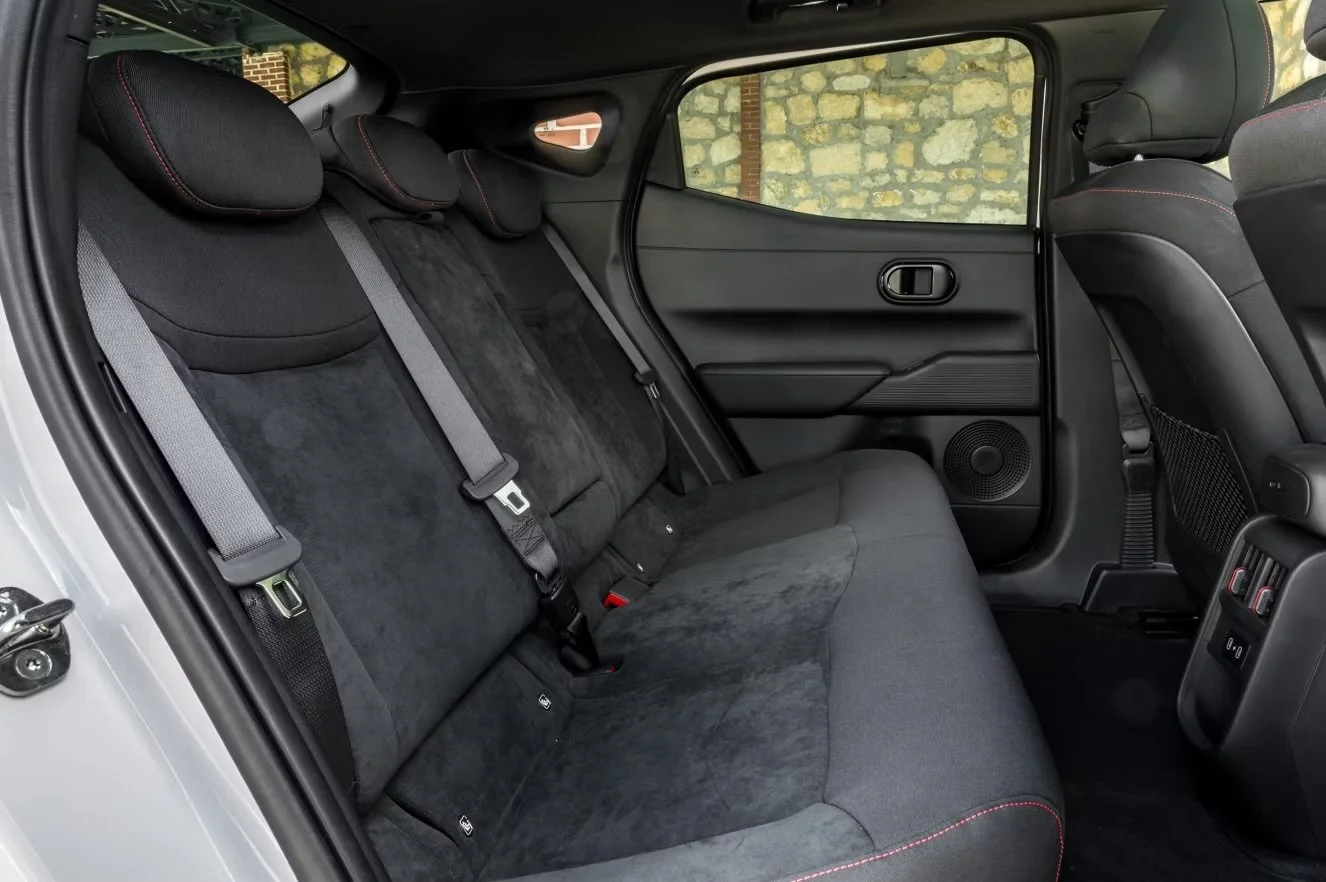
Rear passenger space is decent, at 5ft 11 I can sit behind the driver’s seat (when set up for my driving position). It is hard to complain as the space is impressive considering the size of the car. Seating for 3 children across should be fine, ideal for 2 growing children or small adults. There are child seat anchor points on the outer seats. Head room may be tight if someone over 6 foot is sitting in the rear, test out before buying is my recommendation.
On the road
The on-road driving characteristics of the Ioniq 3 are impressive for a car of this size and footprint. It rides and handles like a vehicle from the class above, even over uneven road surfaces the car rarely became unsettled. The interior cabin is quiet when travelling, this is in part to Hyundai equipping the Ioniq 3 with acoustic foam tyres as well as acoustic glass.
I was fortunate enough to drive the N-Line Evo as well as the Ultimate trim. It is interesting how the character of Ioniq 3 can feel between a trim level. The N-Line Evo has a dark interior which provides a focus on driving, mean while the Ultimate trim with its sense of calm left me unphased at fast drivers on the road.
Final thoughts
I think Hyundai have knocked it out of the park with the new Ioniq 3. With its keen and attractive starting price, striking design and use of physical buttons within the cabin it is certainly a compelling electric car. Coupled with the choice of battery sizes and the 5-year warranty (8 years for the battery), the Ioniq 3 ticks a lot of boxes. If you are in the market for a small car, which is big on space and won’t break the bank. The new Hyundai Ioniq 3 should be on your list.