BYD DOLPHIN G Is a Plug-in Hybrid Supermini
The all new BYD DOLPHIN G is a B-Segment hatchback designed to optimise efficiency and provide its owners with some usable EV range. In other words, BYD claims it’s making a best-of-both worlds small hatchback.
In fact, this is the only supermini on sale with a plug-in hybrid powertrain giving the DOLPHIN G a unique selling point, and at a time when customers look to reduce fuel costs from the ongoing crisis in the Middle East.
At 4.1 meters in length, it’s approximately the size of a Renault Clio, but with a very usable 425 litres of boot space. Unusually, though, and perhaps a first for plug-in hybrids, is that this BYD has two battery options.
Battery, Range and Charging
Both batteries packs use BYD’s LFP Blade cells, which will offer a robust, repeatable charging cycle, without the risk of degrading the battery quickly.
Smaller Battery
The smaller battery has a capacity of 7.42 kWh and that provides an all-electric range of up to 24.8 miles on the WLTP combined test cycle. This should serve most people’s commutes well, including the usual local run-about chores, too. Combined range of petrol and battery power is rated at 633 miles with its combined efficiency indicating a very agreeable 108.6 mpg.
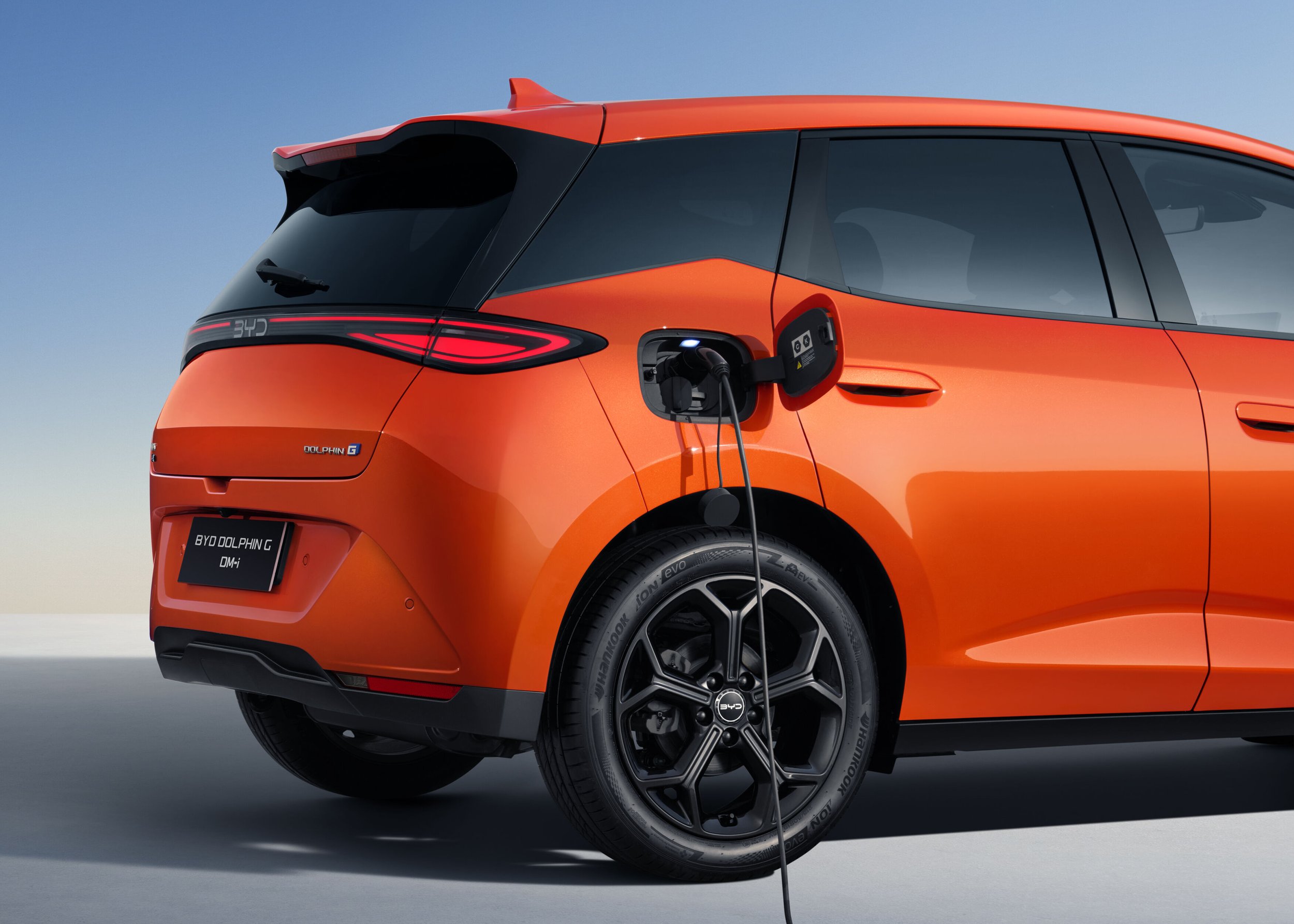
The real downside to the Active trim is that it’s only available with an AC charging socket, and that’s rated at just 3.3 kW, meaning a full charge is limited to 2 hours and 50 minutes, and there’s no rapid charging option.
Larger Battery
The larger pack is 18.3 kWh and its said that this will provide a 65 mile all-electric range. From this larger pack, BYD claims that the DOLPHIN G has a combined range of 646 miles, with a finger-in-the-air efficiency value of 201.7 mpg, provided its regularly plugged in. But this option is only available on the Boost, Comfort and Sport trims, and it starts to get pricey.
Despite AC charging being rated at a higher 6.6 kW over the Active, it’s actually 5 minutes slower to charge than the cheaper version. However, it does also come with a 39 kW onboard DC charger and that provides a 10% to 80% charge time of 26 minutes.




Trims
Four trims are offered with Active, Boost, Comfort and Sport.
Active
The cheapest Active trim is only available with the smaller 7.42 kWh battery pack, and this is priced from £23,990.
Equipment is limited in the range when looking at the other trim levels, but the Active gets 16-inch alloy wheels, front and rear parking sensors, a rear-view camera and LED headlights, tail-lights and daytime-running lights.
Boost
Moving up to the Boost trim gets you in the larger battery DOLPHIN G, but it’s priced from a less comfortable £26,990.
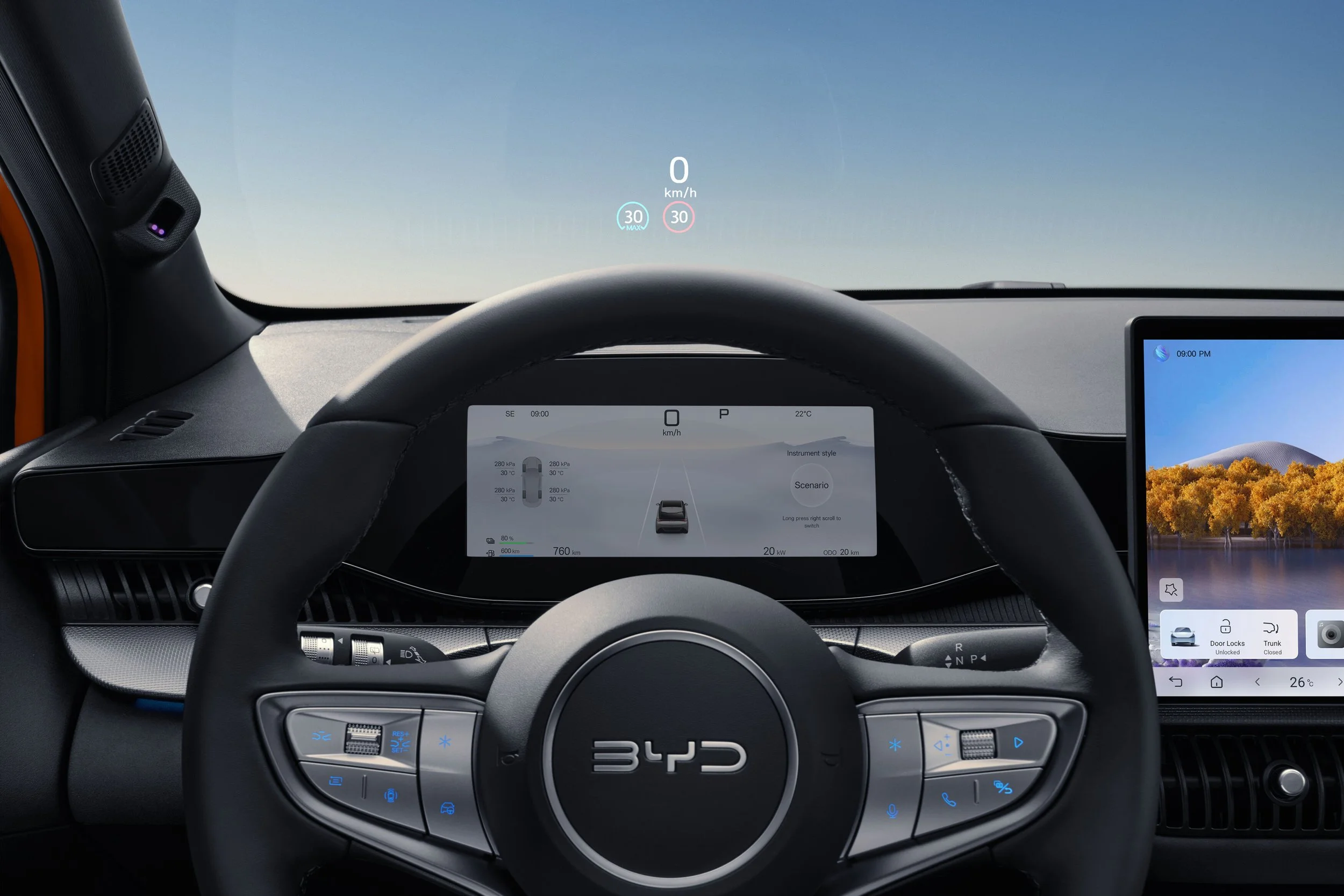
The Boost also gets a larger 12.8-inch infotainment screen, heated front seats and steering wheel, auto dimming rear-view mirror, electrically folding side mirrors, multi-coloured ambient cabin lighting, a 15W wireless smartphone-charging pad, rear air vents, rear USB charging ports and a more powerful eight-speaker audio system. Swish!
Boost also introduces vehicle-to-load capabilities, which is a rarity for a plug-in hybrid. It allows for charging an e-bike battery, or possibly even running eV Newt’s electric pizza oven.
Comfort
At £28,490 the Comfort builds on the Boost and gets “high-end” features (not my words) including a head-up display, a panoramic roof with electrically adjustable sun-shades, puddle lights, and a blend of fabric and faux leather upholstery. The drivers seat is also electrically adjustable and parking is made easy thanks to a 360-degree parking camera. The infotainment system adds Google integration, Google Maps and Google Assistant.
Sport
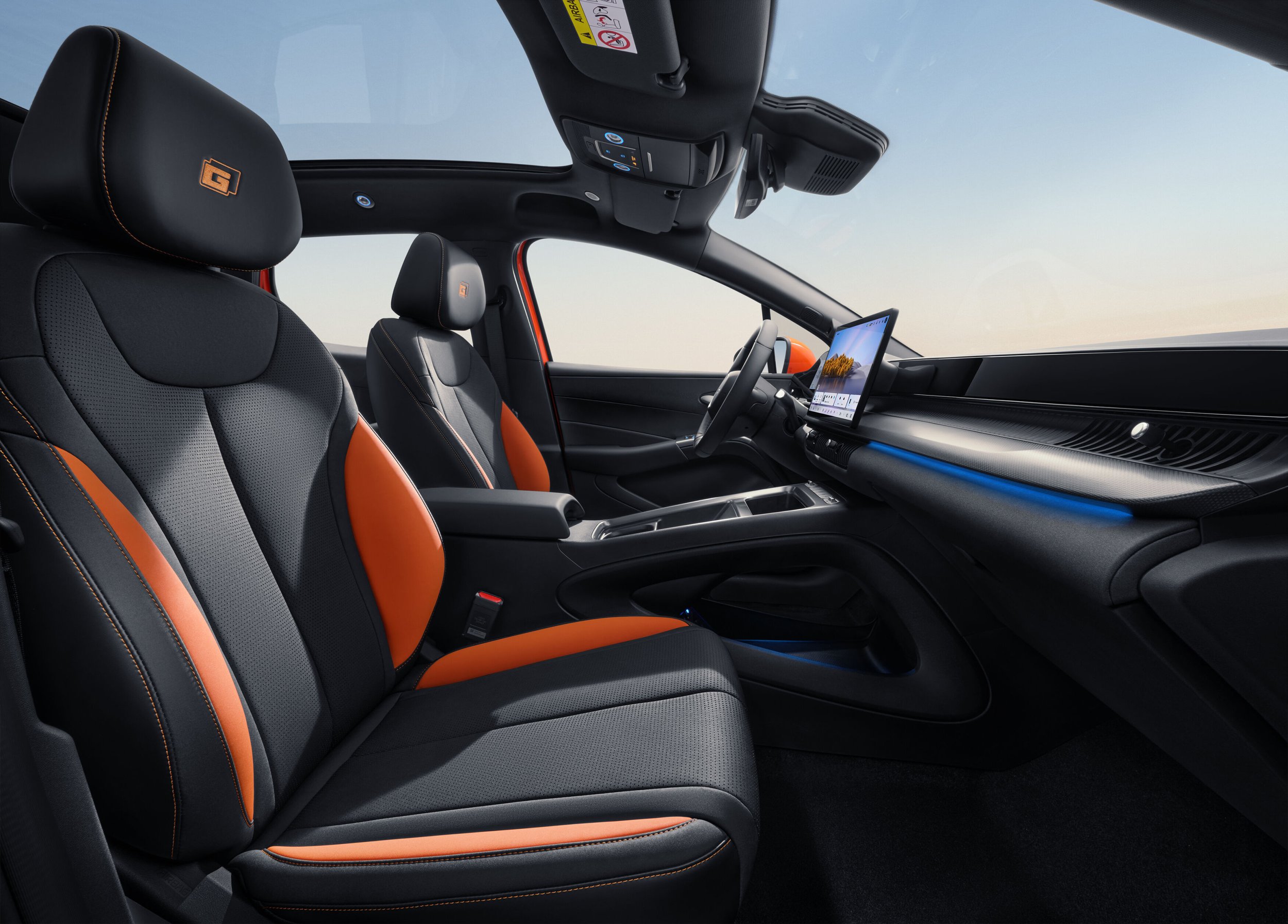
The Sport trim at £29,940 is getting rather pricey for a supermini as it build on the Comfort trim adding sharper looks, discreet badging, a darker style of 18-inch alloy wheels and a unique two-tone cabin treatment, complete with a motorsport-style suede finish on the seat panels. It seems a lot to pay for a slightly different look, and no more equipment, or performance.
Conclusion
On the outset, a plug-in hybrid supermini seems very appealing, allowing for a choice of battery sizes, both with a very agreeable all-electric range. But as hybrids do not qualify for the Electric Car Grant, spending nearly £30k on a Renault Clio sized car to save money on fuel seem ludicrous, especially when the excellent all-electric Nissan Micra, the MG 4 Urban and the upcoming and very stylish Hyundai IOINIQ 3 with over 300 miles of range can be purchased for a lot less.
BYD’s issue isn’t therefore its product. Undoubtedly its a fine car, but the price really lets it down with perhaps the sweet spot being the Boost at £27k. It’s a large burden for supermini customers to bear, and that - when given full context - electric cars provide far greater value for money, with reduced running costs, maintenance costs and purchase costs.