SMMT Data Reveals the HGV Market Falls with One Surprise
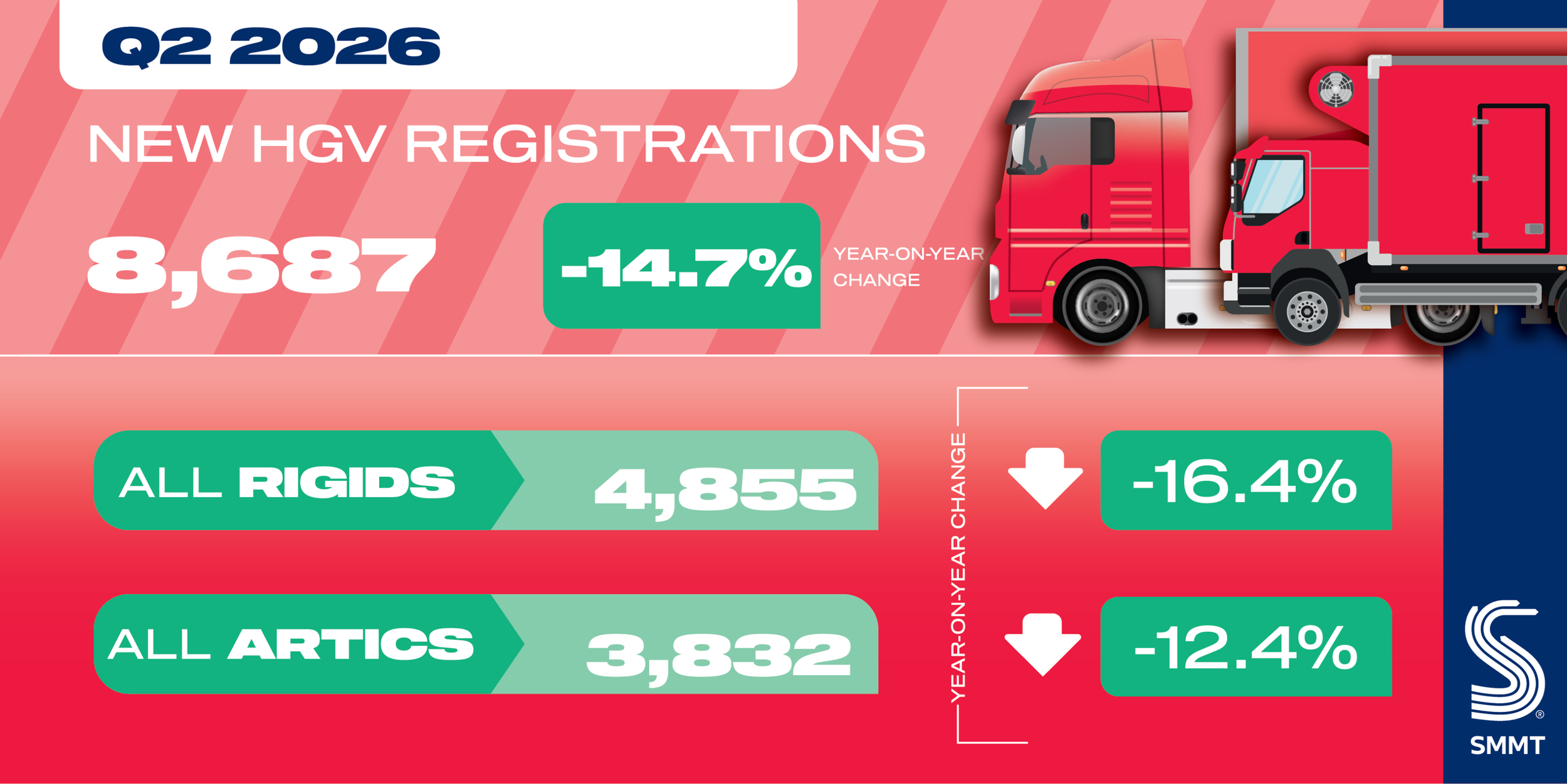
The heavy goods vehicle (HGV) industry is suffering a downturn with registrations falling by -14.7% in the second quarter of 2026. A total of 8,687 new lorries joined UK roads, according to the latest figures published today by the Society of Motor Manufacturers and Traders (SMMT).
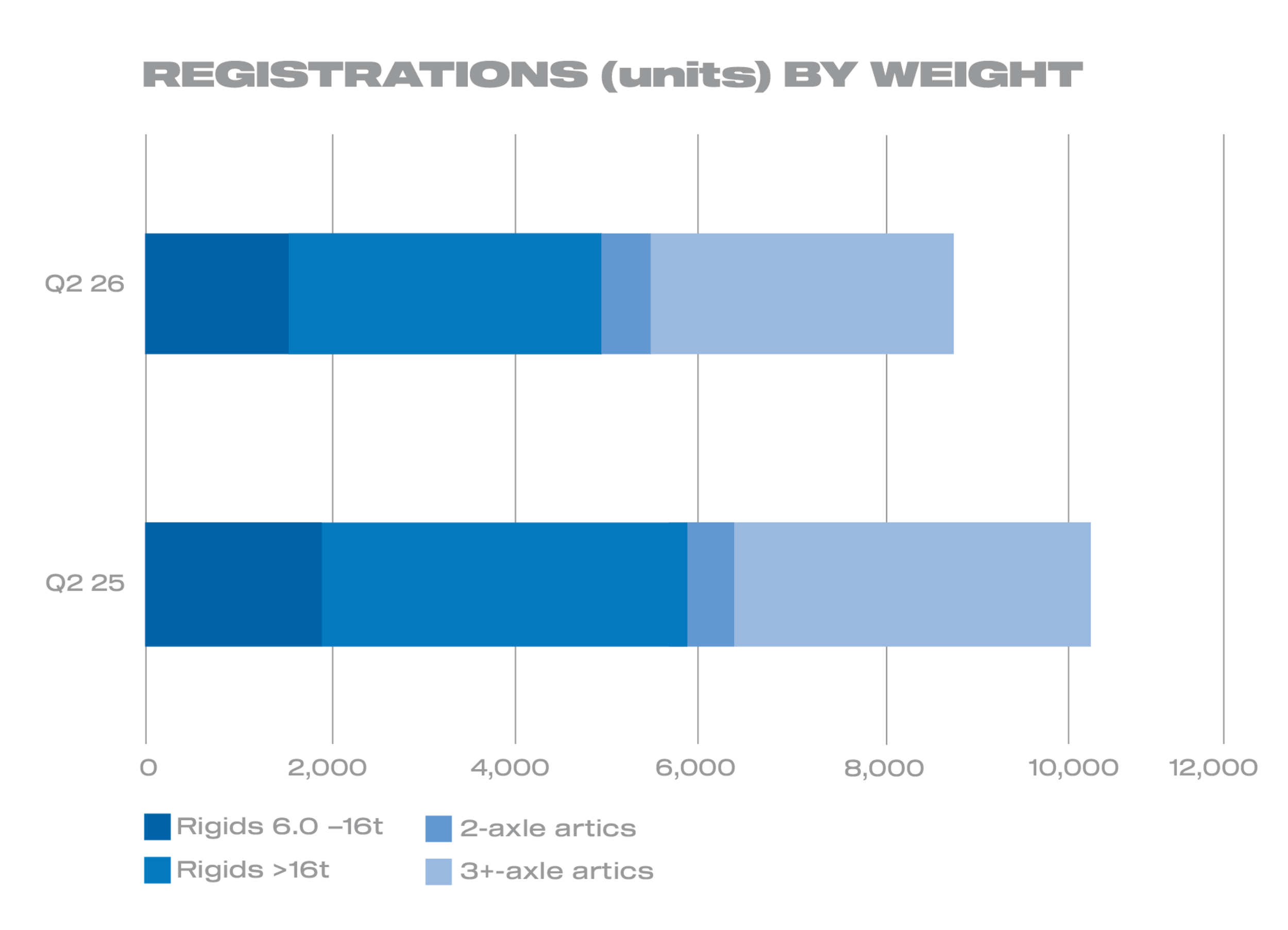
Rigids vs Artics
The breakdown of this contraction shows rigids dropped -16.4% to 4,855 units year-on-year, with artics falling -12.4% to 3,832 units for an aggregated fall of -14.7% across both types.
Source: SMMT U.K. Heavy Goods Vehicles Data
H1 Summary
For the first half of the year (Q1 and Q2), demand was down -8.9% to 18,158 units, following three years of strong post-pandemic growth. The SMMT states “fleet operators balancing vehicle renewal against wider business cost pressures” as a cause, as it’s understood that more recent financial pressures has potentially delayed the purchase of new heavy goods vehicles.
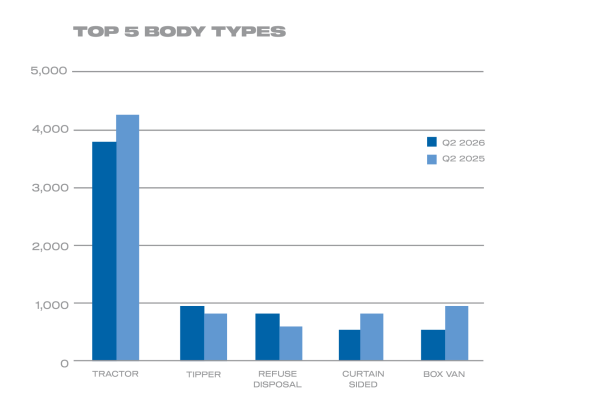
Performance by Body Type
Tractor units account for more than two fifths of new HGVs registered despite volumes falling -13.7% to 3,706 units. Box vans and curtain-sided trucks also declined, down -36.6% and -26.4% respectively, while the surprise is that tippers and refuse disposal vehicles grew by 12.7% and 27.0% respectively.
Source: SMMT U.K. Heavy Goods Vehicles Data
Zero Emissions HGV Registrations
One last surprise was the uptake of zero emission HGVs that rose with new registrations increasing by 4.7%. However, this is a very young market and despite the measurable rise, that only accounts for 90 units. It also increased market share from 0.8% to 1.0% compared the same time last year.
Overall though, zero emissions HGV volumes have fallen -6.6% over the first six months compared to H1 last year, when uptake was supported by ZEHID funding. This has resulted in an overall market share that remains static at 0.9%.
Higher upfront cost of electric HGV’s, and challenges around depot and a public network infrastructure remain a sticking point for progress, with long waits for grid connections has limited public charging options.
This is despite of government support from the Plug-In Truck Grant, Depot Charging Scheme and the ZEHID programme. The SMMT believes that “faster grid connections, accelerated depot planning approvals and a long-term national infrastructure strategy would help support uptake”.
Source: SMMT U.K. Heavy Goods Vehicles Data Q2 2026
Mike Hawes, SMMT Chief Executive, said: "After three bumper years of fleet renewal, the HGV market is now under pressure. The fact that zero emission truck uptake is outperforming the market is a crumb of comfort but at less than 1% of the market it is not a cause for celebration. Government support has helped incubate this emerging market, but if the sector is to decarbonise at pace, operators need confidence – and that means addressing key barriers to investment and a technology-neutral approach that recognises the diversity and complexity of HGV use.”