
Can Solar Panels Save French Vineyards?
France is having a rather bad year for wine. The country’s 2026 harvest is expected to be one of its smallest in around 30 years, with production forecast at 33.9 million hectolitres. That’s 17% below the average for the previous five years. Champagne is expected to be particularly badly hit, with production forecast to fall by almost half. (reuters.com)
The reason being that France has just experienced its hottest summer on record, alongside severe drought and repeated heatwaves. Vines have been suffering from heat and water stress, grapes have been damaged and harvesting has had to start unusually early. The problems aren’t restricted to wine either, with French agriculture suffering billions of euros of losses across crops and livestock.
So here’s an interesting question: Could solar panels (Agrivoltaics) actually help?
It sounds slightly mad at first as we’ve spent years hearing from the Facebook Massive’ and certain angry high-profile accounts on X, that putting solar panels on agricultural land means taking it away from food production. But what if the panels could actually help protect the crops growing underneath them?
That’s the idea behind agrivoltaics, where solar generation and agriculture share the same piece of land. And vineyards are proving to be one of the more interesting places to try it.
Solar shade for grapes
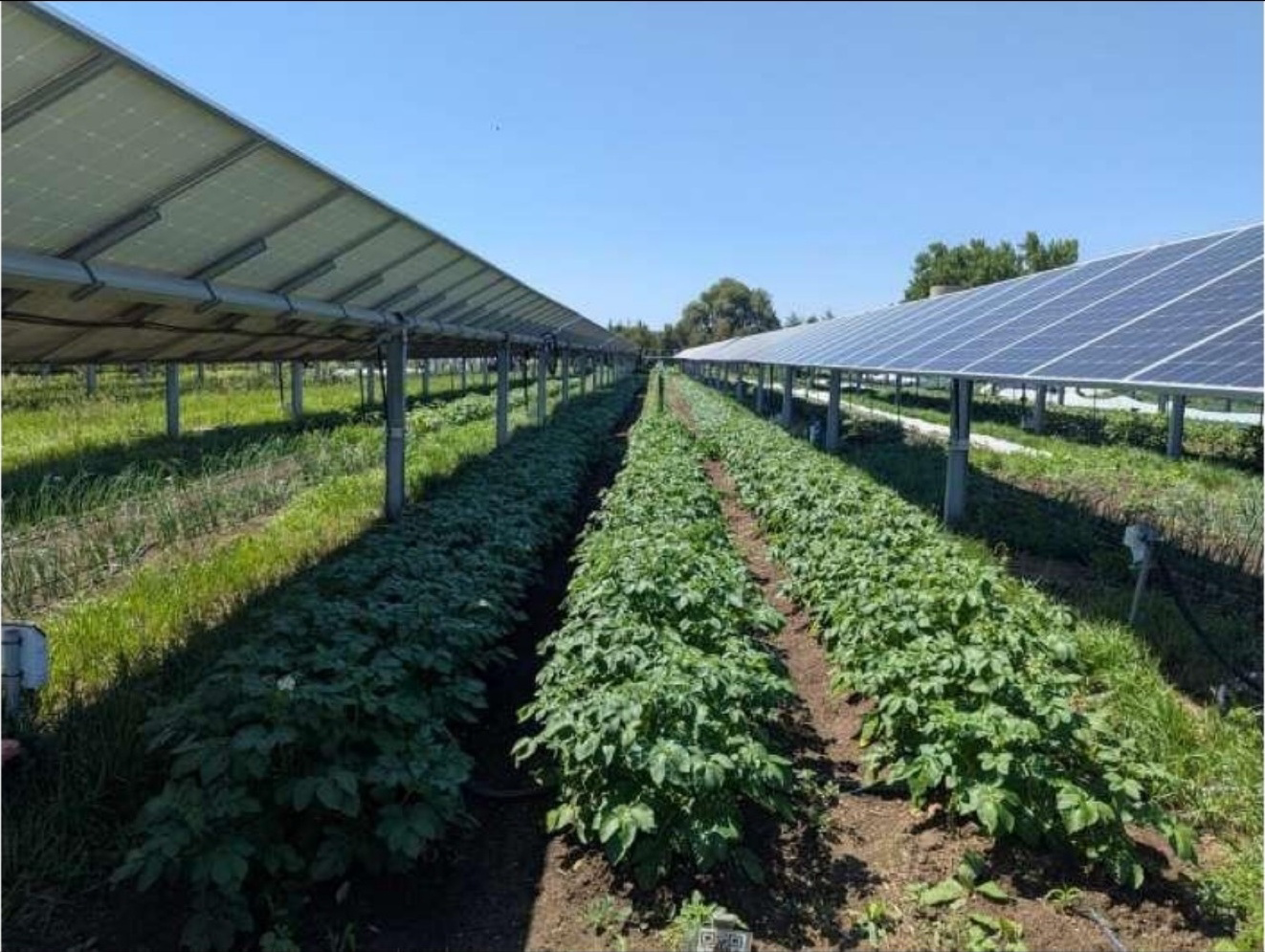
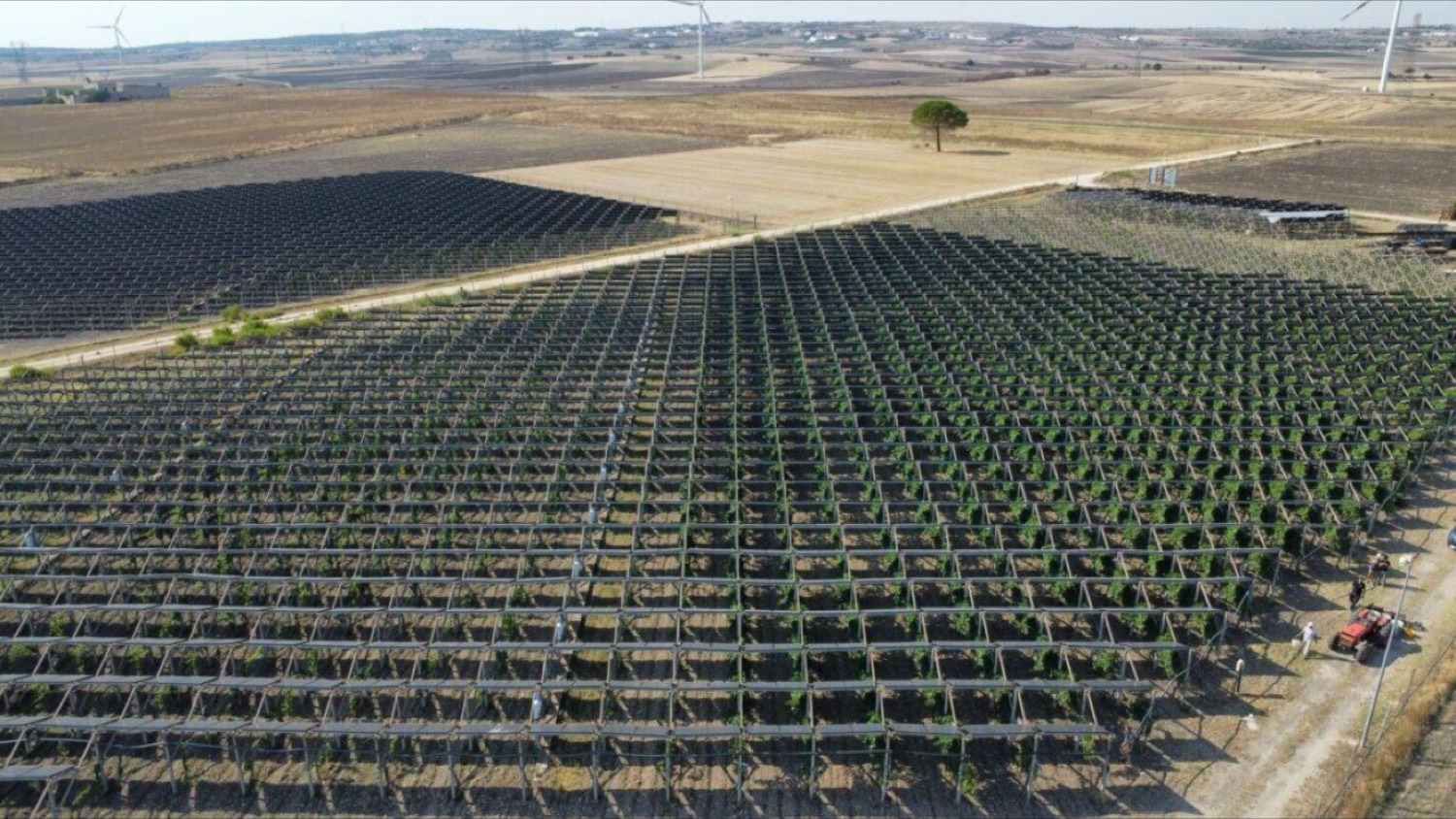
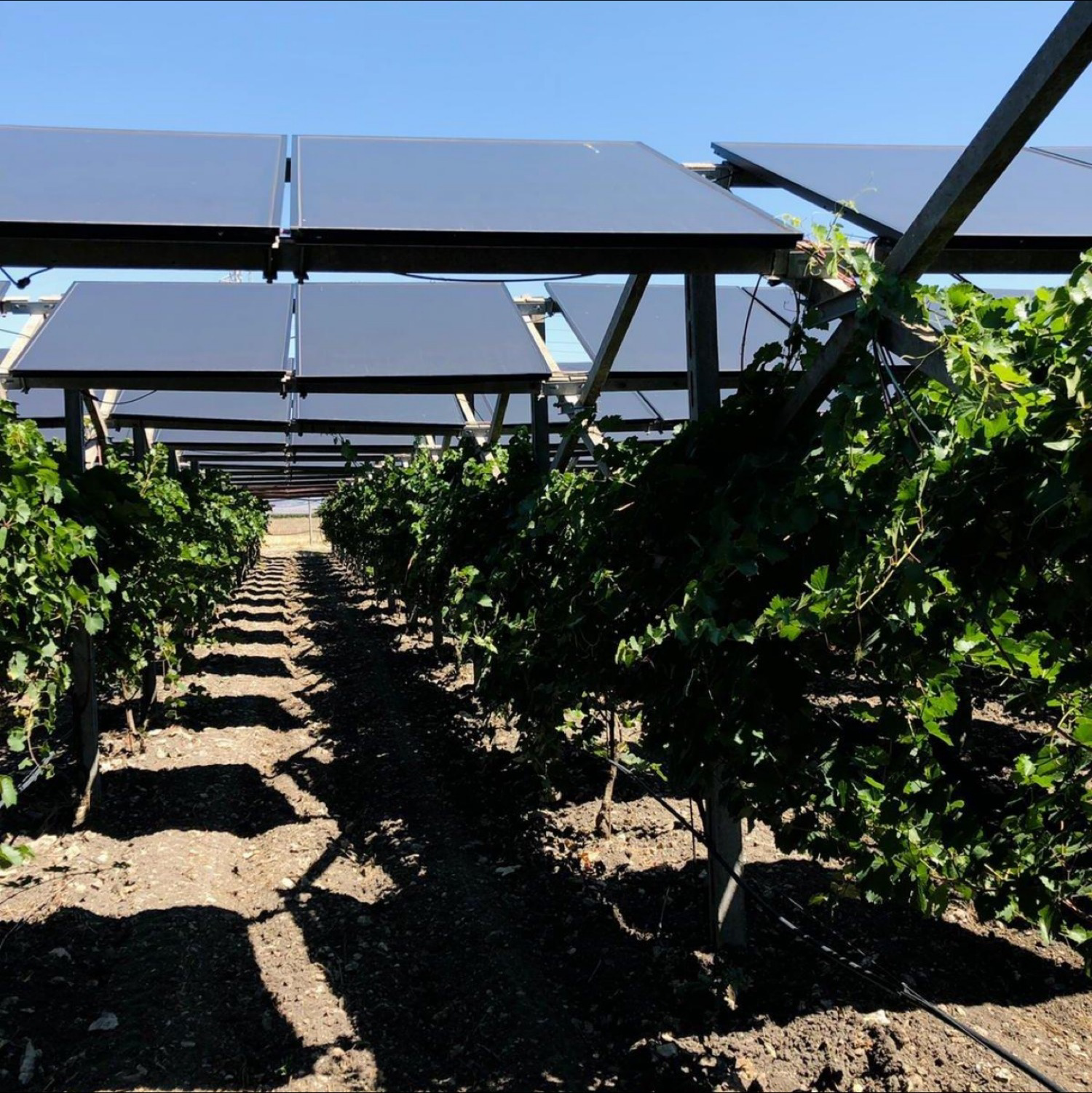
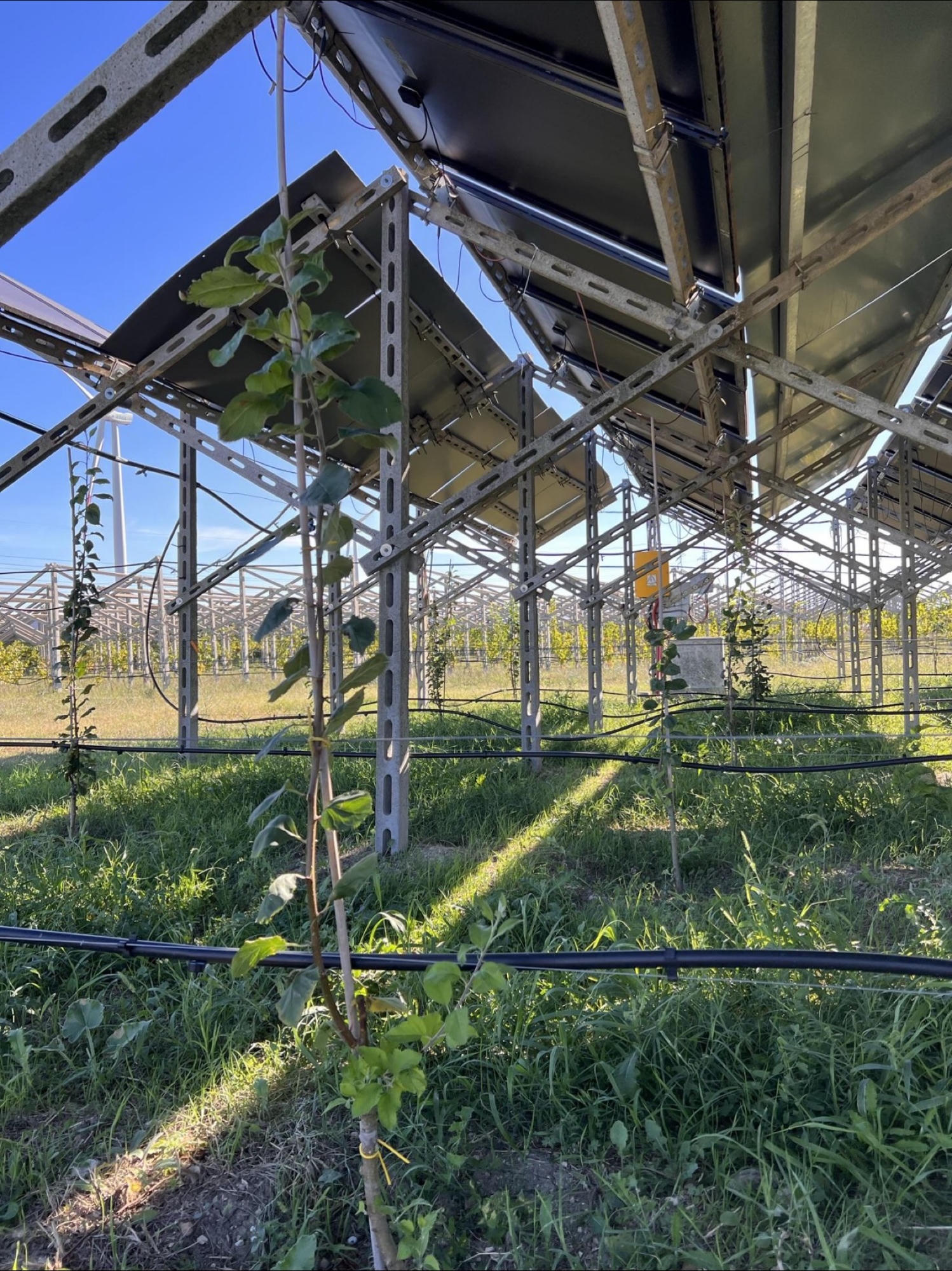
The aim isn’t simply to generate electricity. The panels are there to protect the vines from the increasingly extreme weather the grower is experiencing, including heat, hail and frost. The panels provide shade during the hottest parts of the day, reducing the amount of heat reaching the vines and helping to retain moisture. Some systems can even adjust the amount of shade according to the conditions.
And there is some surprisingly good evidence that this works very well: A recent French trial with Chardonnay found vines beneath adjustable solar panels produced 60% more fruit than uncovered vines during one season. That is one trial, on one crop, in one set of conditions, so it certainly doesn’t mean putting panels over every vineyard will produce 60% more grapes. But it does show why researchers and growers are taking the idea seriously.
Other research has found that agrivoltaic systems can reduce heat stress, improve the water status of vines and, under the right conditions, increase yields. There are also reports of significant reductions in the amount of irrigation water required in vineyards.
That last point could become increasingly important. If summers become hotter and drier, protecting a crop from the worst of the midday heat is considerably more useful than simply giving it more water.
And it’s not just grapes
Vineyards are perhaps the most obvious example because grapes are particularly vulnerable to heat and sun, but researchers have been testing with other crops too. Lettuce is one of the better-established examples. Research has found that if grown beneath partial solar-panel shade, it can maintain, and even improve yields -because the plants make better use of the available light. Tomatoes and peppers have also performed surprisingly well in trials. A two-year experiment in Colorado found no statistically significant reduction in the yields of tomatoes, peppers or lettuce beneath different types of solar modules, while the panels reduced temperatures and moderated the growing environment. Summer squash, on the other hand, didn’t fare as well.
That’s an important detail because agrivoltaics isn’t some magic recipe that works for everything. Crops have different requirements and too much shade can obviously be a problem. The trick is to find the right combination of crop, climate, panel height, spacing and amount of shade.
The results vary considerably across different crops, but one of the recurring themes is that partial shade can help some cope with excessive heat and reduce water consumption.
And there’s also livestock
The same principle can apply to livestock. Solar panels installed over pasture can provide something rather obvious to cattle on a hot or rainy day: shade and protection. A study of dairy cattle found that cows with access to photovoltaic shade had lower afternoon respiration rates and lower body temperatures than cattle without shade. The researchers concluded that agrivoltaics can reduce heat stress while making better use of the land.
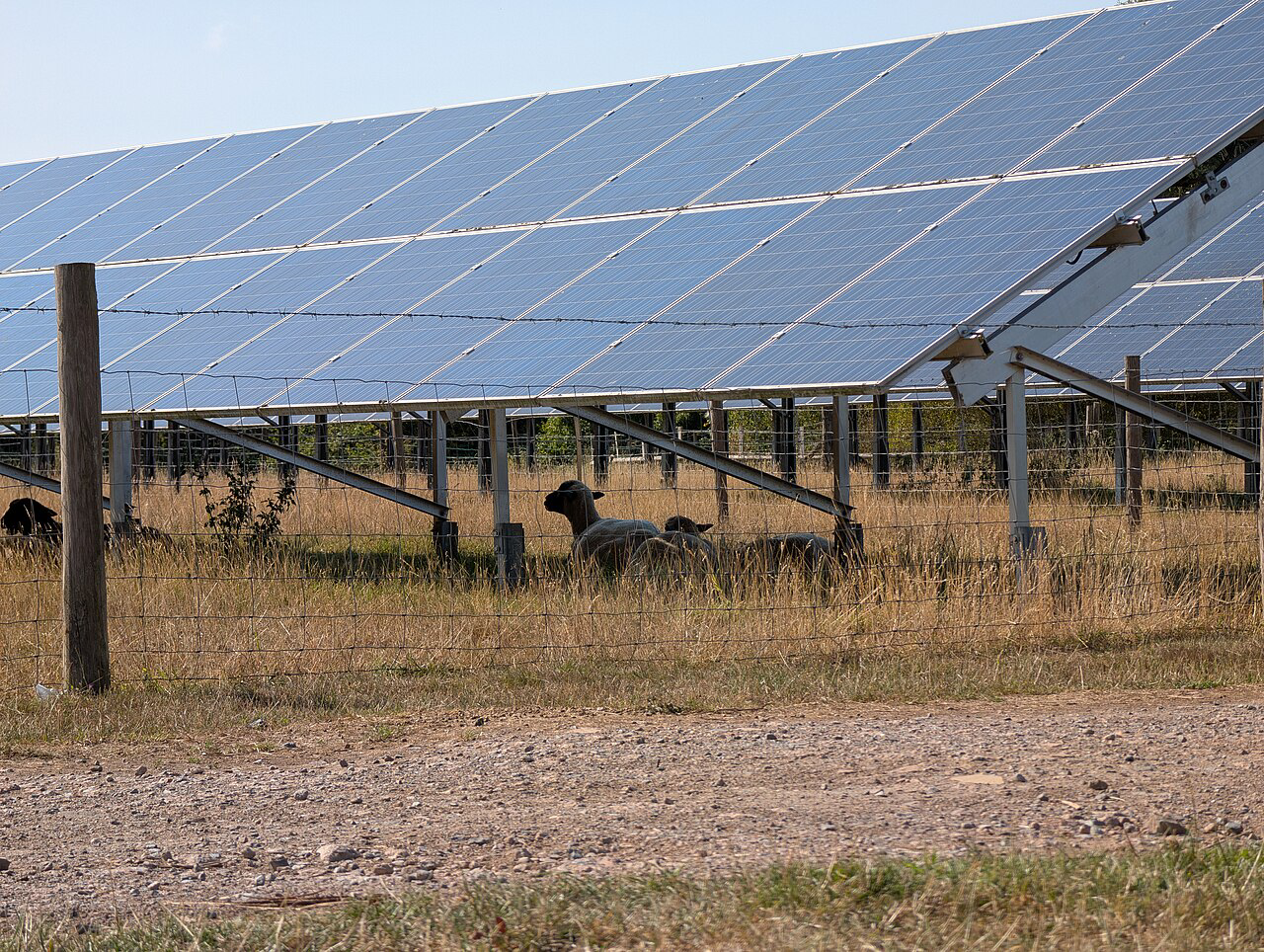
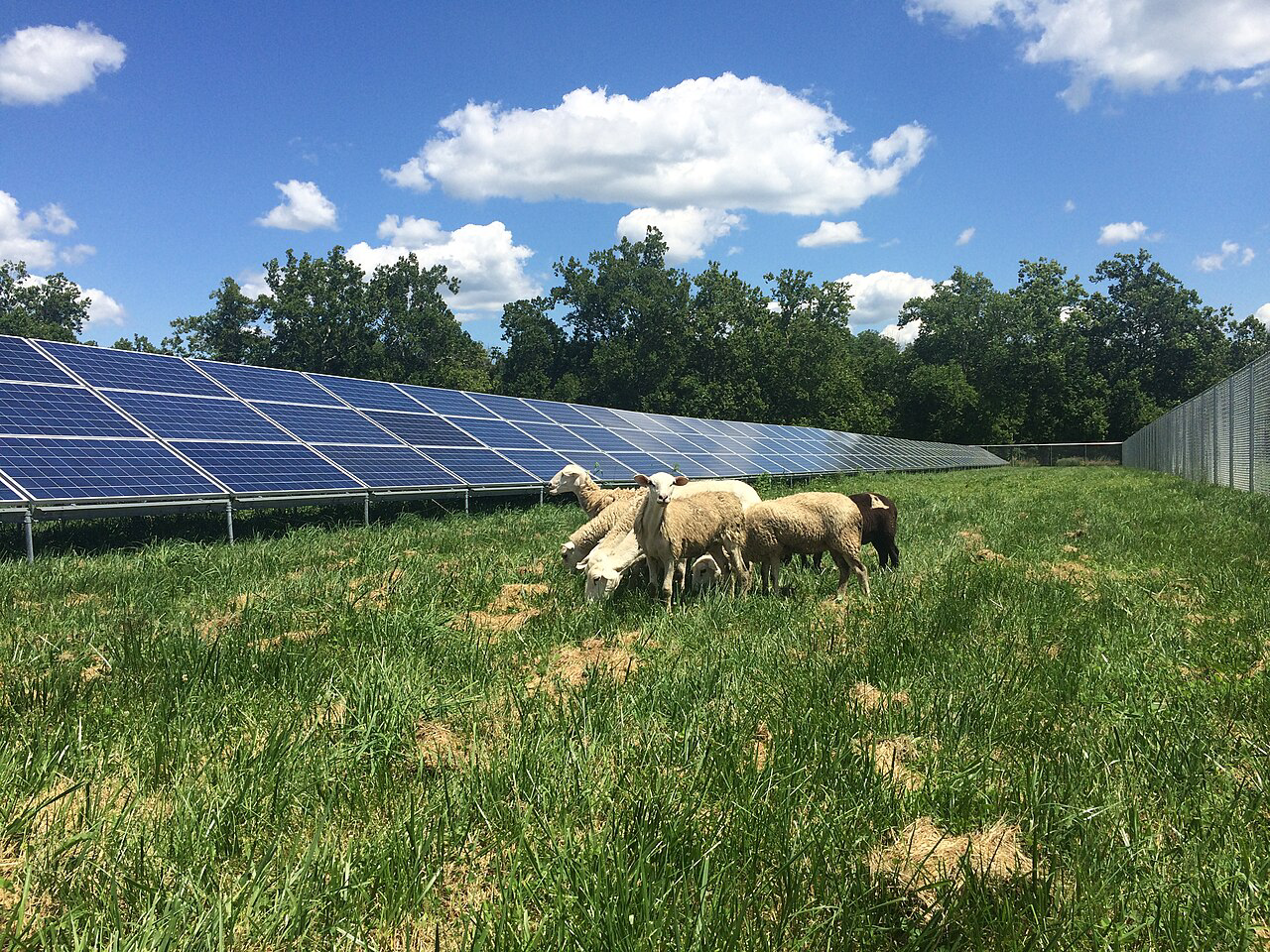
Sheep and goats are another obvious candidate, and research is increasingly looking at solar panels as a way of providing shade while animals continue grazing beneath them. In other words, the field can continue producing food, the animals get some protection from the heat, and the panels produce electricity.
Wildlife.
Well-managed solar sites can provide considerably more than somewhere to put the panels. Between the rows, land can be managed as grassland or planted with wildflowers, while hedgerows and other habitat can be retained or added. A 2024 study of 15 solar parks in England recorded 1,397 pollinators from at least 30 species, including butterflies, bumblebees, hoverflies and moths. The researchers found that the amount and variety of flowering plants within the sites was particularly important for supporting pollinator biodiversity.
So, with the right design and management, we’re potentially talking about a piece of land producing food, electricity and habitat rather than simply choosing one of the three.
Growing electricity
The panels aren’t just protecting the crops. There’s another rather obvious advantage here that sometimes seems to get lost in the argument about solar on farmland. The panels are producing electricity and the farmer isn’t simply putting a giant umbrella or parasol over their vineyard. They’re producing a crop or animal underneath the panels and electricity above it.
Rather than saying the land is being used for solar instead of agriculture, agrivoltaics asks whether the same land can provide both. And the electricity isn’t necessarily some abstract benefit either. It is of course valuable, and can be used on the farm, sold to the grid or provide another source of income for the farmer. Depending on the system and the economics, the electricity could help power irrigation, refrigeration, machinery or other farm operations.
At a time when farmers are dealing with rising energy costs, expensive machinery, drought and increasingly unpredictable weather, having another useful product and guaranteed revenue stream coming from the same piece of land is a double win.
However, it doesn’t mean covering every or indeed a large majority of fields. And there are perfectly reasonable arguments against putting solar panels on some land. The UK’s best agricultural land is valuable. Landscape matters. Biodiversity matters. And if a productive field can AND DOES grow large quantities of food efficiently, there needs to be a good reason for doing something else with it.
But that isn’t really an argument against agrivoltaics. It’s an argument for doing it intelligently. A field growing a crop that struggles in extreme heat or droughts might be an excellent candidate for solar. A vineyard facing repeated drought and sun damage is the obvious candidate. A farm with livestock might use panels to provide shade while the animals continue grazing underneath.
So there isn’t one solution that fits every piece of land. What seems increasingly difficult to justify, though, is the idea that solar and agriculture must always be enemies. France’s disastrous 2026 harvest is another reminder that the conditions farmers have traditionally relied upon are changing. The question shouldn’t simply be how much land we can keep exactly as it has always been.
If the right solar installation can protect grapes from excessive heat, reduce water demand, continue producing a crop, provide shade for livestock, support wildlife and generate electricity at the same time, that’s not really a choice between food and energy. It’s potentially food, energy and nature from the same land.
And as our weather becomes more extreme, that could turn out to be a rather useful idea.
