
The original Hyundai Kona Electric helped prove that an electric car could be a perfectly sensible everyday choice. It offered a decent-sized battery, genuinely useful range and performance that would have embarrassed quite a few warm ‘hot’ hatchbacks.
But that was then. We’re now looking at these cars as used buys, often with a fair few miles behind them. So, is an early Kona Electric still worth considering?I’ve recently had a 2020 64kWh example with 68,000 miles through my dealer hands.
Does it have a heat pump? What’s the battery State of Health? What condition is it in and how has it held up? Here’s what I made of it:
What actually is it?
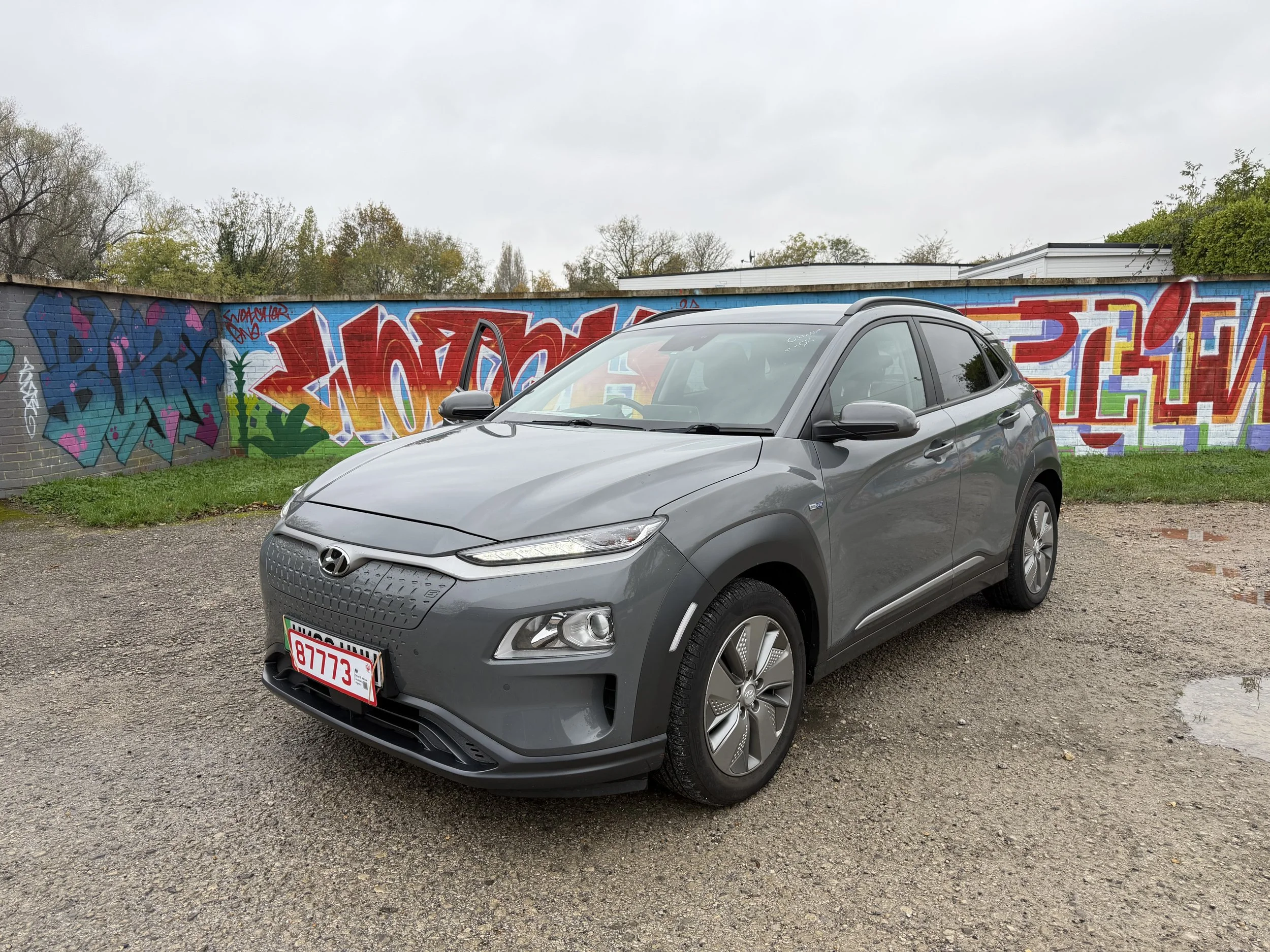
The Kona Electric wasn’t developed from the ground up as a dedicated electric car. The Kona range also included petrol and hybrid versions, and Hyundai adapted its existing architecture to accommodate the electric drivetrain and battery.
That might sound like a compromise, but Hyundai did a pretty good job. The electric version doesn’t feel like a petrol car with the engine taken out and a battery squeezed in. It feels like a properly thought-out EV. You also get the benefit of Hyundai’s experience with the closely related electric powertrain used in the Kia e-Niro. It’s a relatively straightforward package: a 64kWh battery, a front-mounted motor and a single-speed reduction gearbox.
The headline figures are 204PS and 395Nm of torque, with 0–62mph taking around 7.6 seconds. That’s still properly brisk in a small family SUV. And because it’s front-wheel drive, you can occasionally remind yourself of all that torque when pulling away on a wet road. There’s plenty of shove, but it can struggle to put it all down cleanly if you’re a bit enthusiastic.
Range
This is where it really scores. The 64kWh Kona’s biggest selling point is its efficiency. It isn’t carrying a huge battery around, but it makes very good use of the energy it has. Hyundai quoted a WLTP range of around 279 miles for this version. That’s an impressive figure for a car of this age, but the real-world numbers are what make it interesting as a used buy. In my own use, seeing figures in the low 4 miles per kWh is perfectly achievable. That puts a full-charge range in the region of 250–260 miles, depending on conditions and driving style.
I also have a useful real-world example at the other end of the scale. This particular car was delivered from Derby to Bournemouth in freezing, wet conditions, at night, with motorway speeds wherever possible and the cabin heater working hard. It arrived showing an average of 3.1 miles per kWh. That’s not a criticism of the car. It’s a pretty demanding set of circumstances. But it does illustrate how much difference speed, temperature and heating can make. At that efficiency, you’re looking at roughly 200 miles from the usable energy in the battery.
The important point is that the Kona doesn’t need a massive battery to deliver a genuinely useful range. Drive it sensibly and 250 miles is a realistic proposition. For a used EV buyer who wants to cover longer distances without spending a fortune, that’s a very strong argument in its favour.
Charging
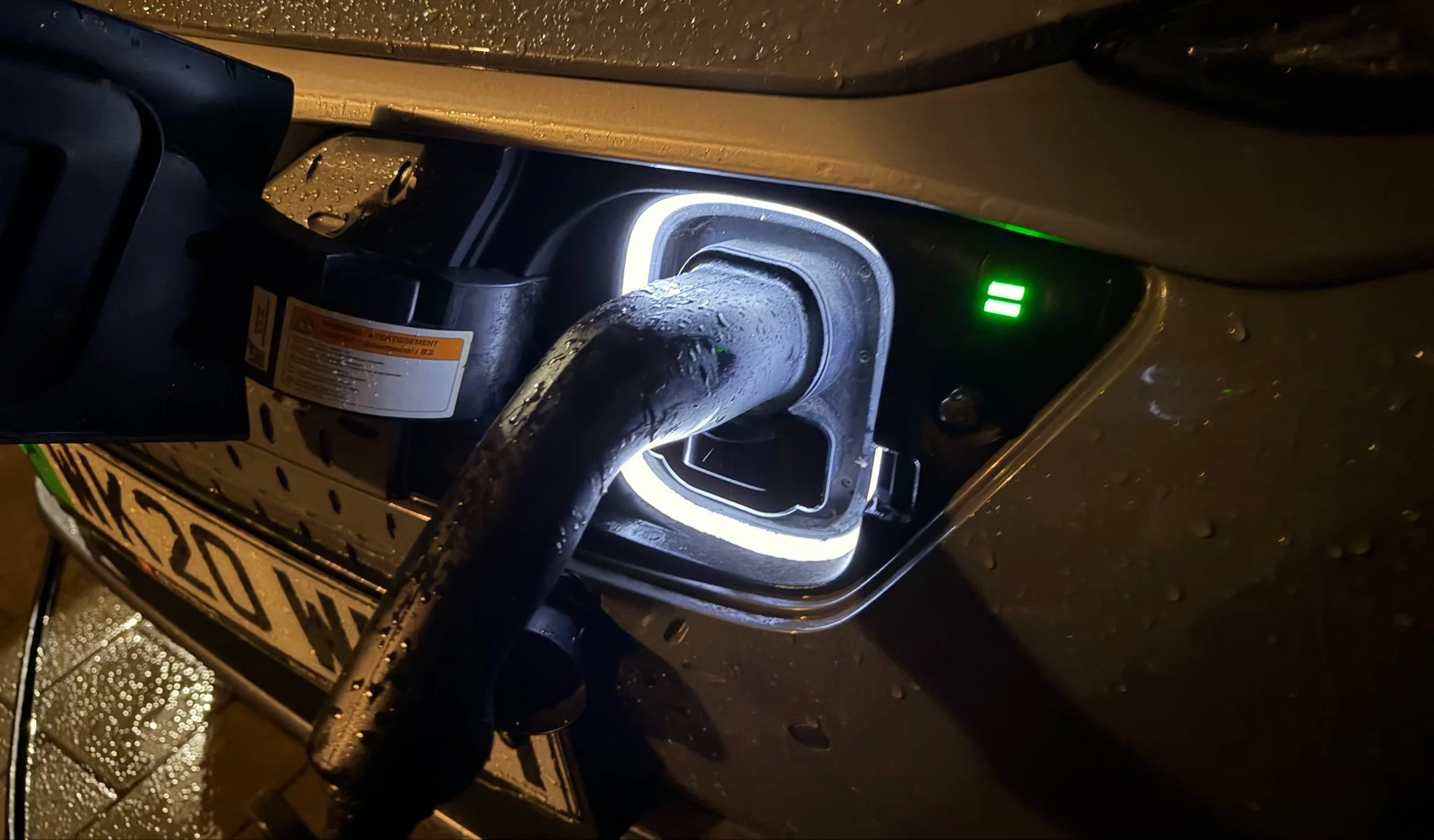
CCS connection for rapid charging and a Type 2 connection for AC charging (max 11kW). The maximum DC charging rate is around 77kW, with a 10–80% charge taking roughly 46 minutes in ideal conditions.
The Kona won’t win any awards for the fastest rapid charging by today’s standards, but it remains perfectly usable. Its efficiency also means you don’t need to spend as long charging as you might expect from the headline battery size.
Equipment and practicality
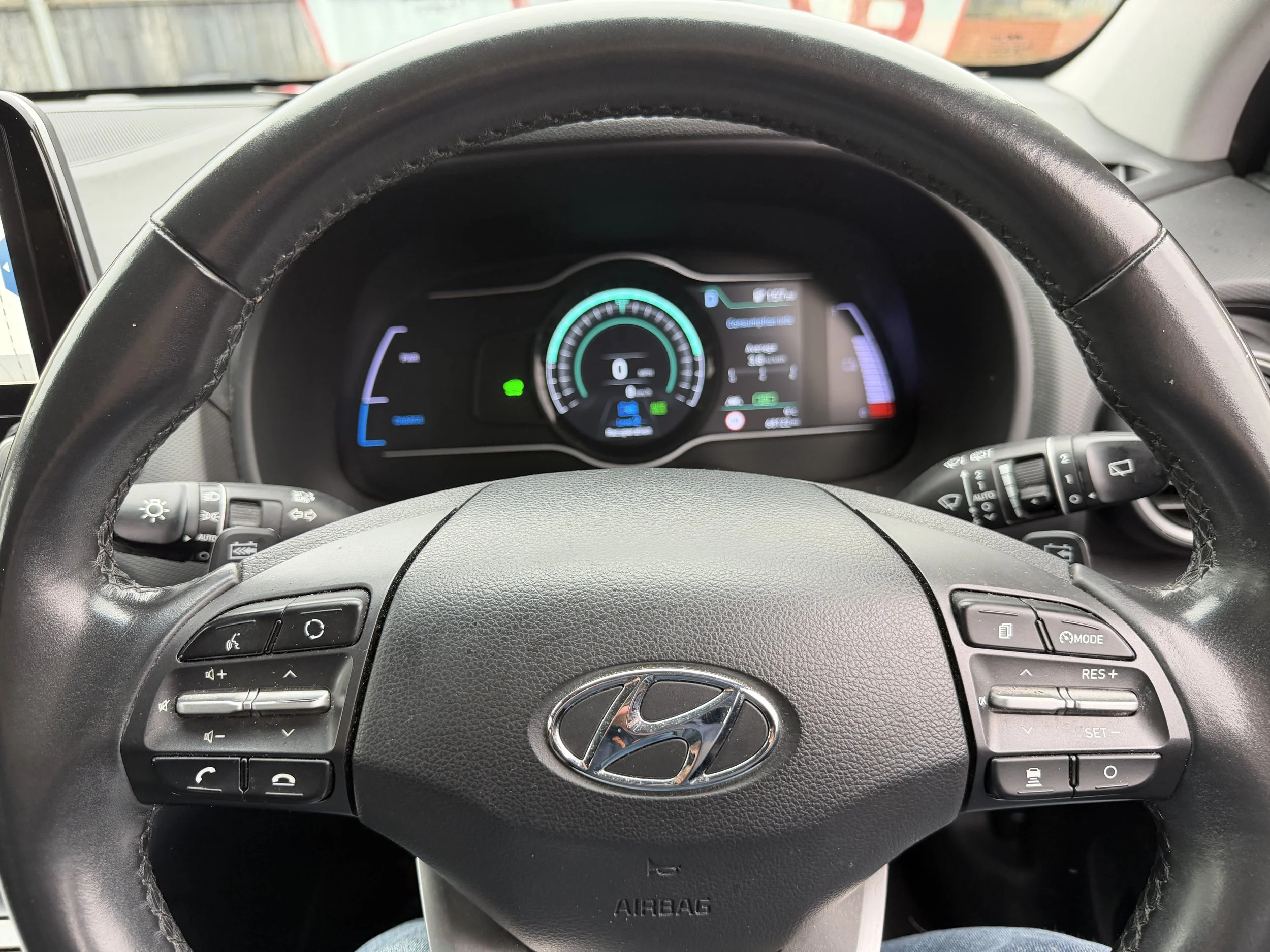
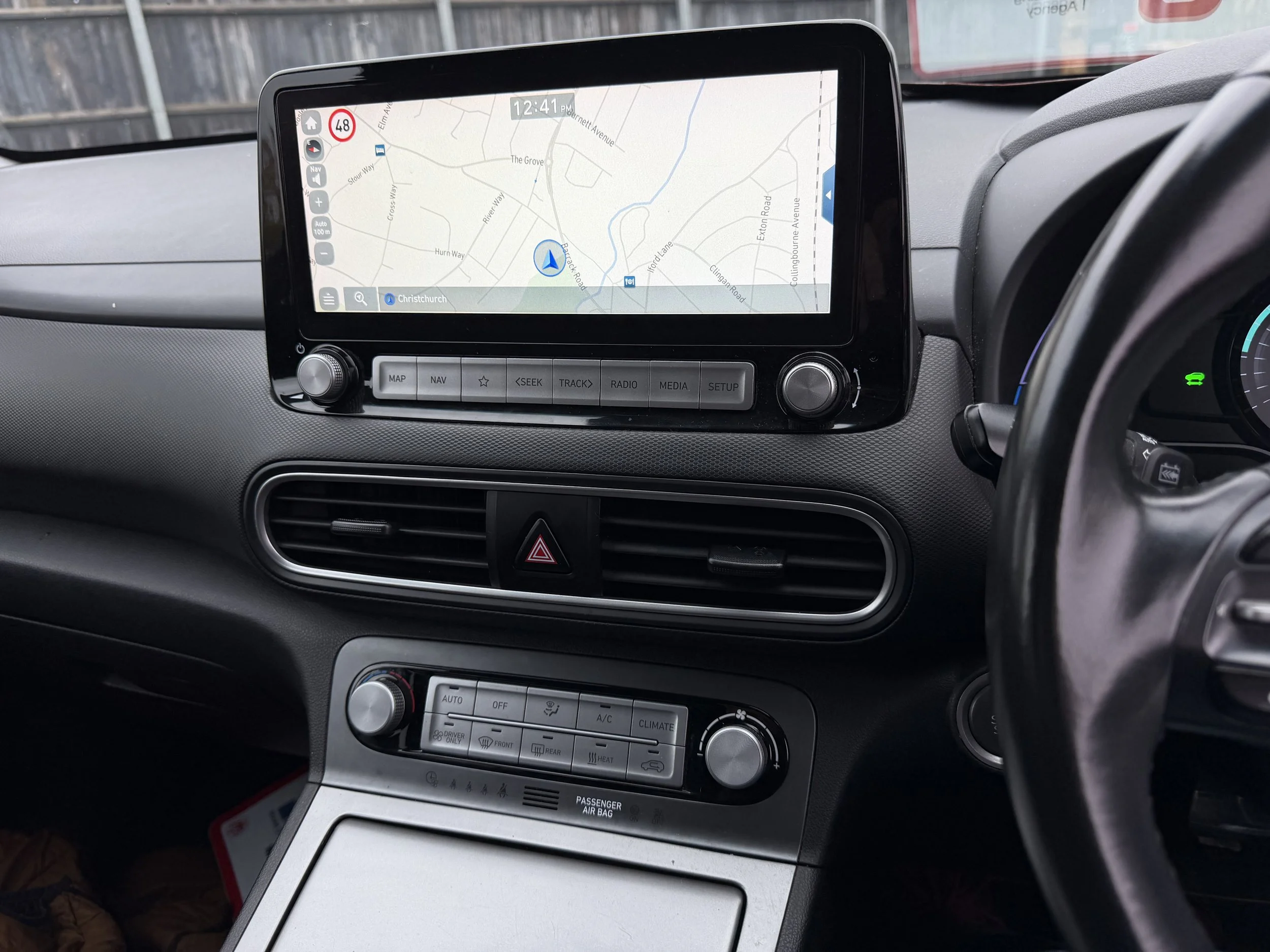
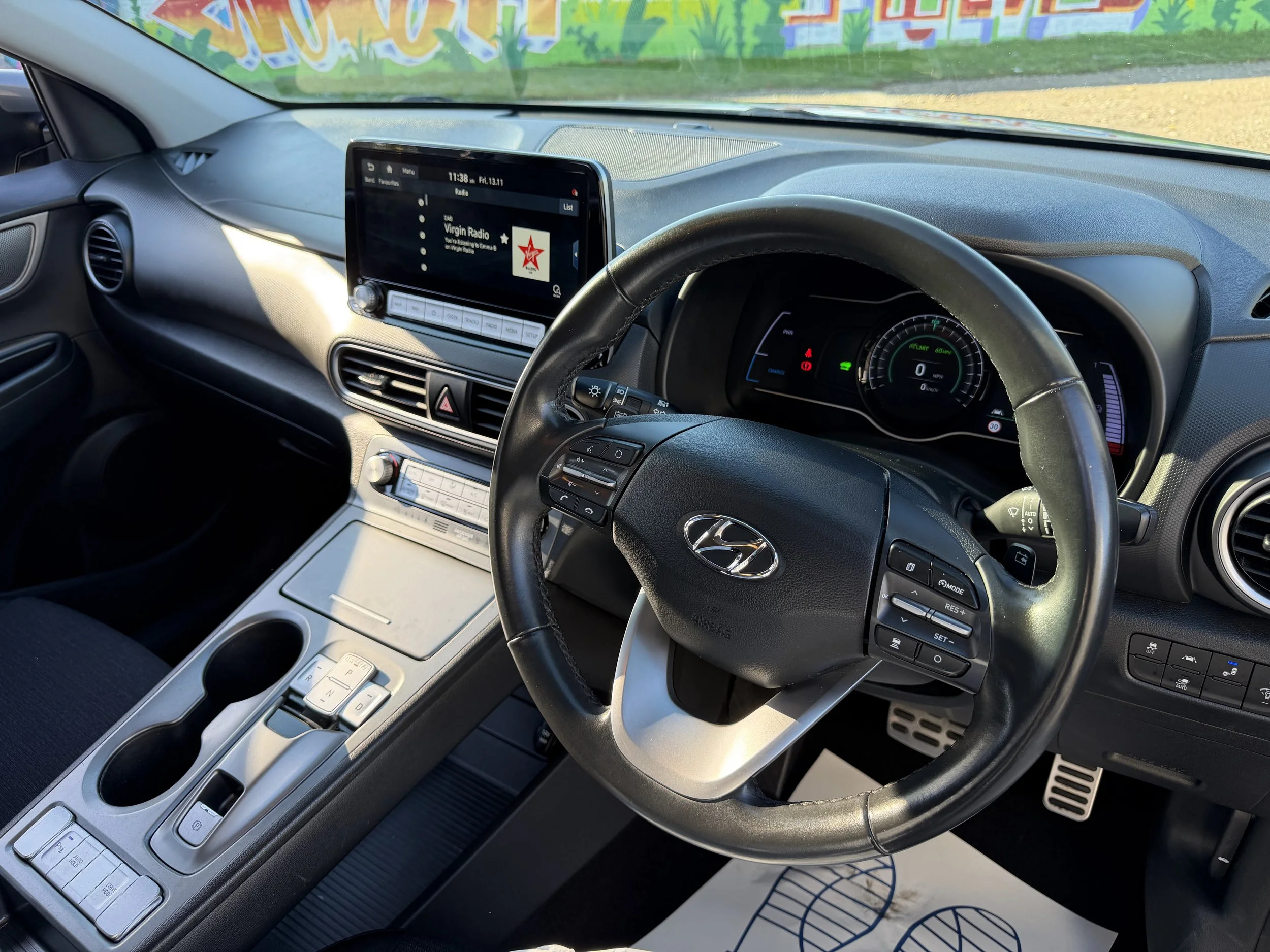
This example is a mid-spec car. It has climate control, adaptive cruise control and lane keeping assistance, along with the larger 10-inch touchscreen. Apple CarPlay and Android Auto are wired rather than wireless, which is hardly the end of the world, but worth knowing if you’re used to a more modern setup.
You may be happy to hear that the Kona (and e-Niro) have actual physical buttons for all the most used functions like HVAC etc.
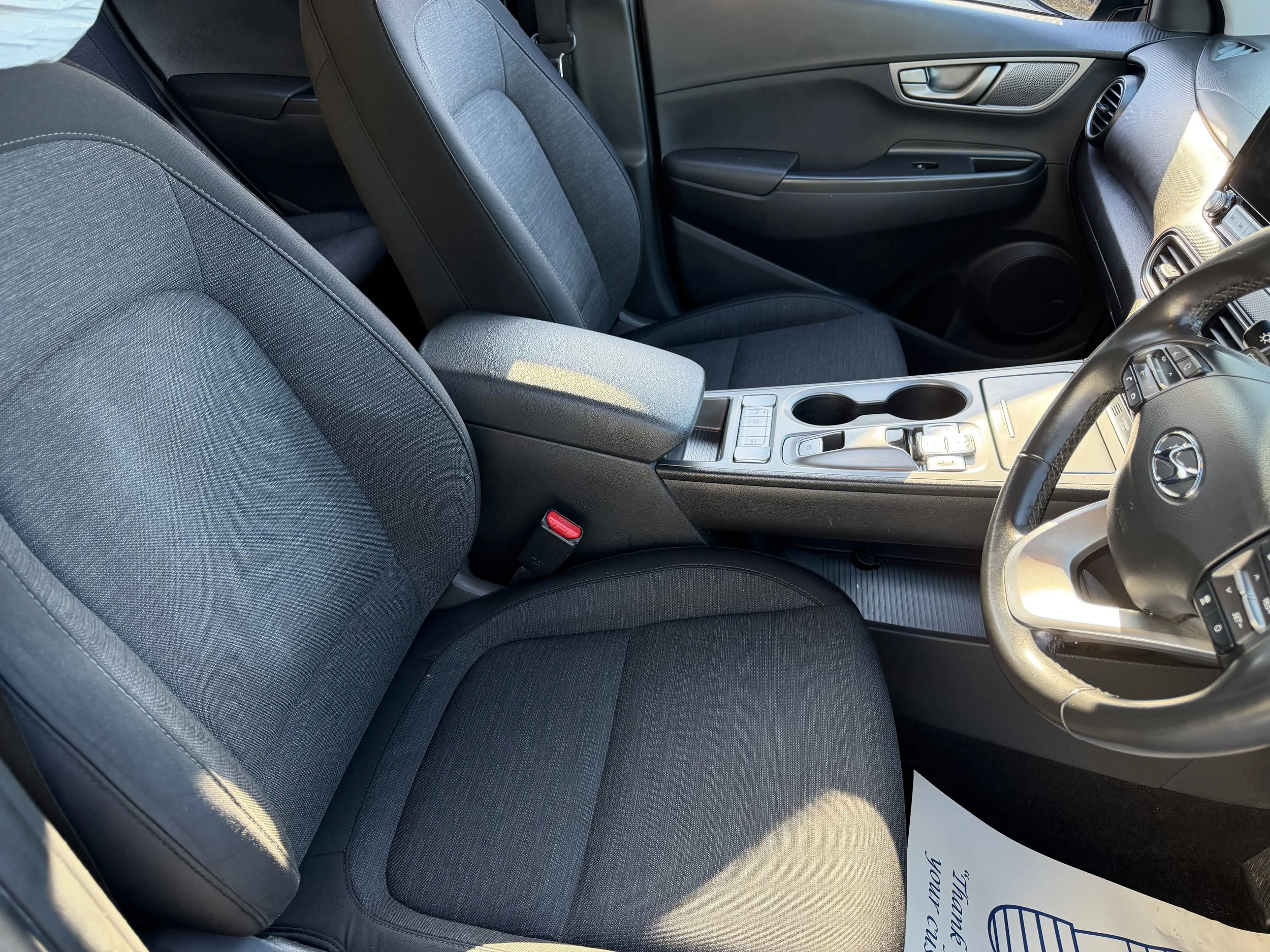
There are a couple of little irritations, too. The one that particularly got on my nerves is the HEAT button. Switch the car off with the heating in a particular setting and, when you start it again, HEAT has reverted to automatic. Even if you’d deliberately switched it off previously. Same for the brake ‘Auto-hold’ function-it defaults to ‘off’. It’s a small thing, but it’s the sort of detail you notice when living with a car. I’d also miss heated seats as this particular car doesn’t have them but higher trim levels do. They make a real difference in an EV, particularly when you can warm yourself without having to heat the whole cabin. Not every Kona has them, so check the equipment carefully rather than assuming they’re fitted.
The heat pump was also optional rather than standard, so don’t assume a car has one just because it’s an electric Kona. It’s worth looking for if you’re buying with efficiency in mind particularly in the colder months.
Space
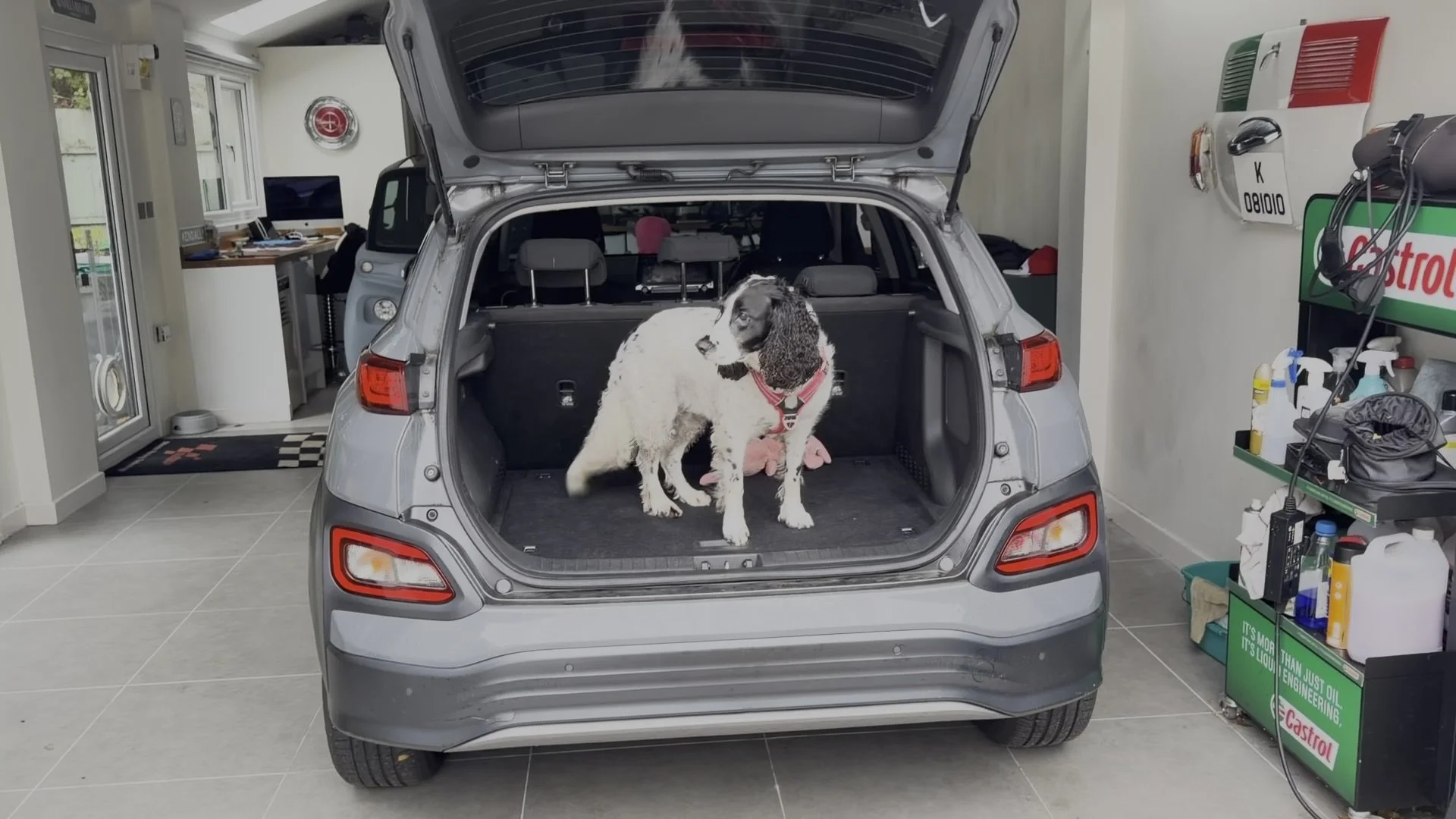
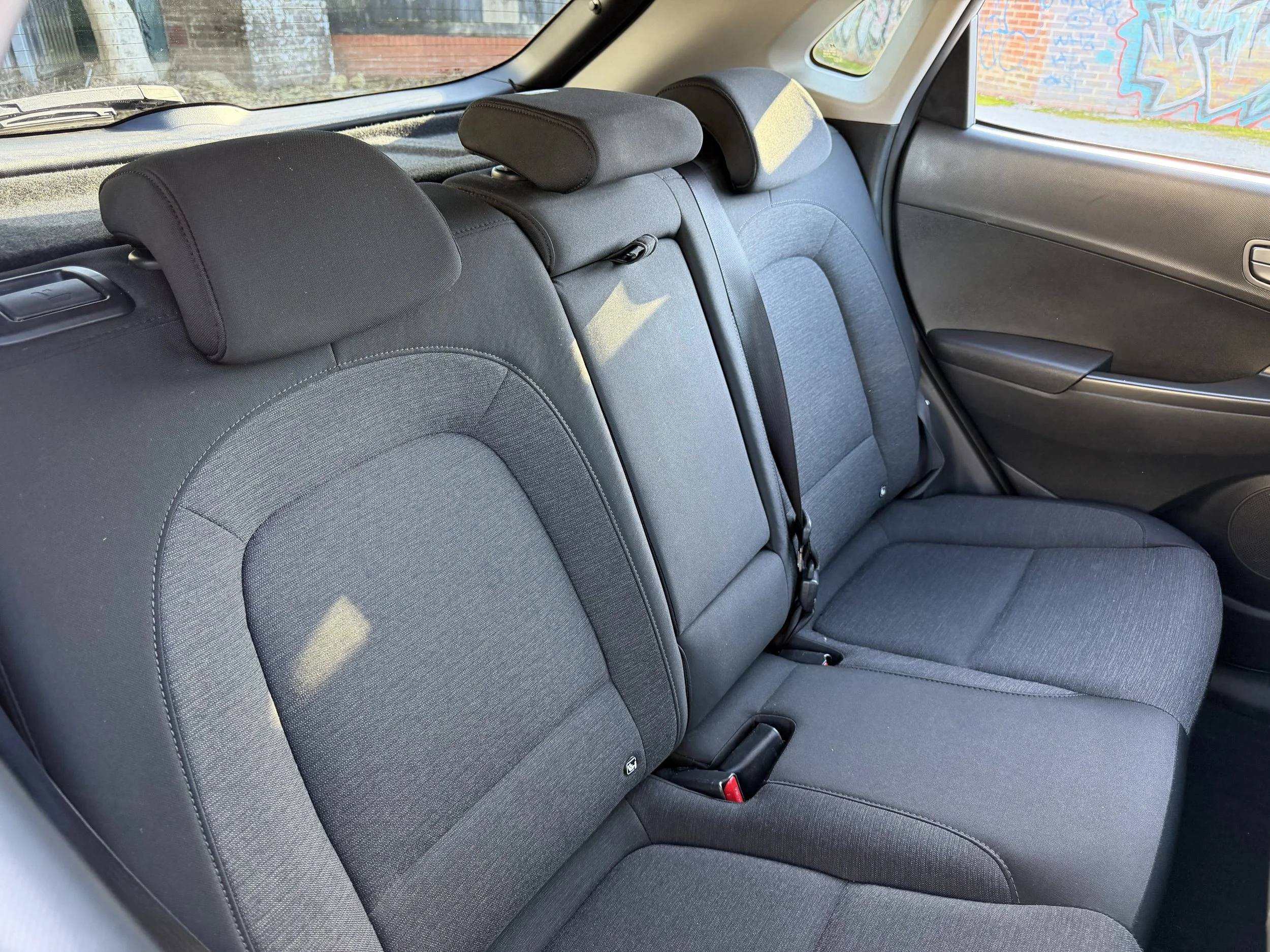
Reasonable for a car of this size. The boot is usable, although it’s not especially generous, and scores 1.5 on the very scientific Ctrlaltrefuel Standard Spaniel Test. The rear legroom is better than you might expect. I can just about sit behind my own lanky driving position, and there’s decent headroom. There’s no factory-fitted frunk, which is a shame. However, aftermarket frunks are available and the ones you can retro- to this car are a good size. It’s also a very straightforward DIY fit. It’s a useful place to keep charging cables and all the other bits and pieces that otherwise end up rattling around in the boot.
Battery health and the big questions
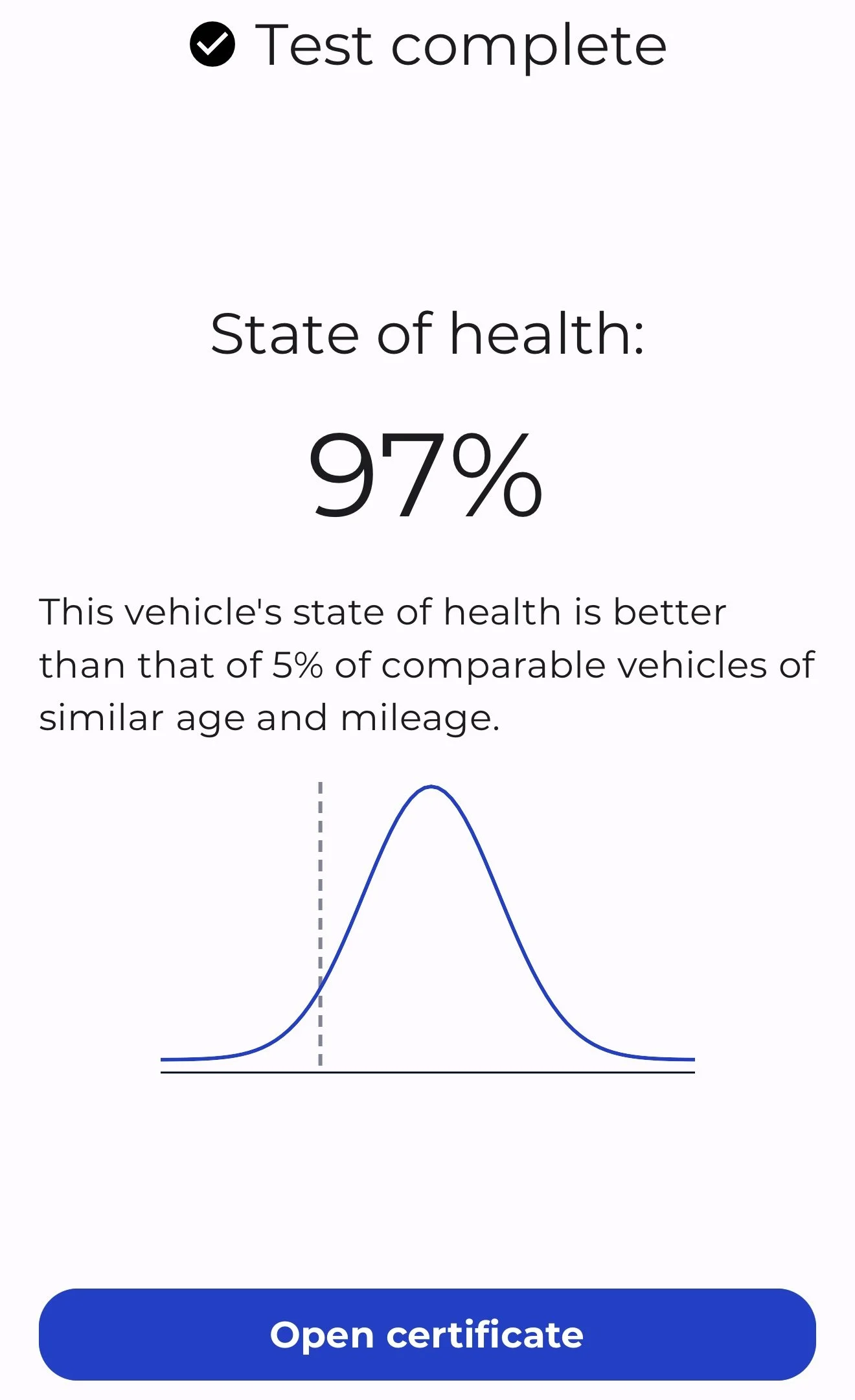
This car reported a battery State of Health of 97% at 68,000 miles from my independent health check. That’s a very healthy result and a good reminder that higher mileage or age doesn’t automatically mean an EV battery is nearing the end of its useful life. Of course, one car’s battery report doesn’t tell you what every other Kona will look like. I’d always want to see a proper battery health report when buying one, rather than relying on the dashboard range estimate or a seller’s reassurance. Check the remaining battery warranty against the car’s registration date, mileage and the UK terms. The typical original warranty was eight years or 100,000 miles, with a 70% capacity threshold, but always check the actual terms applicable to the car.
Also check the VIN with Hyundai for any outstanding recalls, campaigns or remedial work. Some early Kona Electric cars have been subject to battery-related recalls and campaigns, including software updates and, in certain cases, battery pack replacement. Check the VIN and make sure there’s documentary evidence that all applicable work has been completed.
What else should you look out for?
There isn’t a conventional engine to worry about, but that doesn’t mean there’s nothing to maintain. The gearbox oil Is a point of interest. The Kona has a single-speed reduction gearbox. It still contains oil, and it shouldn’t be forgotten simply because there are no conventional gear changes. The maintenance schedule includes reduction gear fluid replacement at 120,000km (around 75,000 miles) under the relevant conditions. Check the service history and the schedule applicable to the car, rather than assuming it has never needed attention.
One detail worth knowing about these early cars is that the reduction gearbox doesn’t have a conventional external magnetic drain plug. There is understood to be an internal magnet within the housing, but it’s not the same as having a magnetic drain plug that can be removed and inspected during an oil change. Some owners choose to fit an aftermarket magnetic plug. I wouldn’t automatically condemn a car because the oil looks dark, but I’d want to know that the gearbox hasn’t simply been forgotten about. More importantly, listen carefully for unusual whirring, rumbling or changes in noise between acceleration and regenerative braking.
Motor and reduction gear noise
This is worth mentioning in its own right. Hyundai issued a technical service bulletin covering abnormal motor rumbling noise on certain early Kona Electric models. The bulletin applies to specific production dates, not every car, and describes an inspection and repair process that can involve the motor, reduction gear or associated mounting components.
On a test drive, listen carefully. A healthy car should be quiet and smooth. If you hear a persistent rumble, whine or rhythmic noise that changes with speed or when you lift off the accelerator, investigate it properly. I’d also ask a Hyundai dealer to check the VIN and production date for any relevant history.
Coolant
The Kona uses a liquid-cooled battery system, so the coolant is important. This isn’t simply a case of topping it up with whatever antifreeze happens to be in the workshop. Check the service history for the correct coolant maintenance and any relevant Hyundai campaigns. Some Kona Electric models have been subject to coolant-related attention, so a VIN check is worthwhile. The coolant in this example looked clean and blue, but appearance alone doesn’t prove that it’s been serviced correctly.
Brakes, suspension and driveshafts
As with any used car, inspect the brakes properly. Regenerative braking means the friction brakes can have an easier life, but that can also mean corrosion or sticking if they haven’t been used enough. Check the suspension for knocks, worn bushes and tired components, and inspect the driveshafts and CV boots. These are ordinary used-car checks, but they’re worth doing rather than assuming an EV is somehow exempt from wear and tear.
I’d also check the air conditioning and heating thoroughly. Make sure the car heats and cools properly, and pay particular attention to the heat pump if fitted.
And, as ever, don’t forget the 12V battery. It’s an easy thing to overlook, and a weak one can cause some very confusing symptoms on an EV.
What’s it like to drive?
Actually, still rather good. The Kona feels lively, with plenty of instant torque, and it still has enough performance to make joining a motorway or overtaking straightforward. The steering is predictable and the car feels reassuringly familiar. Regenerative braking is particularly good. There are different levels available using the steering-wheel paddles, and Level 3 gives you a strong amount of deceleration when you lift off. It doesn’t have a dedicated full one-pedal driving mode in the way some newer EVs do. However, holding the left-hand paddle will bring the car to a complete stop, so you can get pretty close to that style of driving.
Ride comfort is great overall, although I found the suspension a little on the firm side, but that might just be me. Also wind noise is not really bad, but is on the noticeable side-but it feels like a well-sorted car. It drives nicely, responds well and, importantly, this particular example feels tight. No obvious knocks, rattles or unpleasant noises.
Having driven plenty of early evs-I’d say the Kona feels a more accomplished car than many. It’s a better-finished, more polished product, than say an MG or any of the Stellantis offerings, and that difference is noticeable when you get behind the wheel.
What should you pay?
I’d be looking at around £10,995 retail for a good example like this, subject to mileage, condition, specification and history.
Expect a broader band of roughly £9,500–£12,500 depending on those factors, with lower-mileage or higher-spec cars, especially those with a heat pump and heated seats, commanding a premium.
As a used EV dealer, I can also say that sourcing decent electric stock has been surprisingly difficult over the last few months. Auction prices have been silly in places, and there’s been very little choice of good stock. That doesn’t mean every car is worth the money being asked for it, but it does help explain why tidy examples can command a premium. Expect to pay up for a good 64kWh Kona or e-Niro though as they are hard to come by and I find that they sell very quickly
At this sort of money, the Kona is a very interesting proposition. You’re getting a car with a battery that still offers genuinely useful range, performance that’s more than adequate and running costs that can be very low if you can charge at home.
The verdict
The 2020 Kona Electric 64kWh has aged remarkably well. It isn’t the most spacious small SUV- it’s more a good sized hatchback -it doesn’t have the latest charging technology, and there are a few little ergonomic quirks that remind you it’s an older design. The boot could be bigger, motorway wind noise is noticeable and I really wish this particular car had heated seats and the Sat Nav/Ui is rather dated-but those are relatively minor complaints when you consider what it gets right. The range is the big one. A car that can realistically cover around 250 miles in favourable conditions, while returning excellent efficiency, is still a very useful electric car. The battery health on this 68,000-mile example is encouraging, too.
I’d want to check the gearbox oil history, listen carefully for motor or reduction gear noise, confirm coolant and campaign history (including any early battery campaigns), and get a proper battery health report. Do those checks and a good Kona could make a very sensible used buy.
It’s not the newest or flashiest EV on the market, but it does the important things very well. And at around £10,500, that’s quite a lot of electric car for the money.
