
Welcome to the revived GTi nameplate on the electric 208 hatchback!
At the European first-drive event around Loch Lomond, I got my hands on the e-208 GTi for a proper walkaround and a short drive on Scottish roads. Here’s what stood out.
Specs
The e-208 GTi sits roughly 25 mm lower than the standard car and has a wider track front and rear. Dimensions come in at about 4.1 m long, 1.77 m wide and 1.4 m high, with a 2.55 m wheelbase. Power comes from a 54 kWh battery (51 kWh usable). Peugeot claims up to 243 miles of range (slightly less with the performance Michelin tyres). A mechanical slip differential is integrated into the reduction gearbox to help manage understeer.
Battery, Range and Charging
The charge flap is at the rear. AC peaks at around 11 kW - a 7 kW home charger takes roughly 4 hours 45 minutes for 10–80 %. DC rapid charging hits 100 kW, with 20–80 % in just under 30 minutes. Seven colours are available, including the new Miramar Blue; the test car was white.
Exterior
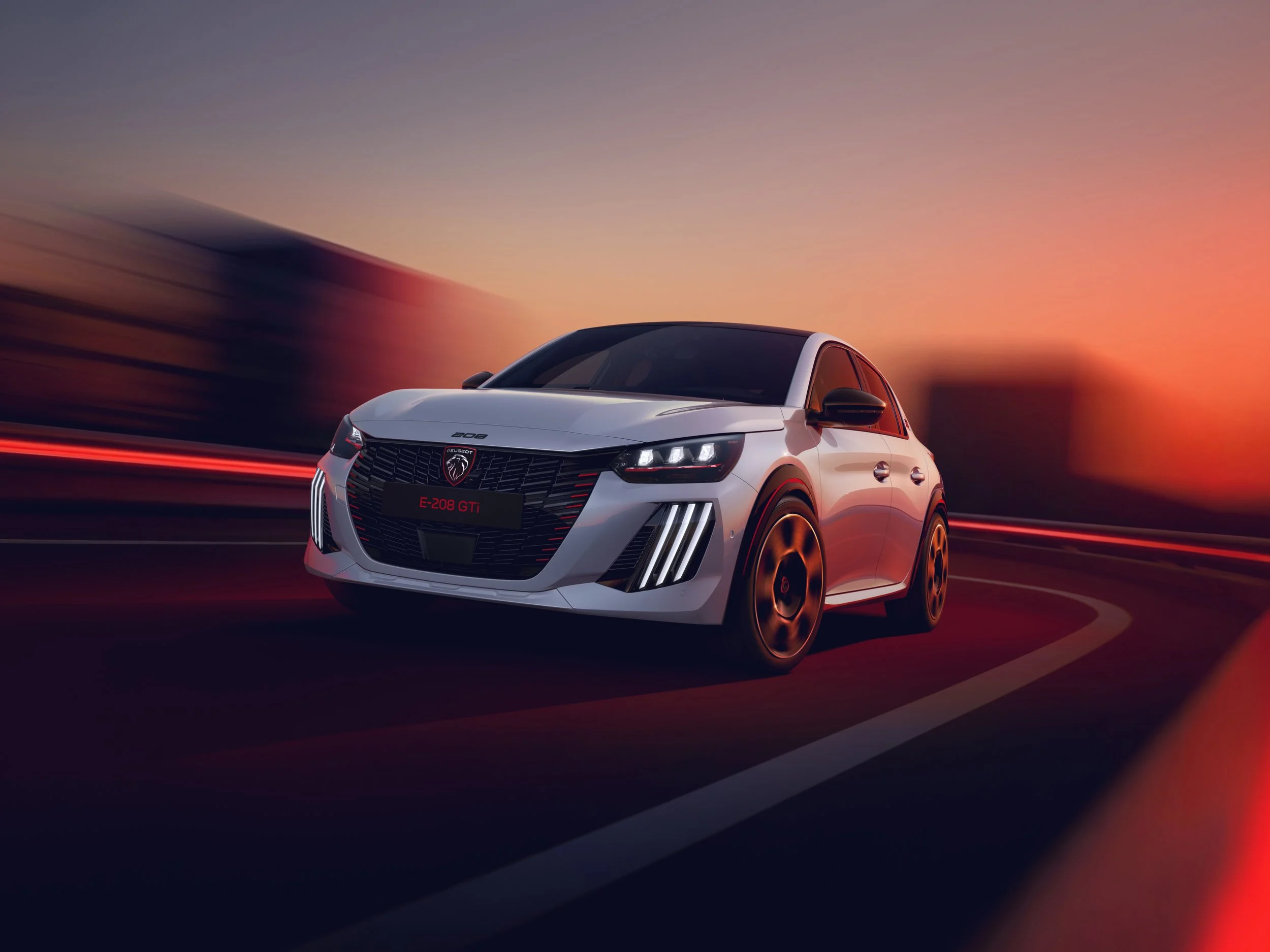
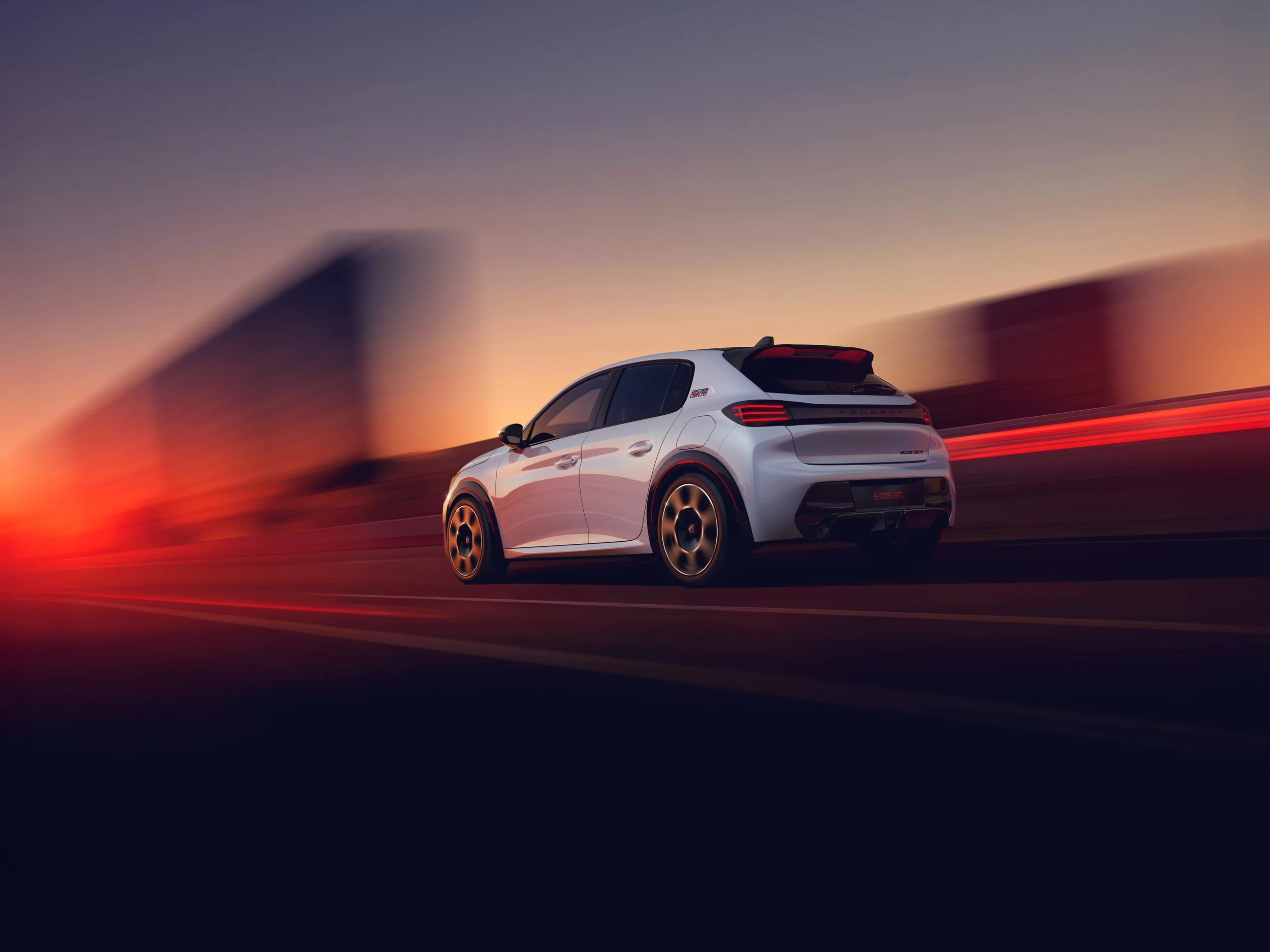
You can tell it’s the GTi from the front: red accents in the grille, claw-style LED headlights, and the big shield with red surround. This press car also had the 360 camera. Beyond the details it doesn’t look radically different from the standard e-208, but the lower stance and wider track give it more presence. At the rear you get the tri-claw taillights, Peugeot lettering and red GTi badge, plus a small diffuser.
Space and Practicality
Boot space is just under 310 litres, rising to just over 1,100 litres with the 60/40 rear seats folded. There’s room for the (fairly hefty) charging cables, but no clever under-floor storage. There is no frunk. Rear leg and foot room is reasonable for a compact car- it shares the interior package of the standard e-208. At 5’11” headroom is a little tight under the panoramic roof. You get USB-A and USB-C ports, map pockets, privacy glass, ISOFIX on the outer seats, and red seatbelts.
Interior
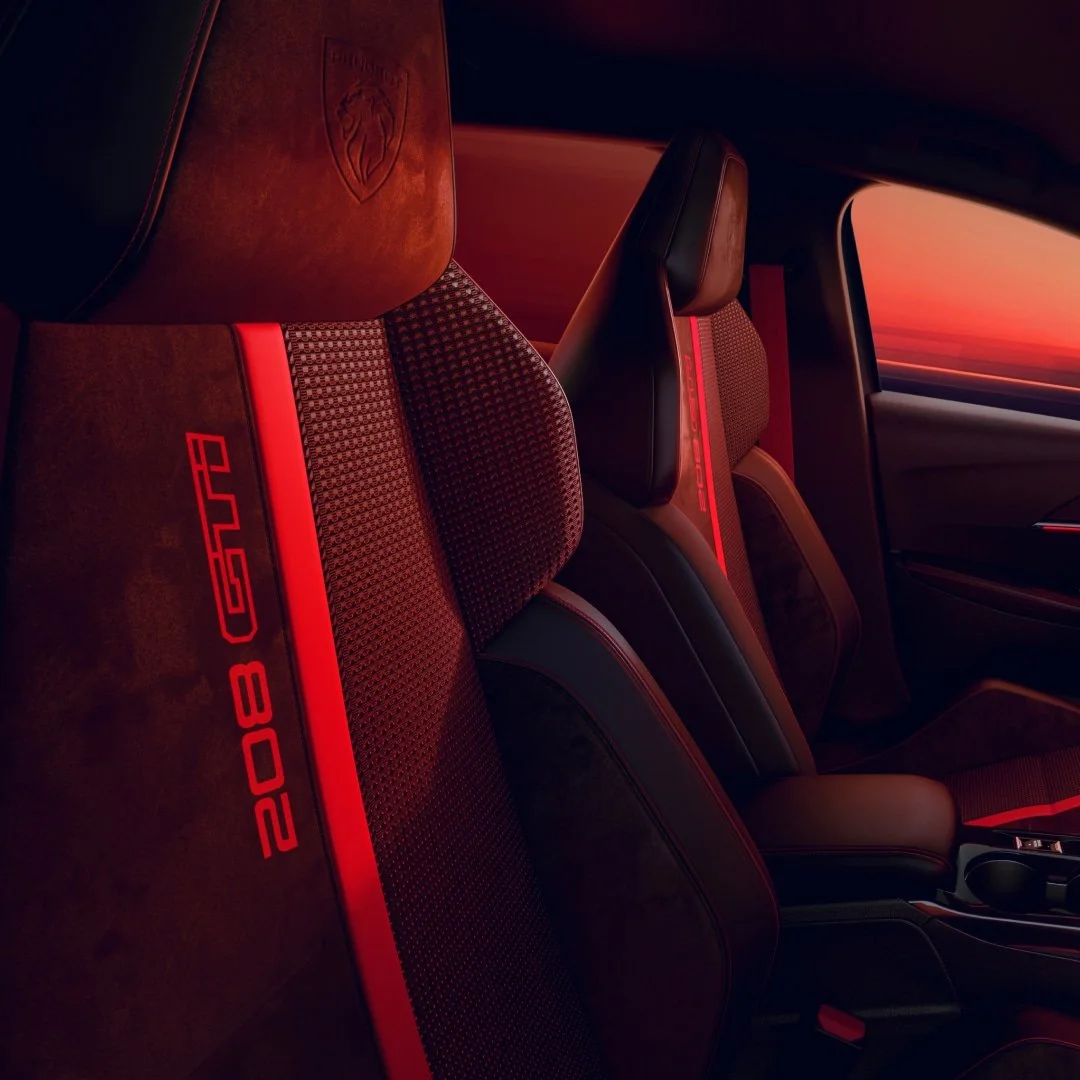
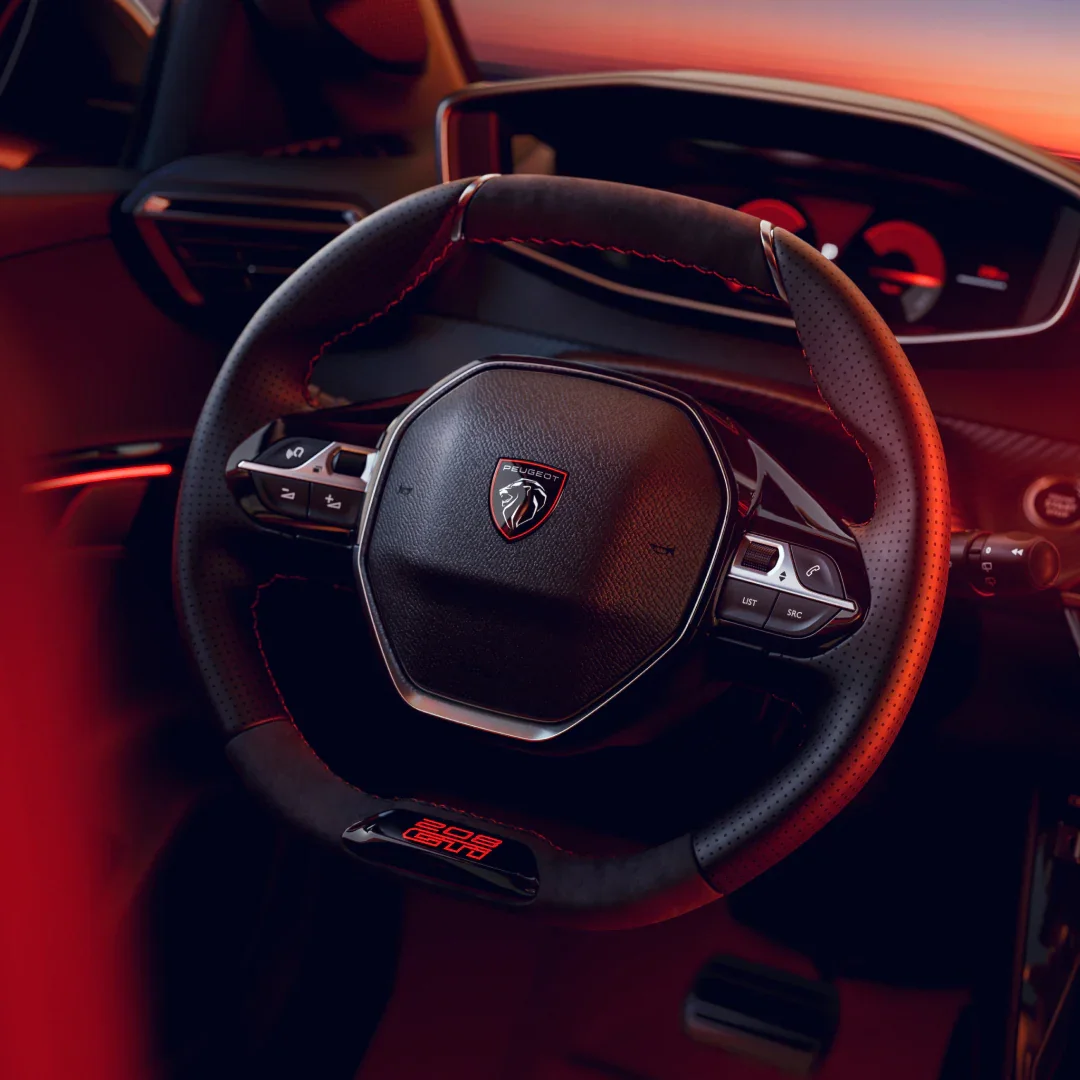
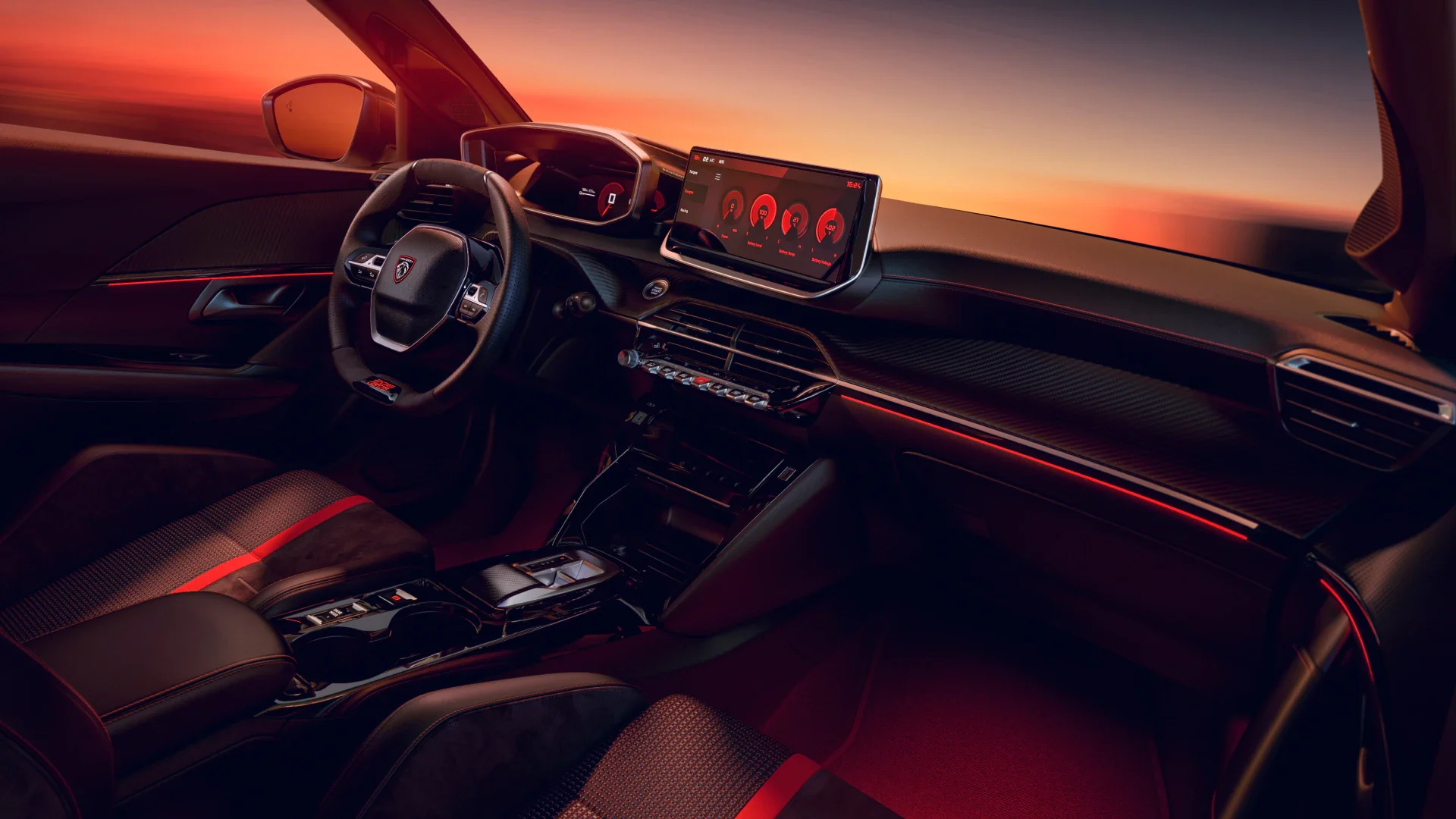
Red flashes run through the carpets, seatbelts, door cards and steering wheel. The big bolstered front seats have an asymmetrical print that deliberately nods back to the original 205 GTi, with “Peugeot” debossed into the headrest. At 5’11” it takes a moment to get comfortable-the steering wheel has limited reach and rake adjustment and the cabin feels tight. There’s a 10-inch display with Apple CarPlay and Android Auto, physical toggles below it (including a nice rocker for climate and a sliding wireless charger), a 3D instrument cluster, sporty pedals and a carbon-fibre-look dash. The panoramic roof has a manual shade you can reach from the driver’s seat.
On the road
The e-208 GTi feels a little firmer than the standard 208, as you’d expect from the sportier version. On the twisty Scottish back roads it comes across as nimble and easy to place, and the compact size is welcome once you adjust to it. Visibility is acceptable, though the thick A-pillars and tight cabin make it feel like the car is sitting on top of you-which should help it feel chuckable when the roads open up.
A few classic Peugeot quirks showed up quickly. The speedo can disappear behind the steering column; even after adjusting the seat and wheel I could only see the tops of the numbers and had to peek over. The cruise control lives on a third stalk that isn’t the most intuitive -you can’t see it easily and it’s all by feel, with multiple buttons and toggles that change things on the screen. Drive-mode changes require a double tap and an “Are you sure?” confirmation, which feels unnecessary when you just want to switch modes quickly. In B mode the regen is strong enough that it fights you when you try to deploy power, and it only gently slows the car rather than bringing it to a full stop. After trying it I switched regen off and stayed in normal or sport.
On the short route available (including some speed bumps and average-speed-camera stretches) it felt competent and fun in a compact way, but the limited time and road types meant I couldn’t fully explore its hot-hatch side. It’s the sort of car you need more miles in to settle into the controls.
Warranty
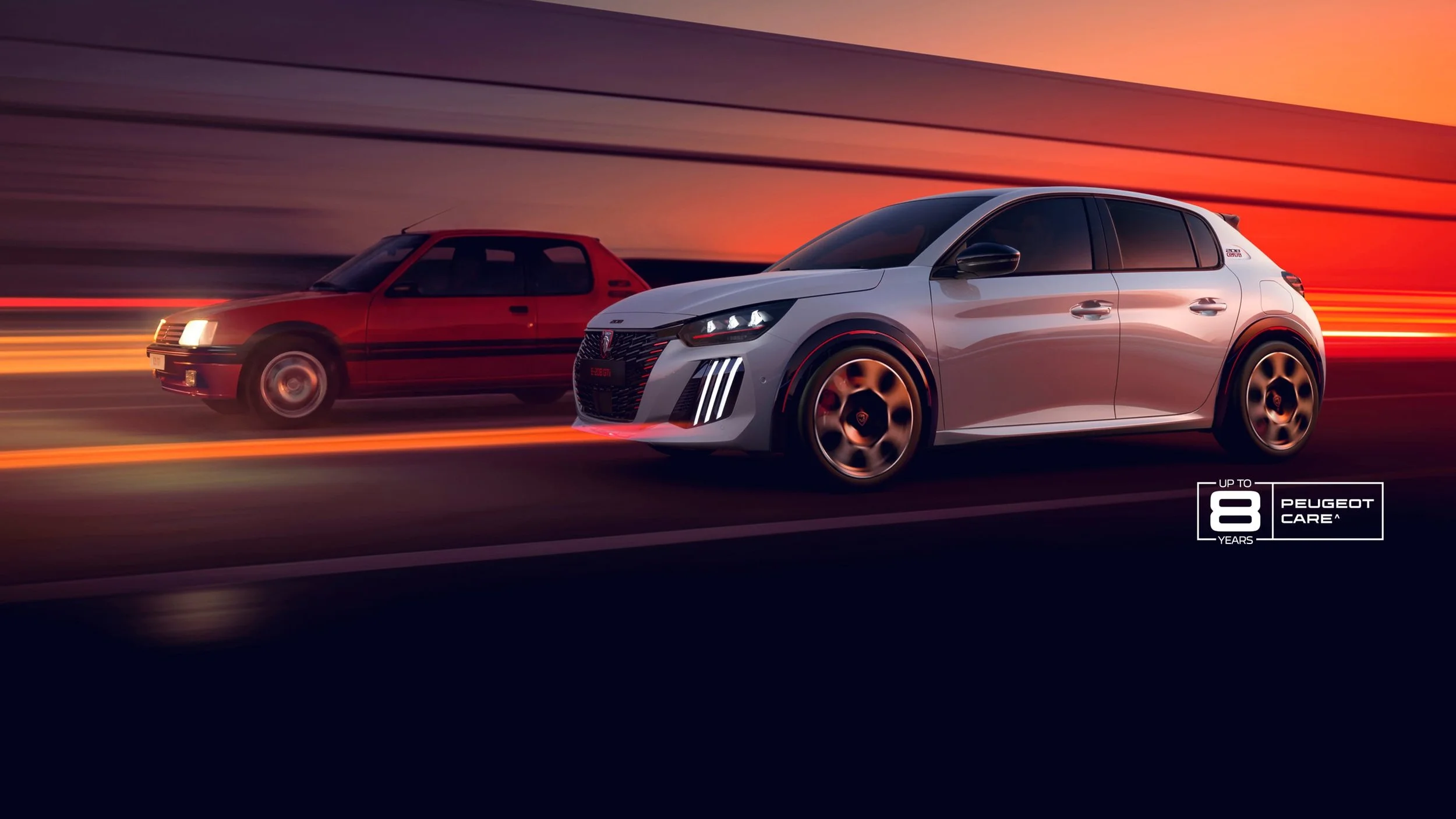
You get an 8-year battery warranty. Opt for a Peugeot Care service plan and the car itself is covered for 8 years as well, which should give some peace of mind.
Final thoughts
The e-208 GTi brings the famous badge into the electric era with a lower stance, wider track, mechanical diff and clear GTi styling cues. It keeps the compact dimensions and cabin layout of the regular e-208 while adding the performance-oriented details. The quirks-the hidden speedo, fiddly cruise control and confirmation prompts-are pure Peugeot, and fans will probably just shrug and get on with it. Whether the electric powertrain still delivers the spark of the old GTi is the real question, and on the evidence of this short drive it feels like a capable, characterful small electric hot hatch that just needs more time on the right roads to show its best.
If you’re after a practical supermini with a bit of performance and flare, the e-208 GTi could be worth a look. What do you think-would you have one, or would you prefer one of its rivals?
Watch the full video review here: Peugeot E 208 GTi Review