
Tesla’s extraordinary electric pickup was bold, brilliant, ridiculous and, at times, utterly bonkers. Its impending demise is more than the end of an unusual vehicle. It raises some much bigger questions about the future of a company that once seemed determined to reinvent the car, and actually did.
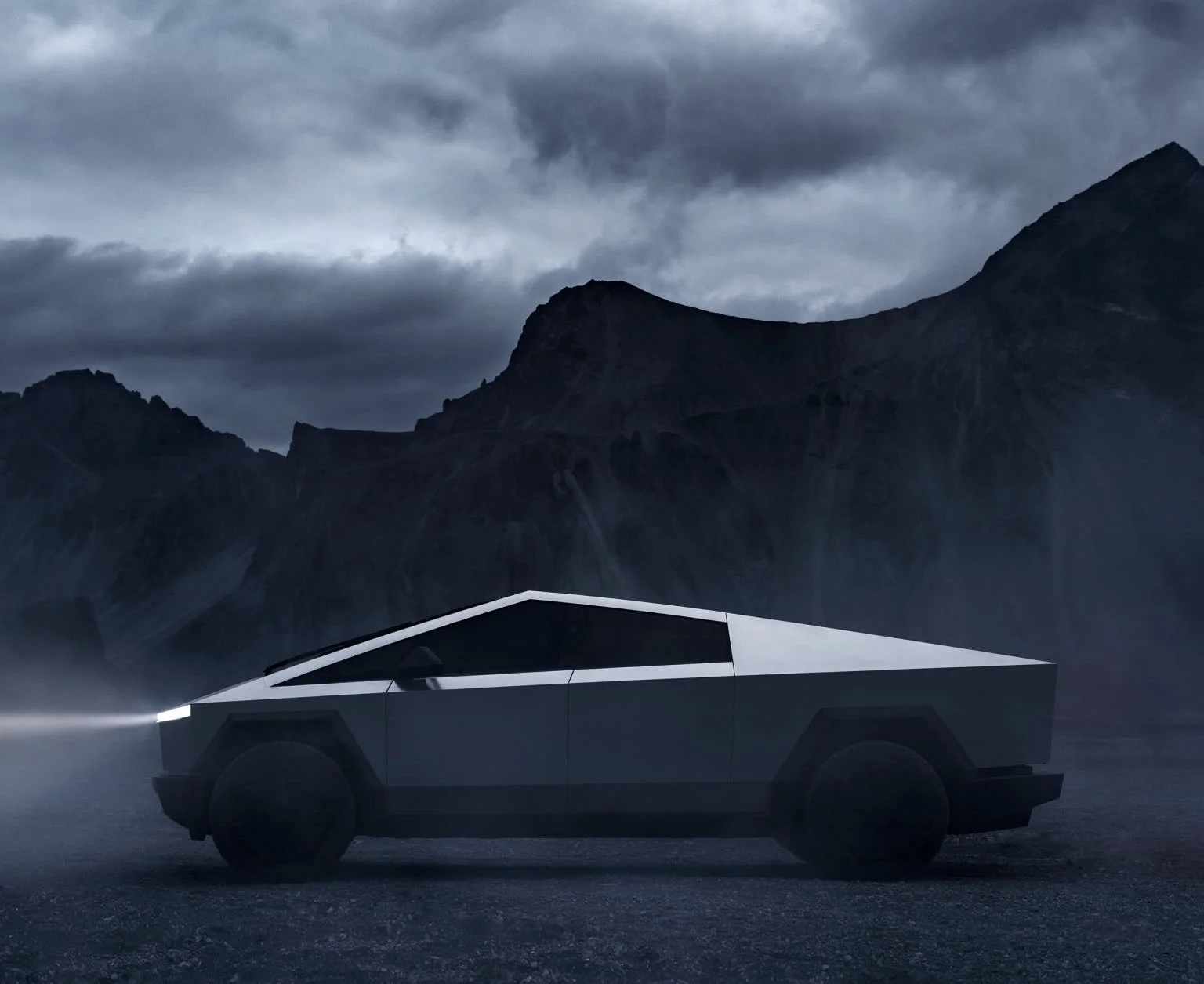
Tesla Inc. Cybertruck
There are plenty of people who will be celebrating the news that Tesla is winding down Cybertruck production-there are probably just as many who will be wondering what on earth Tesla was thinking in the first place. And, to be fair, both reactions are understandable. The Cybertruck was a strange beast. It was arguably ugly, enormous, expensive, impractical for many people and about as subtle as a brick through a conservatory. It was also one of the most interesting and technically ambitious vehicles to emerge from the automotive industry in years.
I rather liked it. Not necessarily because I wanted one- or even because I thought it was a particularly sensible vehicle-but because it represented something brave and completely different.
Elon Musk has announced that Tesla will wind down Cybertruck production at its Gigafactory Texas facility around the middle of 2027, and I quote, “freeing up manufacturing capacity for increased Cybercab production.” It’s a remarkable turn of events for a vehicle unveiled with enormous fanfare in 2019 and eventually delivered to customers in late 2023.
For me, this isn’t simply a story about an unusual electric pickup that hasn’t sold in the numbers Tesla wanted-or rather that Elon once predicted. It’s about where Tesla is going, what it is wanting to do, and whether one of the most influential automotive companies of the modern era is turning its back on the very thing that made it special. Of course, nobody else would have built this thing (or have been capable of building it) in the first place.
Before we cast opinion, though, let’s go back to November 2019.
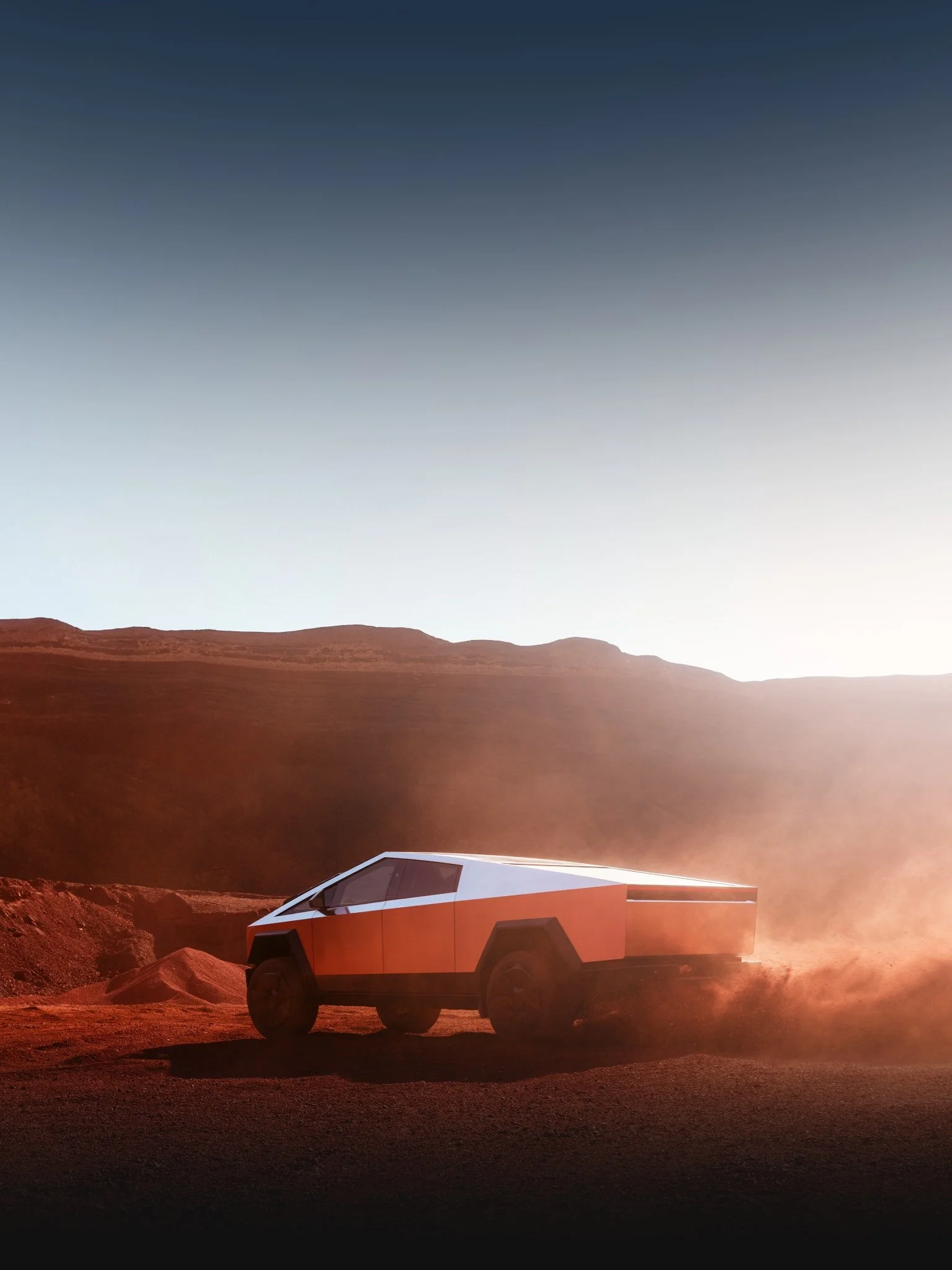
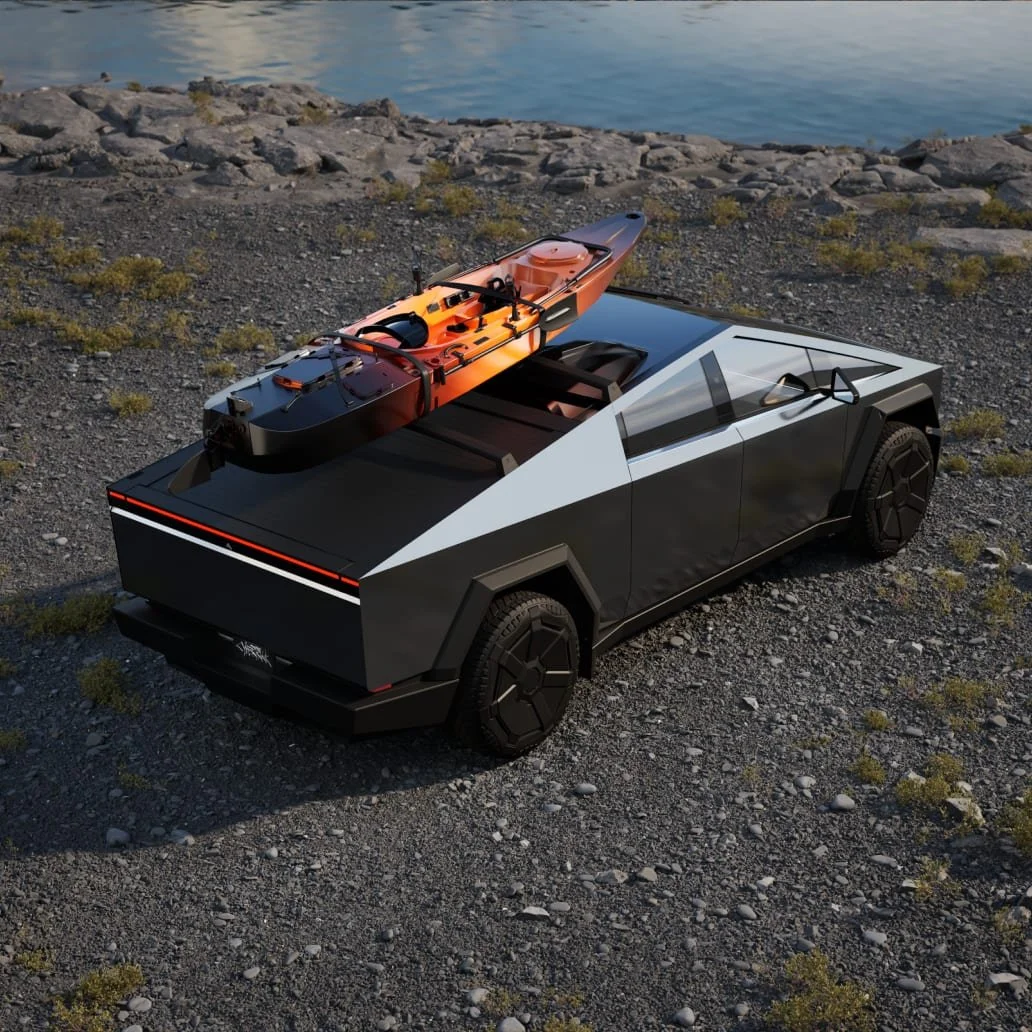
Tesla unveiled something that looked as though it had escaped from a science-fiction film. It didn’t look like a Ford F-150, a Rivian, a conventional pickup or anything else for that matter-it looked like a drawing of a futuristic vehicle, constructed entirely from triangles. And let us not forget, Elon was prompted by one of his younger children (I forget who) to answer a very astute question: “Why doesn’t the future LOOK like the future?” And so, the world got to see the design of the Cybertruck. The reaction was immediate. Some people loved it-others thought it was hideous. Plenty simply couldn’t believe Tesla was actually going to build it. The Cybertruck was an unapologetic rejection of conventional automotive design. Its angular stainless-steel exoskeleton wasn’t just a styling exercise- it was an attempt to rethink how a vehicle could be constructed. Or at least, that’s what we were told.
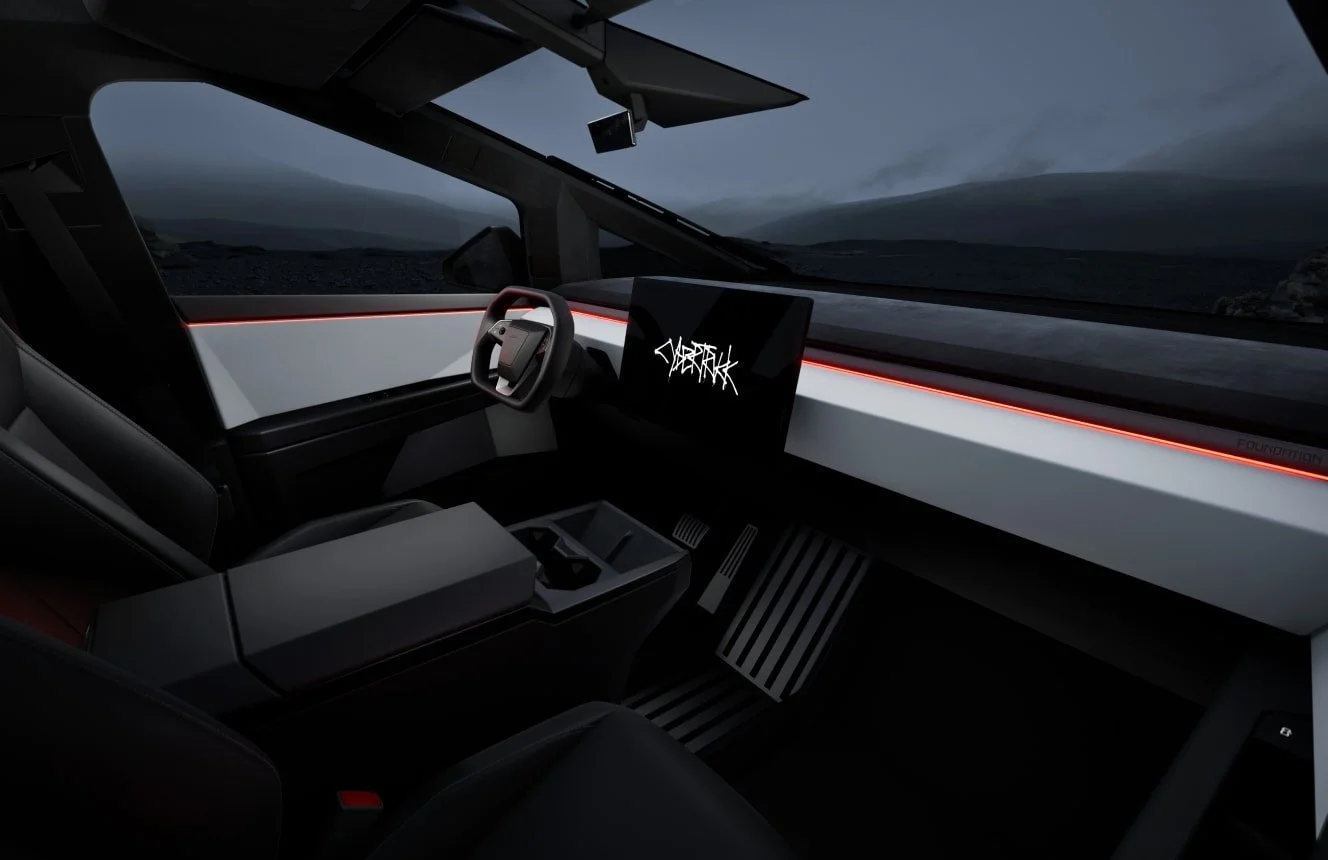
And underneath that extraordinary-looking exterior was some genuinely interesting engineering. There was steer-by-wire, rear-wheel steering, a 48-volt electrical architecture, an 800-volt battery system, an unusual structural approach and a whole host of engineering decisions that challenged established thinking. The 48-volt system was particularly interesting. Moving away from the traditional 12-volt architecture meant significantly less current, smaller wiring and the potential for simpler, more efficient electrical systems. Tesla also developed its own high-speed vehicle communication architecture, reducing the amount of wiring running through the vehicle.
Steer-by-wire removed the conventional mechanical connection between the steering wheel and the front wheels, with electronic systems controlling the steering. Add rear-wheel steering and you have a very large pickup with a surprisingly tight turning circle. (Interestingly, Tesla said the 48V system would be free of copyright for other manufacturers to copy.)
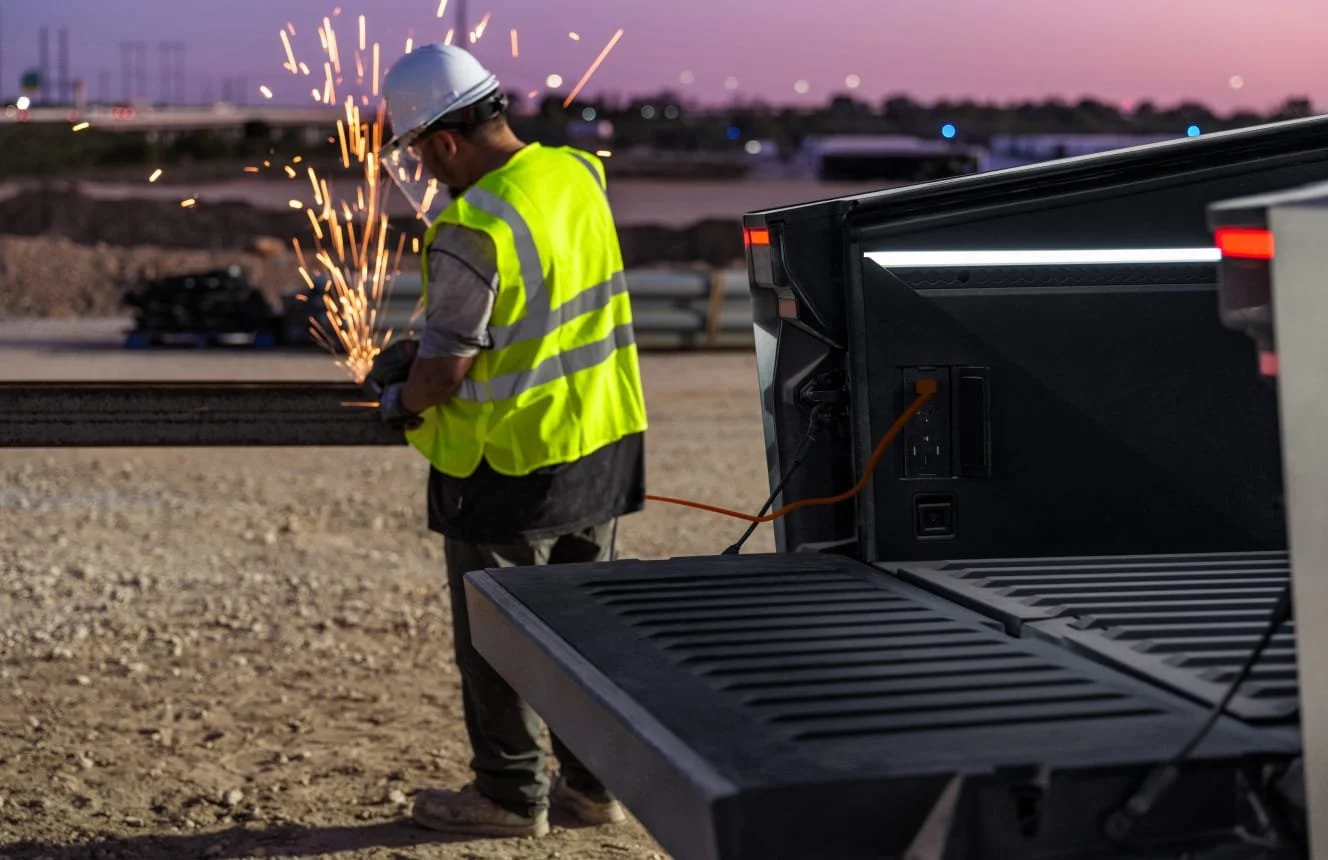
Then there’s the stainless-steel exoskeleton, huge castings, adaptive air suspension and bidirectional charging-allowing the truck to supply power to tools, equipment and even a home. Tesla wasn’t just designing a different-looking pickup. It was experimenting with the underlying architecture of the automobile. And that’s what I found exciting. The Cybertruck was great and terrible, brilliant and stupid, bold and ugly. It was an extraordinary piece of engineering and at times, a demonstration of what happens when ambition gets rather too far ahead of common sense-but I’d rather have a car company occasionally attempting something outrageous than one that spends its time producing endless variations of the same old thing.
The unveiling.
Of course, the Cybertruck’s reveal was memorable for reasons beyond its unusual appearance. Elon made some extraordinary claims about what this thing would be capable of. The stainless-steel bodywork was supposed to be bullet-resistant, The windows were presented as virtually indestructible armour glass.
Elon subsequently suggested the Cybertruck would be sufficiently waterproof to “serve briefly as a boat”, even suggesting it could cross the water between SpaceX’s Starbase and South Padre Island in Texas. It was supposed to have extraordinary towing capability, sports-car acceleration and the ability to outperform conventional pickups in just about every conceivable way.
And then there was the price. The original announcement promised a starting figure of $39,900, with a top-specification version offering more than 500 miles of range. The production reality was rather different, with prices rising substantially and the cheaper versions taking a very long time to materialise. There was also a promised “range extender add-on” to make that 500-mile claim a reality. This never materialised. Elon was talking about 250,000 Cybertrucks a year. In October 2023, he even warned investors that the company had effectively dug its own grave with the difficulty of manufacturing the vehicle.
It was classic Musk. Enormous ambition, extraordinary confidence, a willingness to make promises that sometimes seemed to defy physics, and an apparent attitude of simply doing what he wanted.
Was it dumb ambition? Or was it precisely that attitude that made the Cybertruck possible? Probably a bit of both, and I wouldn’t want to lose that willingness to take risks-even if the finished product occasionally, falls short of the original promises. Brilliant engineering, but not necessarily a brilliant business model.
For all the controversy, it’s worth separating the Cybertruck’s engineering achievements from its commercial performance. The latter has been disappointing. There’s no point pretending otherwise. Tesla sold an estimated 38,965 Cybertrucks in the US in 2024. That fell to around 20,237 in 2025, a decline of almost 50%. Sales fell further in the first nine months of 2026. Those figures are a long way from the 250,000 annual sales Musk originally envisaged.
There were several reasons. The price was much higher than originally promised. The design was always going to be polarising. Its size and shape made it difficult to sell in many international markets, and it faced repeated recalls and quality concerns. It was also a very American interpretation of what a pickup truck should be.
We never got it in Europe, and it was never going to be an easy vehicle to introduce here. Its dimensions, sharp-edged design and unconventional construction presented significant challenges for international markets and regulations. Its promised introduction in Australia and New Zealand (with reservation holders being notified that their orders from years ago would not proceed) is particularly disappointing and confusing. Australia, with its strong ute culture, would have been an interesting market to test. Perhaps it would have succeeded, perhaps not-but we’ll never know. And I can’t help wondering whether Tesla has somewhat deliberately hampered or nixed the Cybertruck.
What happens next?
This is where the Cybertruck story becomes rather more interesting. Because its early retirement, isn’t happening in isolation. Earlier this year, Tesla confirmed that the Model S and Model X would be discontinued, with production at Fremont substantially completed by May 2026. And long before that, our right-hand-drive markets were dropped. The manufacturing space is being repurposed for its Optimus humanoid robot programme.
The Model S was the car that changed everything for Tesla. When it arrived in 2012, it demonstrated that an electric car could be desirable, quick, luxurious and capable of challenging established premium manufacturers. It helped make electric cars aspirational rather than simply a sensible environmental choice.
The Model X followed, with its rather extraordinary Falcon Wing doors and another demonstration that Tesla wasn’t afraid to do things differently.
Neither car received the completely new generation that many of us hoped for. The Model S, in particular, spent years without a fundamental reinvention. It was perhaps an early indication of what was coming and the direction Tesla would take- but the Cybertruck was a glowing display of what was possible.
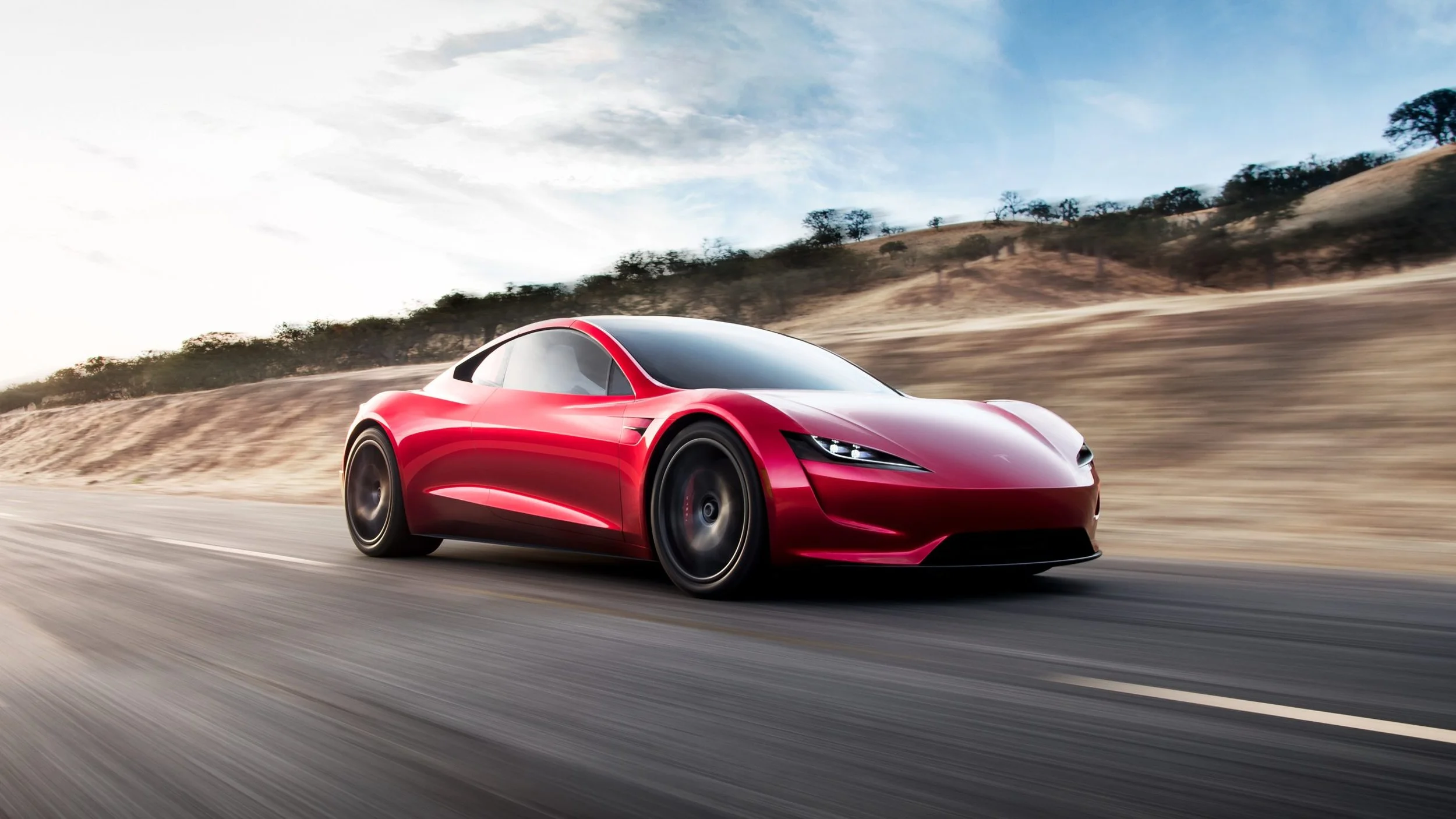
Tesla Inc. 2017 Roadster Concept
The Roadster.
The original second-generation Roadster was announced back in 2017. It was to be a spectacular electric sports car, with incredible acceleration, substantial range and the sort of performance that would make even established supercar manufacturers sit up and take notice. And it was a glorious thing.
Deposits were taken, but it never arrived as the straightforward, buyable car many of us were waiting for. Tesla however, finally unveiled a completely redesigned version in October 2026, featuring SpaceX-inspired cold-gas thrusters and demonstrations of the car lifting and rotating in the air. The engineering and sheer ambition is unarguably impressive. Production is now being targeted for 2028.
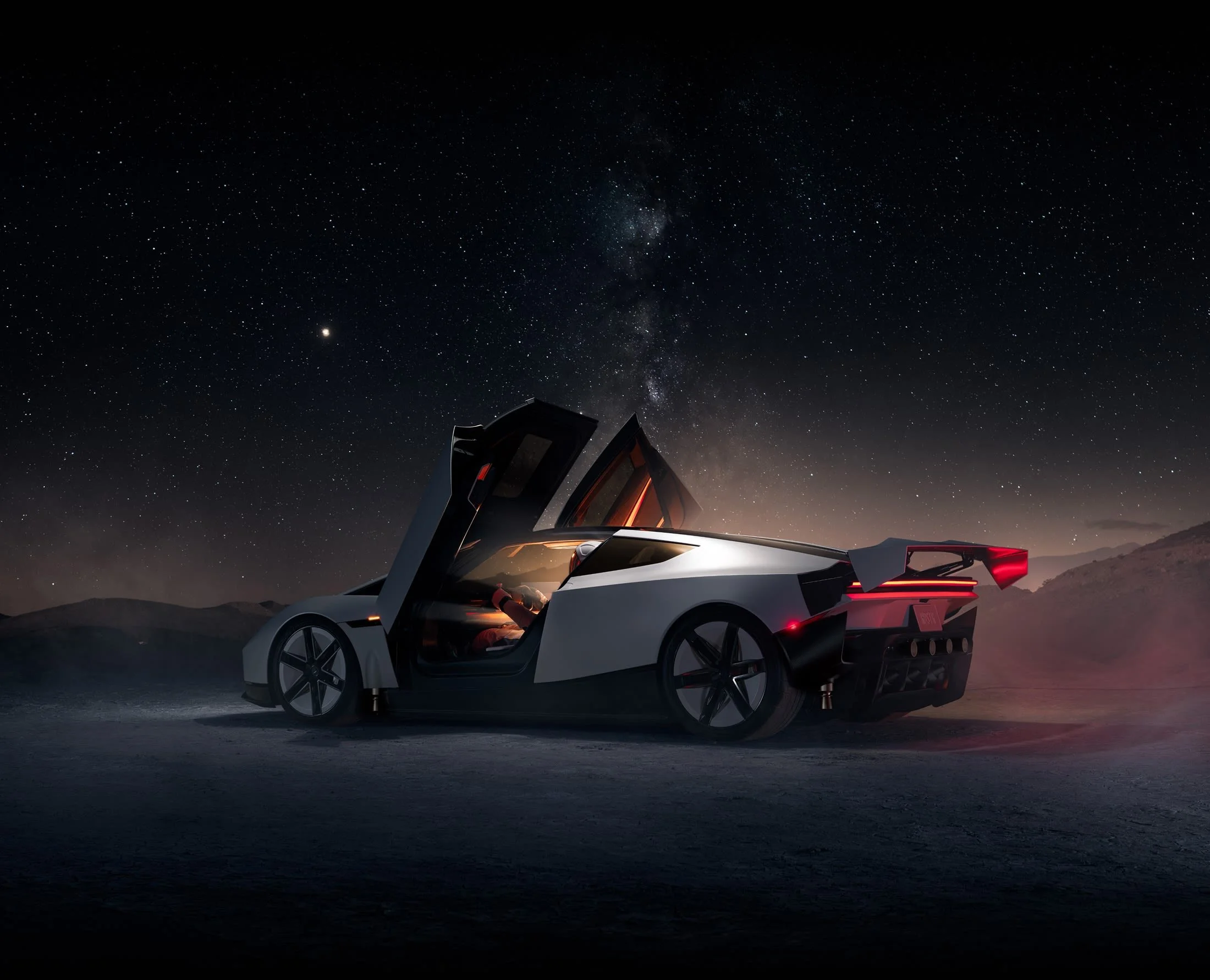
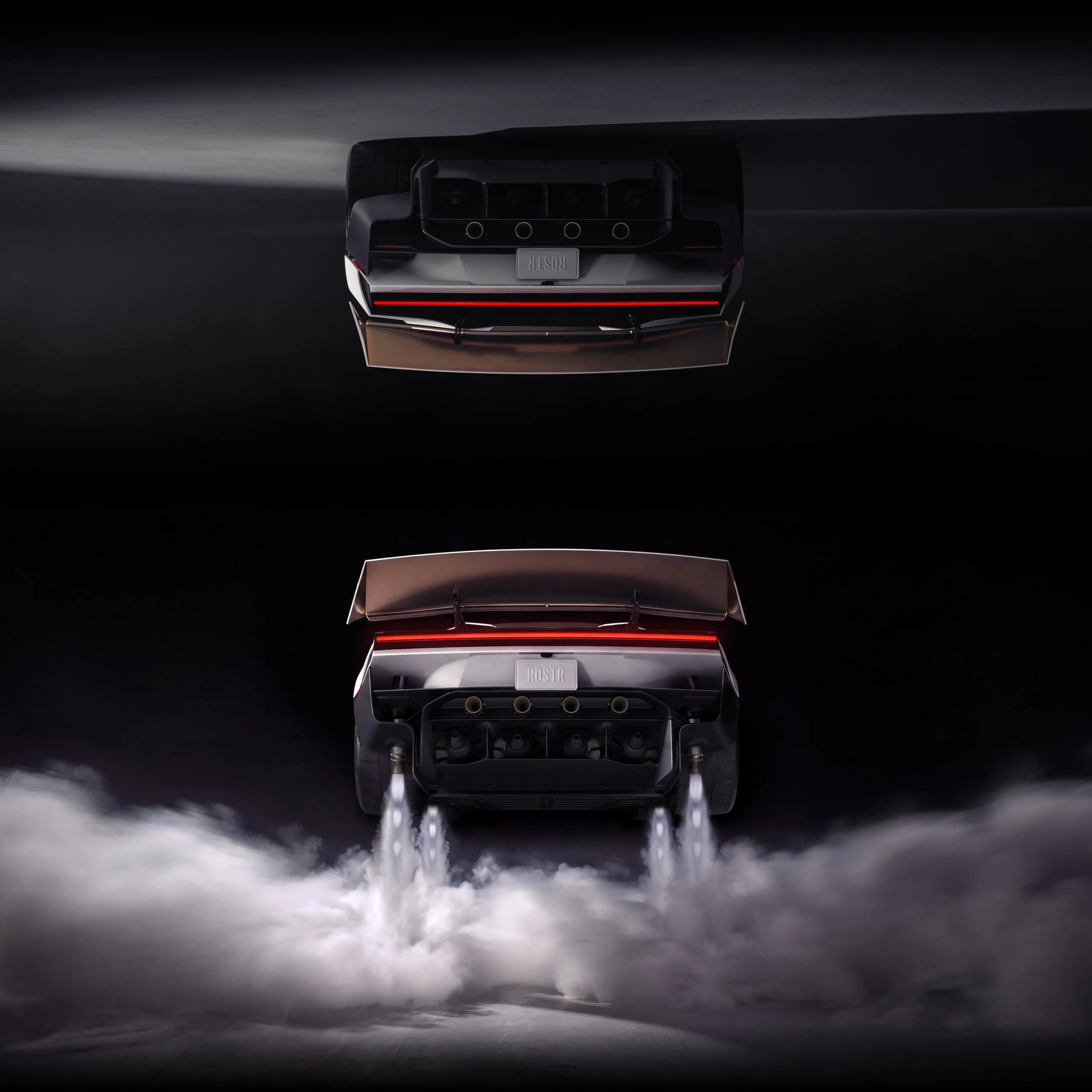
I love ambitious engineering, but I felt that the ‘show’ overshadowed the apparent fact that there will be a very cool ‘base’ version without all the smoke and perhaps, the mirrors. Although it’ll still be super-pricey and produced in low volumes.
Perhaps Elon thinks the job is done?
There’s another way of looking at all this, and it’s worth giving it some consideration. Tesla’s original mission was to accelerate the world’s transition to sustainable energy. When it started, the established automotive industry was deeply reluctant to embrace electric cars. They were widely regarded as expensive, compromised and something of a niche product. Many manufacturers were perfectly happy to concentrate on improving their combustion engines.
Tesla changed that. The Model S proved that an electric car could be desirable and exciting. The Model 3 brought EVs to a much wider audience. The Supercharger network helped make long-distance electric motoring practical. Easy, even. And, perhaps most importantly, Tesla forced the rest of the industry to wake up.
Every major manufacturer now has electric vehicles in its range, or is investing heavily in developing them. Some have moved faster than others, and the transition is far from complete, but the automotive landscape has changed enormously. You could argue that Tesla has achieved something extraordinary. It has helped make the electric car mainstream and forced an initially reluctant industry to respond. The Cybertruck is /was a true ‘Concorde moment’
Perhaps, in Elon’s mind, the mission is accomplished. Perhaps he believes the next big challenge isn’t making better electric cars, but changing the way we use transport altogether. I say ‘perhaps’ when I’m actually fairly certain that ‘perhaps’ is redundant.
Anyway, Robotaxis, autonomous driving and humanoid robots represent Tesla’s future, and are potentially enormous markets. If he genuinely believes that is where the biggest opportunity lies, it’s understandable that he wants to concentrate his attention and, perhaps more importantly, the resources there-but does that mean Tesla has to stop making interesting cars? Or even making any cars you can buy and drive?
It has spent years making electric cars that people actually want to own and drive. It has helped change the automotive industry and encouraged millions of people to consider electric motoring.
Electric cars have become ‘cars’. Just cars, and the ‘it’s electric’ bit is redundant. And Tesla now seems to be telling us that the future isn’t really about owning and driving cars at all. It’s about summoning them and having them drive you.
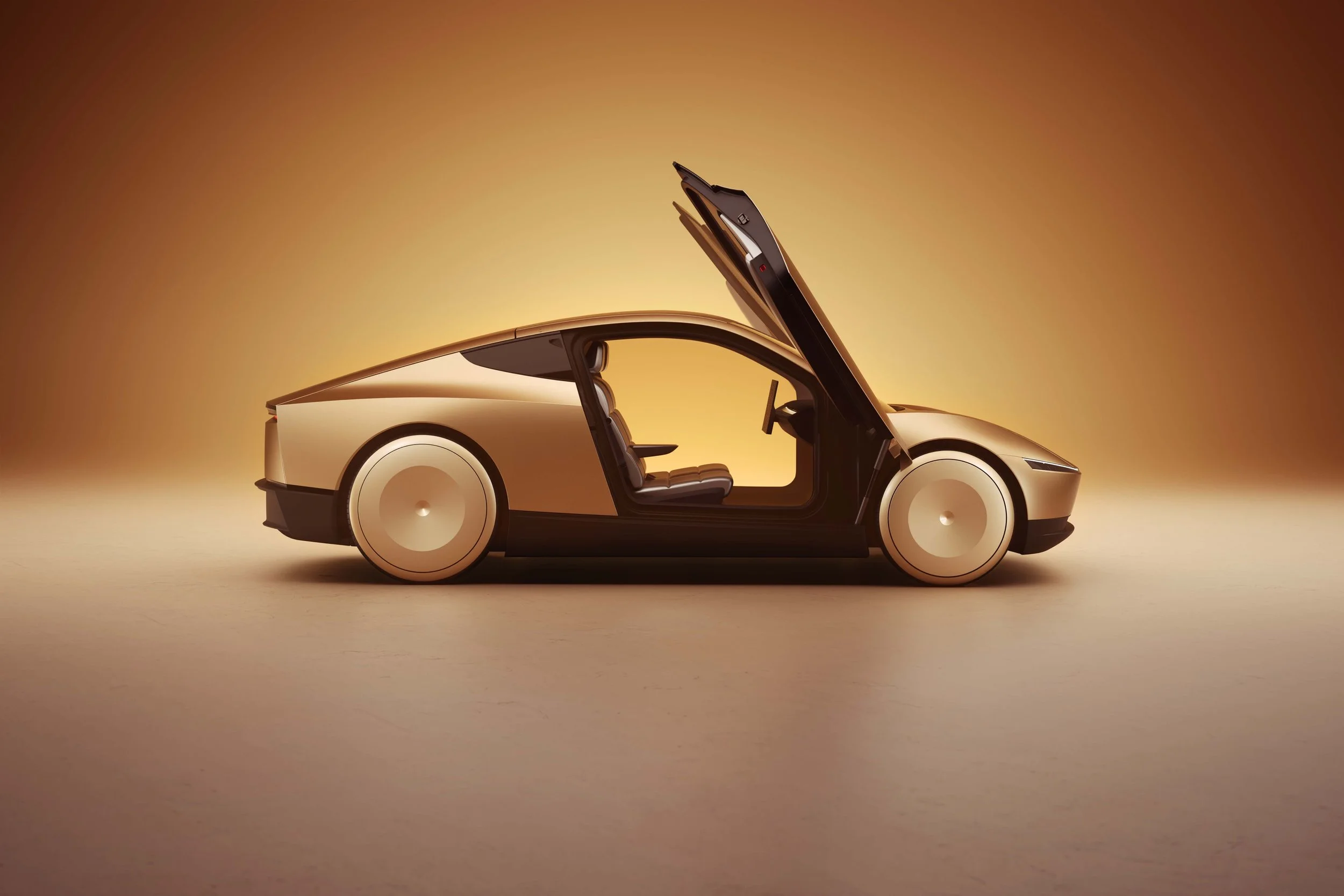
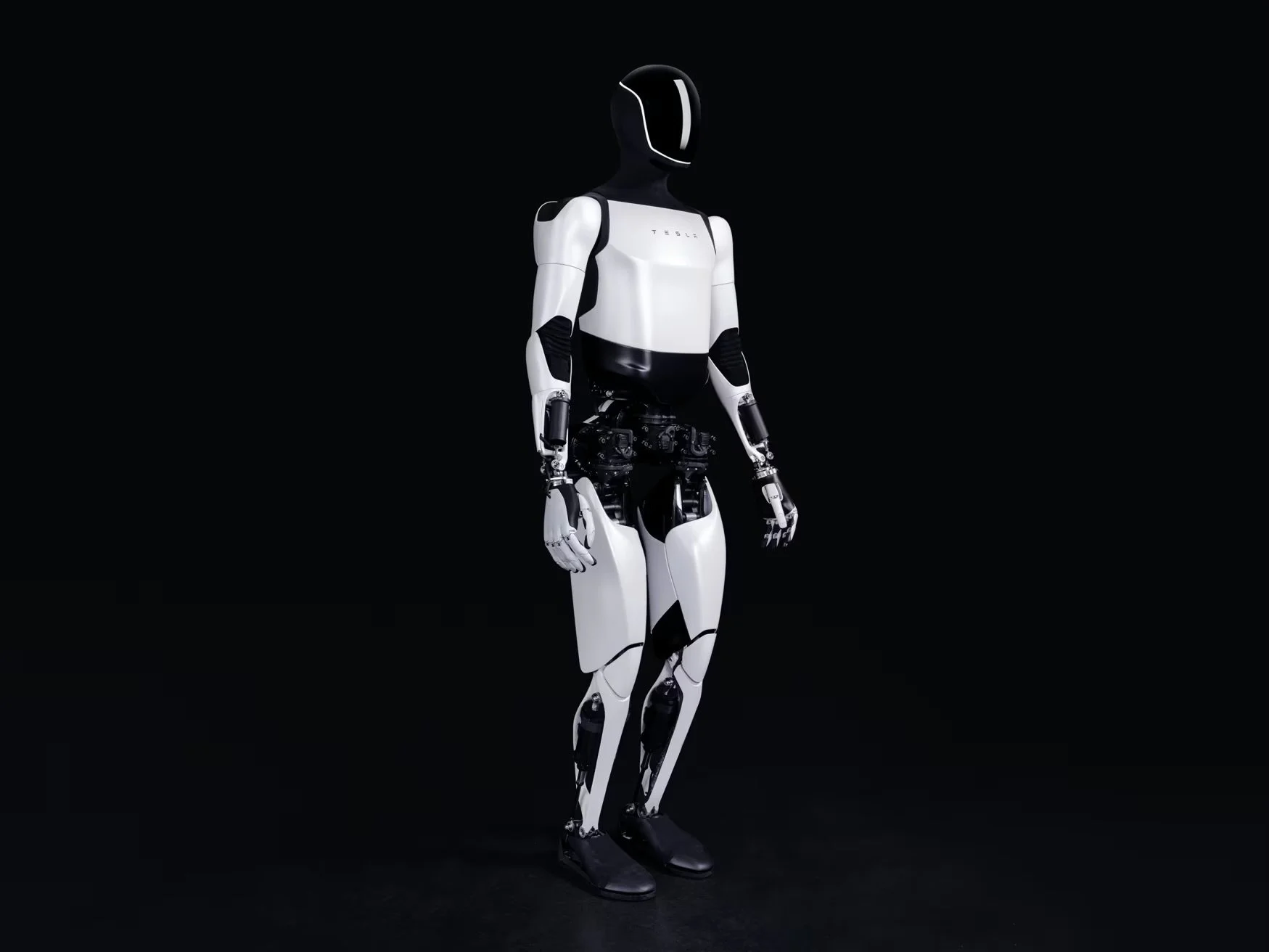
Welcome to the age of the Cybercab and Optimus
The Cybercab is central to that thinking. I can understand the attraction, or appreciate it at least. A world of autonomous taxis could be transformative. If you can summon a vehicle, travel safely without a driver and have it operate economically, particularly within cities, there’s potentially an enormous business there. Tesla is clearly serious about it. Its Cybercab began providing Robotaxi rides in Austin in September 2026, and the company reported substantial growth in unsupervised Robotaxi miles during the third quarter. That’s progress, sure, although it’s still a long way from demonstrating a fully scalable, commercially proven driverless transport network.
And then there’s Optimus. Can humanoid robots eventually become incredibly useful? Factories, warehouses, etc. are the obvious examples of where they could be genuinely useful. For domestic tasks and all sorts of other applications around your home? I’m not so sure we’re in the right century for that-but surely there’s a difference between recognising that these technologies could be important and betting so much of your company’s future on them?
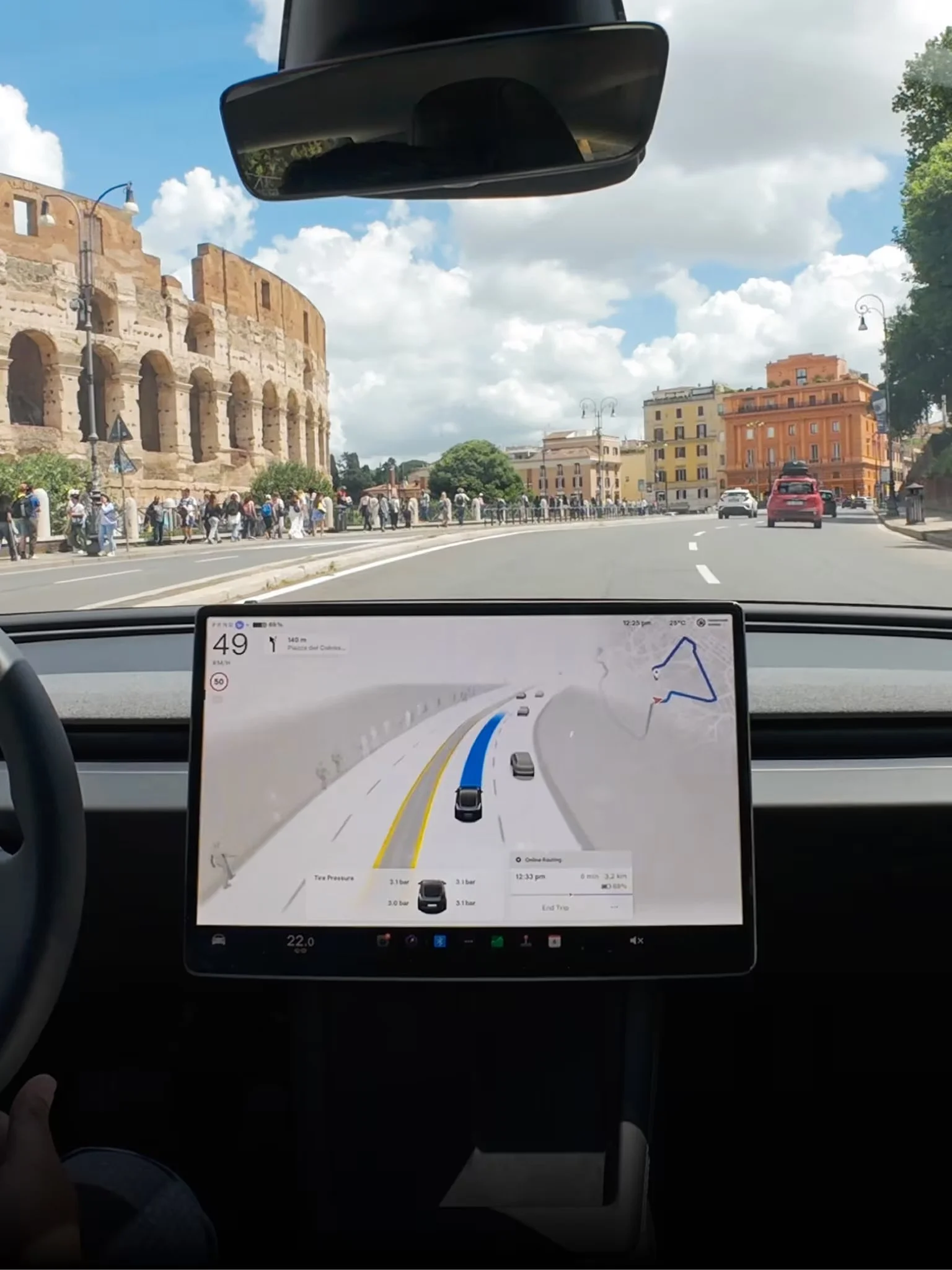
Tesla Inc. FSD
Full Self-Driving
Tesla has made some extraordinary progress with its driver-assistance technology-but to be told that the future of motoring means I no longer need to be able to buy a new car that I can drive myself is quite a tough one to process
Would I like the OPTION of letting my car drive for me? Absolutely.
I should make something clear. This isn’t an attack on Tesla, and I’m certainly not suggesting the company has suddenly stopped doing remarkable things. Far from it. There are branches of Tesla that aren’t being given enough credit or attention.
For example-The Tesla Semi is a genuinely amazing project. Electrifying heavy goods transport is a huge challenge, and Tesla has the opportunity to make a meaningful difference there if it gets on with it and scales up.
Then there’s the Supercharger network. For me, this remains one of Tesla’s greatest achievements. It didn’t simply build electric cars and leave customers to work out how to charge them. It built an extensive, reliable charging network that helped make long-distance electric motoring practical and showed the world the pathway. Opening that network to other manufacturers was also a hugely positive move for the industry.
So what happened/what changed?
Perhaps Elon genuinely believes that conventional car manufacturing has reached its natural conclusion and that autonomy and robotics represent a far bigger opportunity. Perhaps he’s right about the size of those future markets-but I wonder whether he’s underestimating the continuing appetite for Tesla vehicles (and vehicles in general).
Farewell, Cybertruck.
I suspect it will be remembered rather differently depending on who you ask. For many, it’ll be an ugly, expensive failure that never came close to fulfilling its promises. For others, it’ll be a remarkable piece of engineering that dared to challenge almost every convention of automotive design. I can see both arguments, but I’m firmly in the ‘it was amazing’ camp.
It was great and terrible. Brilliant and stupid. Bold and ugly. It was perhaps the ultimate expression of Elon Musk’s apparent philosophy of doing whatever the f*** he wanted, regardless of whether anybody thought it was sensible. And I rather liked that about it. And him, to be fair. Not everything needs to be sensible. Not every ambitious idea needs to work. Sometimes the most interesting things come from people prepared to take enormous risks and do something nobody else would contemplate. The Cybertruck was one of those things.
Its early death, or retirement (depending on your outlook) doesn’t erase its engineering achievements, and I think it would be a shame if some of the technology developed for it didn’t find its way into other vehicles.
Tesla helped create an entirely new market. It made electric cars desirable, challenged established manufacturers and forced an industry to rethink what was possible. It gave us the Model S, the Model 3, the Supercharger network and, eventually, the utterly bonkers Cybertruck. Perhaps the next revolution really is autonomous transport and robotics. .
It could keep making cars. But it looks like it won’t. Not ones you can drive yourself at least. And I’m a bit sad for that.
Unfortunately, as my gran used to say often, “I wants, don’t get!”
eV Newt
