
Ethanol in Your Tank: Greener Fuel or Just Expensive Greenwashing?
Next time you’re at the pump and spot that E10 sticker, it’s worth a pause. That “10” means up to 10% ethanol blended into the fuel. E5? That’s the older 5% version.
So what is ethanol doing in there?
First, it’s to lower carbon emissions (on paper). Ethanol is a biofuel, usually from crops like corn, wheat or sugar beet (or waste in better cases). The government pushes it through the Renewable Transport Fuel Obligation to hit net-zero targets. Burning it releases CO₂, but plants absorbed some while growing, so it counts as ‘renewable’. Real-world savings are debated, around 50-70% lower in ideal cases, less otherwise.
Second, it stretches fossil fuel supplies. Blending ethanol means we need less crude oil, which helps energy security when prices spike or supplies tighten, although in the U.K. our energy pricing is pegged against fossil fuels.
Third, it boosts octane for smoother running in modern engines. However, ethanol has less energy per litre, so you might actually notice a small drop in efficiency.
On the surface it sounds like a win: less oil dependence, lower emissions, support for farming. But dig deeper, especially with most of our supply coming from US corn, and the picture gets messier.
The Land Grab in America’s Breadbasket
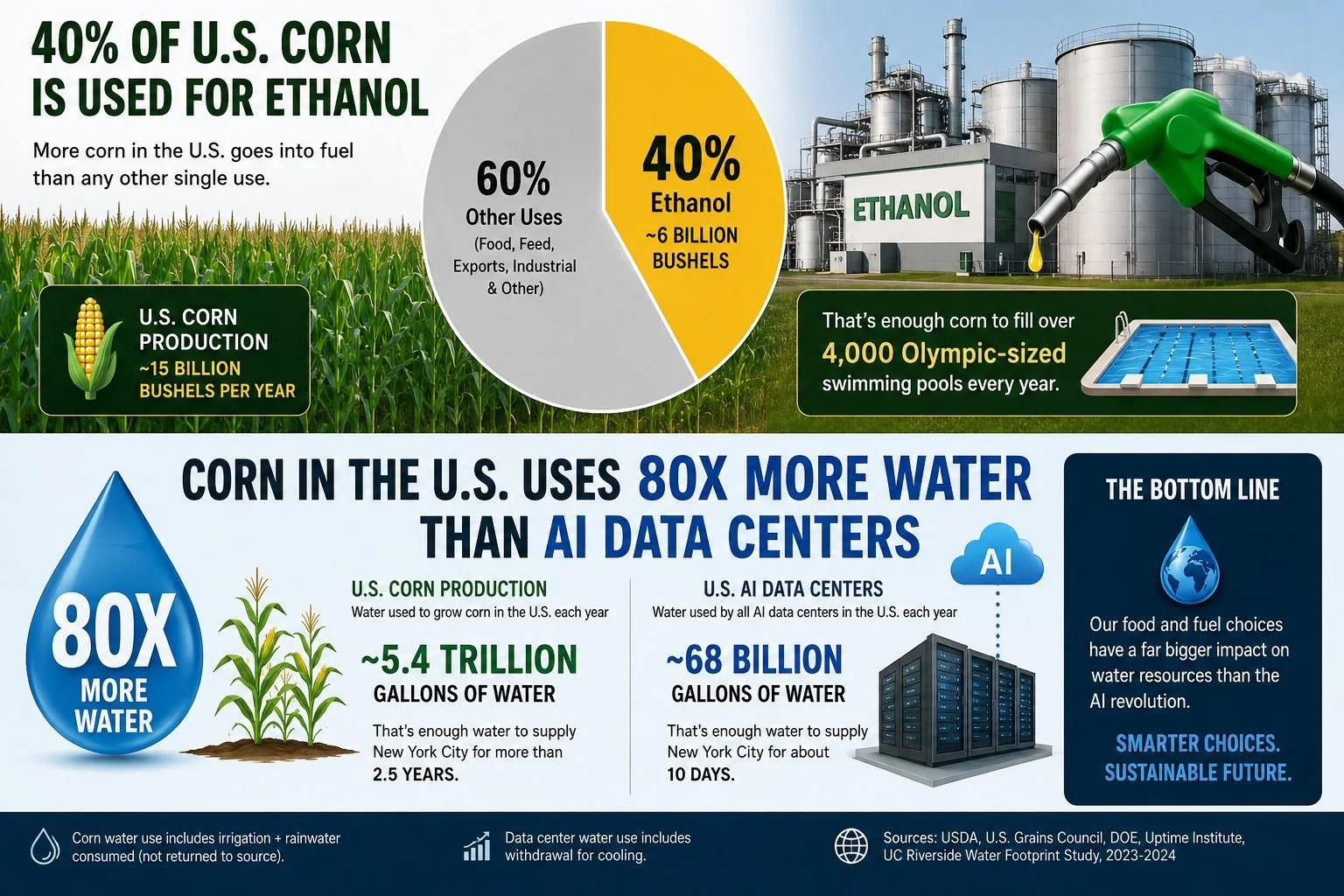
US ethanol production runs at massive scale, around 15-18 billion gallons a year, nearly all from corn. That takes roughly 30-35 million acres of farmland. Think an area the size of New York State. About 35-40% of the entire US corn crop goes to fuel rather than food or feed.
This is concentrated in the Corn Belt, Iowa, Illinois, Nebraska and surrounding states. Mandates like the US Renewable Fuel Standard drove big expansion, pushing corn onto more land, including former grassland and even conservation areas.
One study found an extra 6.9 million acres planted between 2008 and 2016. Fertiliser use jumped, feeding problems like the Gulf of Mexico dead zone.
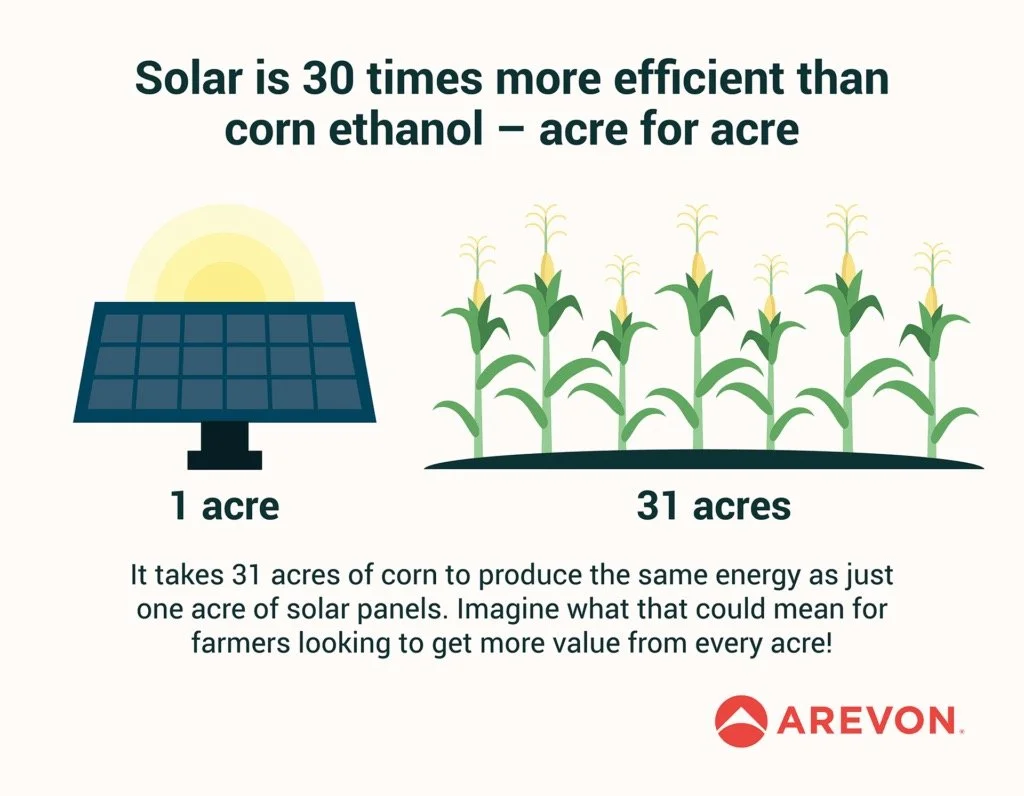
One acre of decent corn land might produce 475-550 gallons of ethanol. Sounds okay until you compare it to solar panels on the same land powering EVs. The distance you could drive is significantly higher.
Producing these ‘renewable fuels’ also uses copious amounts of water
Energy In, Energy Out, And the Shipping
Producing the stuff isn’t clean. Farming needs diesel machinery, energy-heavy fertiliser, often from natural (methane) gas, pesticides and water. Then there’s processing: grinding, fermenting, distilling, big natural gas demand. Modern plants are more efficient, with net energy returns around 2-3:1 in good analyses. But add transatlantic tanker shipping from the US and the gains shrink further.
A 2022 study on the impacts found corn ethanol’s full carbon intensity was no better than gasoline, and likely at least 24% worse once land conversion and other effects were counted.
So Is It Worth It?
Ethanol has octane benefits as mentioned already, and has displaced some petroleum. Sugarcane versions - like in Brazil - perform better. But relying heavily on imported US corn ethanol, with all the land, water, pollution and shipping involved, perhaps feels more like green box-ticking than a genuine green solution.
For UK drivers, E10 works fine in most modern cars. You might lose a bit of economy, and some older vehicles prefer E5 where available. If you want lower-impact options, look at stations offering higher HVO blends in diesel or consider how your driving habits stack up against the bigger picture.
The real path forward is smarter renewables, with perhaps more waste-based fuels adding more to the mix, better efficiency, but the largest contributor being electrification. Mandates that reward actual lifecycle wins, not just volume, would help. And of course, ever expanding land-grabs to ‘grow fuel’ clearly reduce our ability to grow food
Next fill-up, consider that splash in your tank has a bigger story than the sticker suggests.
Author
Newt is a lifelong car enthusiast and specialist in electric cars.
You can find Newt on𝕏 at @eV_Newt
