
Milk-floats: The Original Quiet EV Revolution. But Just What Were They?
There’s a certain breed of anti-EV commentator who thinks they’ve landed a killer blow by sneering that electric cars are just “MiLkFlOaTs.” They say it as if they’ve reduced the whole technology to something slow, outdated and faintly ridiculous. I find it quite hilarious though, because milk floats were utterly brilliant. And if you’re going to compare a modern EV to one, you’re accidentally paying it a compliment (though it does rather give away their age. Most of these ‘Boomers’ grew up with the things still on the streets.)
Younger readers (and Americans), by contrast, will probably just be looking rather blank and confused at this point here. So what was a milk float?
The milk float was a very British institution
For anyone like me, who grew up in Britain in the 1970s, the milk float was simply part of the morning and it was how milk (in reusable glass bottles) got delivered to households. The ‘milkman’ (or woman) would leave it on your doorstep in the early hours.
If you were awake or dozing, you would hear the low hum of the electric float, the clink of glass bottles in the crates, the float itself creeping along the street while the rest of the world was still half asleep. And this was a part of the point of them, to generate as little noise in the wee hours as possible.
Everyone had a ‘milkman’ or so it seemed, and - despite not seeing any back then - woman Milkman existed, but were somewhat of a rare sight. The job just seemed very male dominated in the popular imagination.
They even made it into the comedy hall of fame. Benny Hill’s “Ernie (The Fastest Milkman in the West)” was a number one hit in 1971, a daft story of a milkman racing a bread delivery man for the affections of a housewife. And years later Father Ted gave us Pat Mustard in the “Speed 3” episode, a milkman so unhinged he ends up with a bomb on a float in a glorious parody of the Keanu Reeves film. Both stuck because the image was so familiar.
My own connection is a bit more personal. My dad did a short stint as a milkman for Unigate Dairies in Bournemouth. I went out with him a couple of times and even got to drive the float. It was brilliant. The one we used had the classic three-wheeler layout: a single front wheel right in the middle, steered by a tiller. It felt sketchy as hell the first time you turned it, like the whole thing might tip or wander, and it felt much faster than it actually was, but once you got the hang of it the tight turning circle was magic for weaving in and out of parked cars and tight residential streets. It felt like you were piloting something properly different. As I recall, you never really needed to use the brakes.
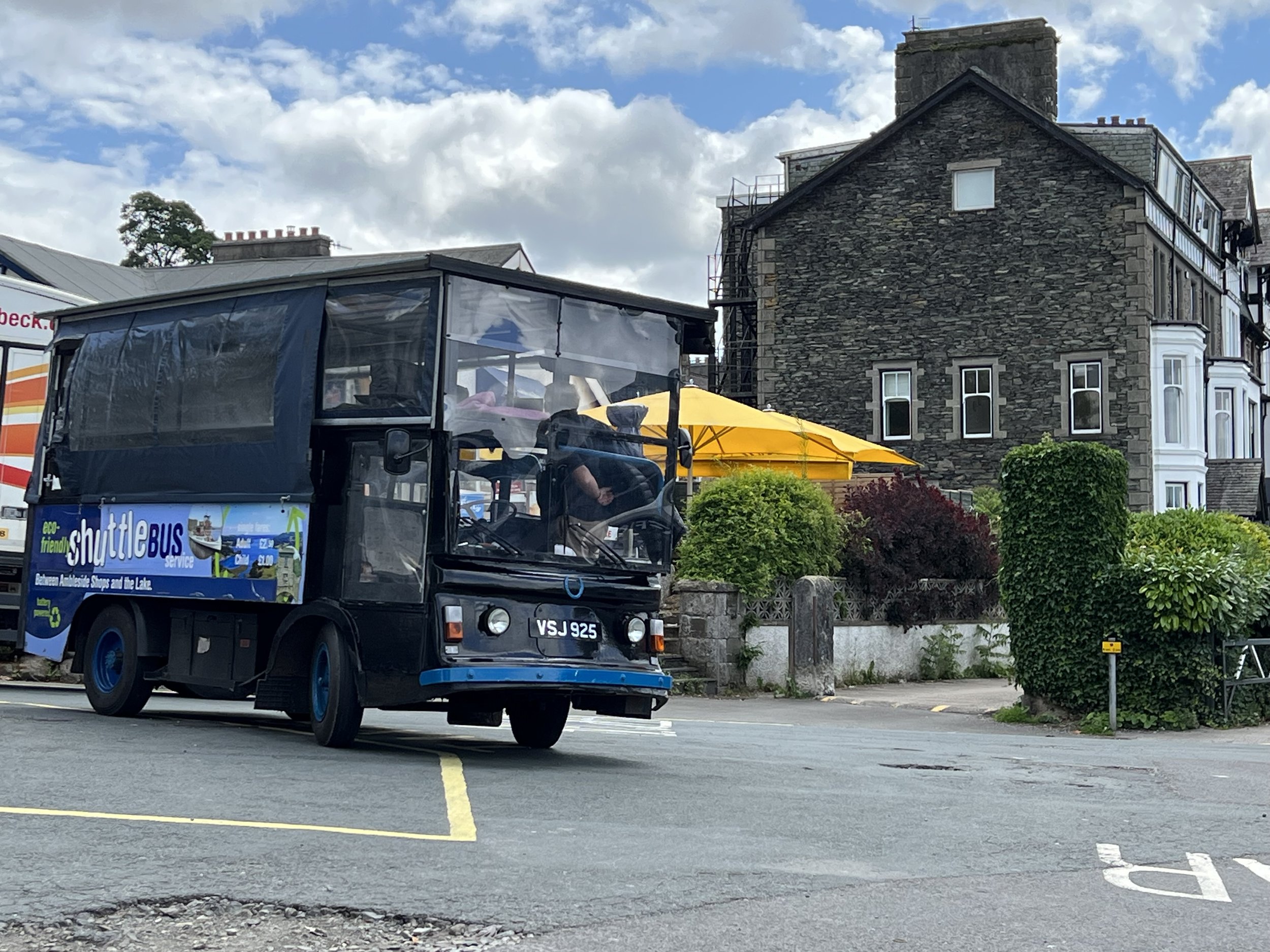
A converted float now shuttling passengers in Windermere.
History of Milk Floats
The story of the milk float goes back further than most people realise. Horse-drawn versions were already on the streets by the 1860s. These were low-slung two-wheeled carts with a dropped axle that put the load bed unusually close to the ground.
The design made it easy for a milkman to lift heavy churns on and off without hauling them up high. The name “float” came from an older use of the word. Long before these carts existed, a float meant a flat-bottomed boat or barge used to carry heavy goods on rivers and canals. Those floating platforms sat low and level in the water.
When cart builders created a similarly low, open load bed on land for milk-churns and other awkward cargo, they borrowed the same name. It stuck, even after the horses were pensioned off and the electric floats took over.
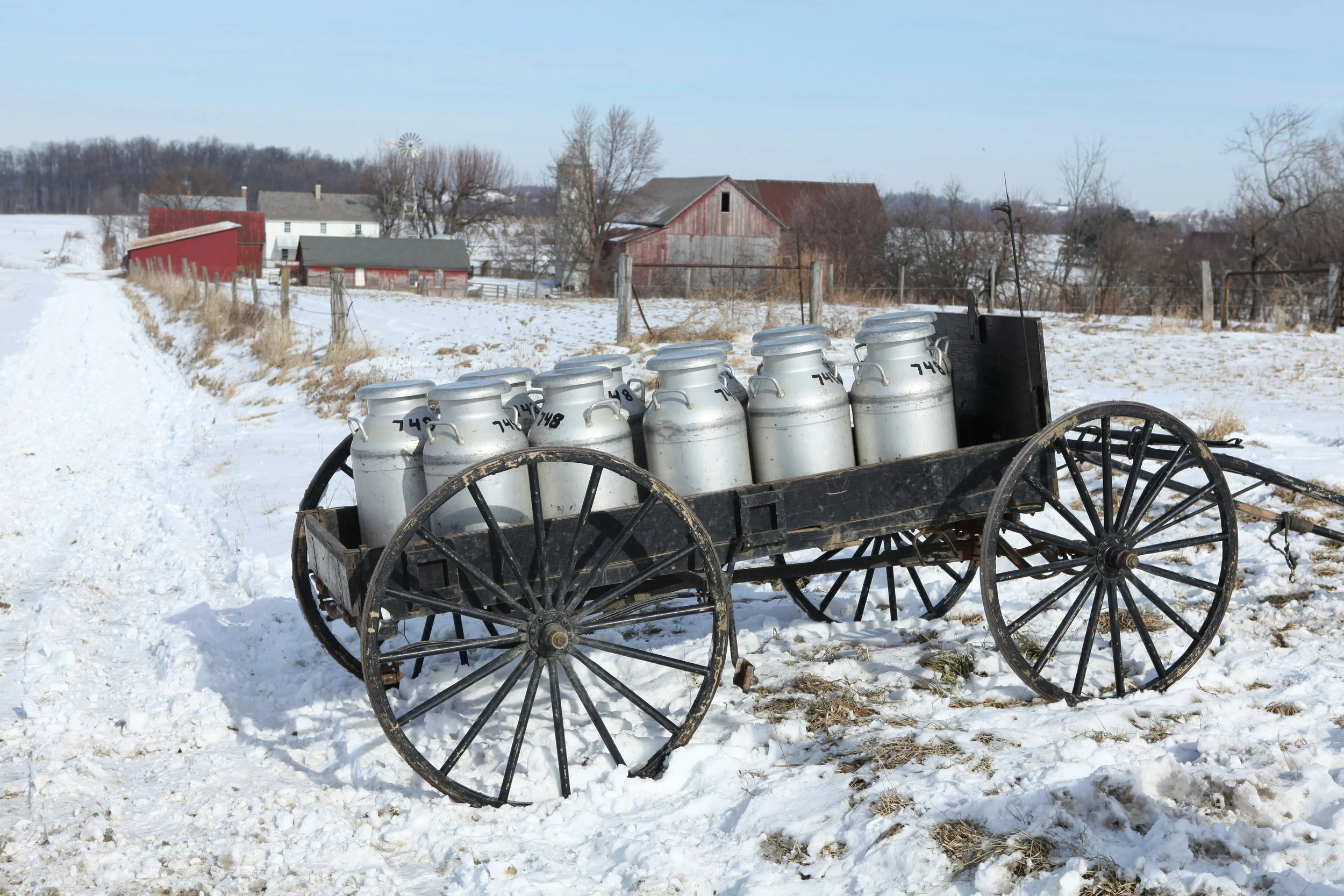
Low-slung two-wheeled cart
The low-slung two-wheeled cart designed for easy loading and unloading, and was towed by a horse.
The Milkman would go door-to-door and ladle milk from the churns into a pail, jug or pitcher that was left at the gate or doorstep the night before.
Some would listen out for the Milkman and then greet them with the container.
Photo by Randy Fath on Unsplash
Electric versions started appearing in serious numbers in the early 1930s, with Express Dairies among the early adopters. After the war they took over properly. By the 1950s and 60s Britain had the largest fleet of electric road vehicles in the world, and almost all of them were milk floats. Peak numbers hit in the 1970s with more than 50,000 registered. Doorstep delivery reached something like 99 percent of households.
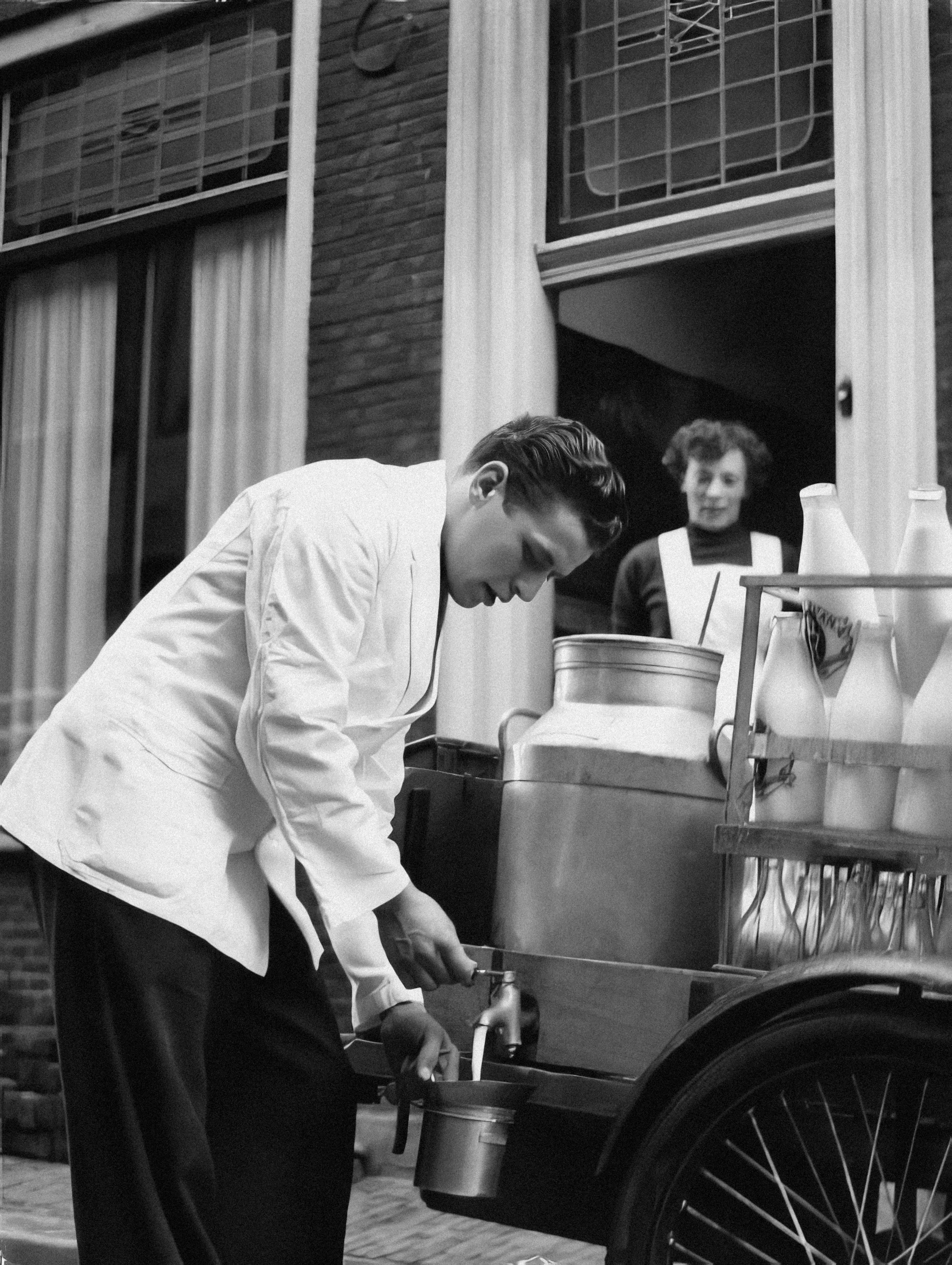
Milk Deliveries Were Ahead of their Time
With modern recycling of single use plastics, it’s a sticky plaster to a huge phenomena that was caused by the supermarket takeover of milk sales.
Prior to this milk was delivered in reusable bottles that the Milkman would collect, called ‘Empties’, which would go back to the depot for cleaning and sterilisation to be reused for another delivery.
Further back, and some would provide their own container that the Milkman would decant milk into from a churn.
Photo by Nationaal Archief on Unsplash
They were perfect for the job. Silent enough for the early hours, cheap to run on short stop-start rounds, simple to maintain, and they didn’t fill the street with engine noises or exhaust fumes. Manufacturers like Wales & Edwards specialised in the three-wheelers that many of us remember, while Morrison-Electricar and others turned out four-wheel versions in huge numbers. For decades they just worked and remained largely the same.
Changing Times
Then the world changed around them. Fridges became standard in almost every home, so a daily delivery stopped being essential. Supermarkets started selling milk cheaper than the dairies could match, once the old price controls and marketing boards were dismantled. Plastic bottles and cartons arrived, longer shelf lives followed, and the economics of the doorstep round sadly collapsed. By the 1990s the numbers were in free fall. These days the electric milk float is a very rare sight. Estimates put the working fleet still delivering milk at under 400, with no new ones being built.
A few still trundle on, kept going by stubborn independents and people who simply prefer glass bottles on the step. But the great age of the milk float is over.
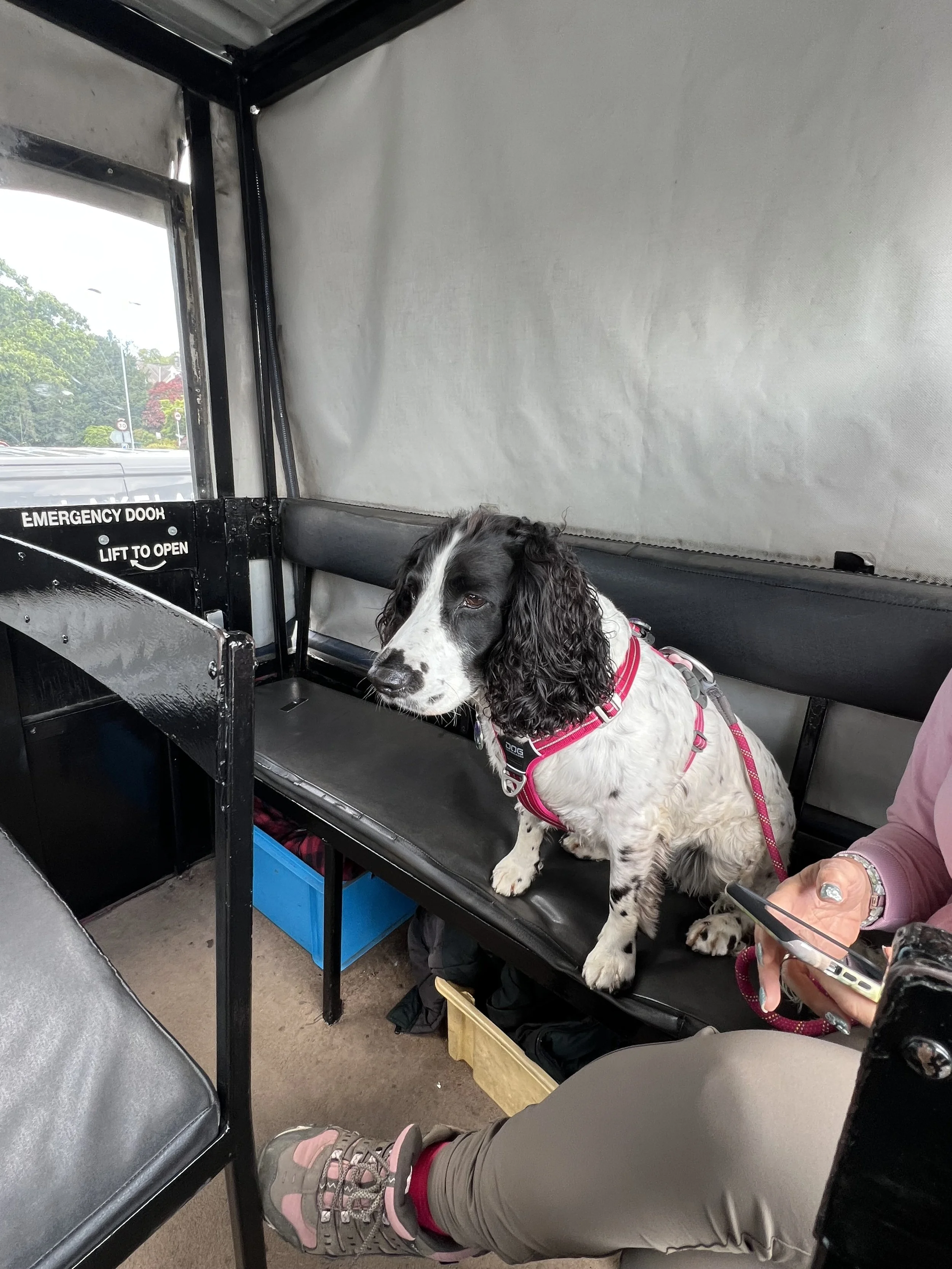
I was really excited though to see a converted float on a visit to Windermere a few years back, ferrying tourists between the upper and lower part of town to the shore. Going for a ride on it was essential. Tesla the dog wasn’t best pleased with the experience (maybe this is why she hates my Citroen Ami 🤔?)
In pictures. From and on display at the Whitewebbs Museum of Transport, A 1967 Wales & Edwards 3 wheel milk float like my dad drove, fully restored in Unigate livery.
72V Lead-acid batteries, 18mph top speed (if you were lucky!) Approx 30 mile range on this Rangemaster version. This one was based in Guildford, Surrey.
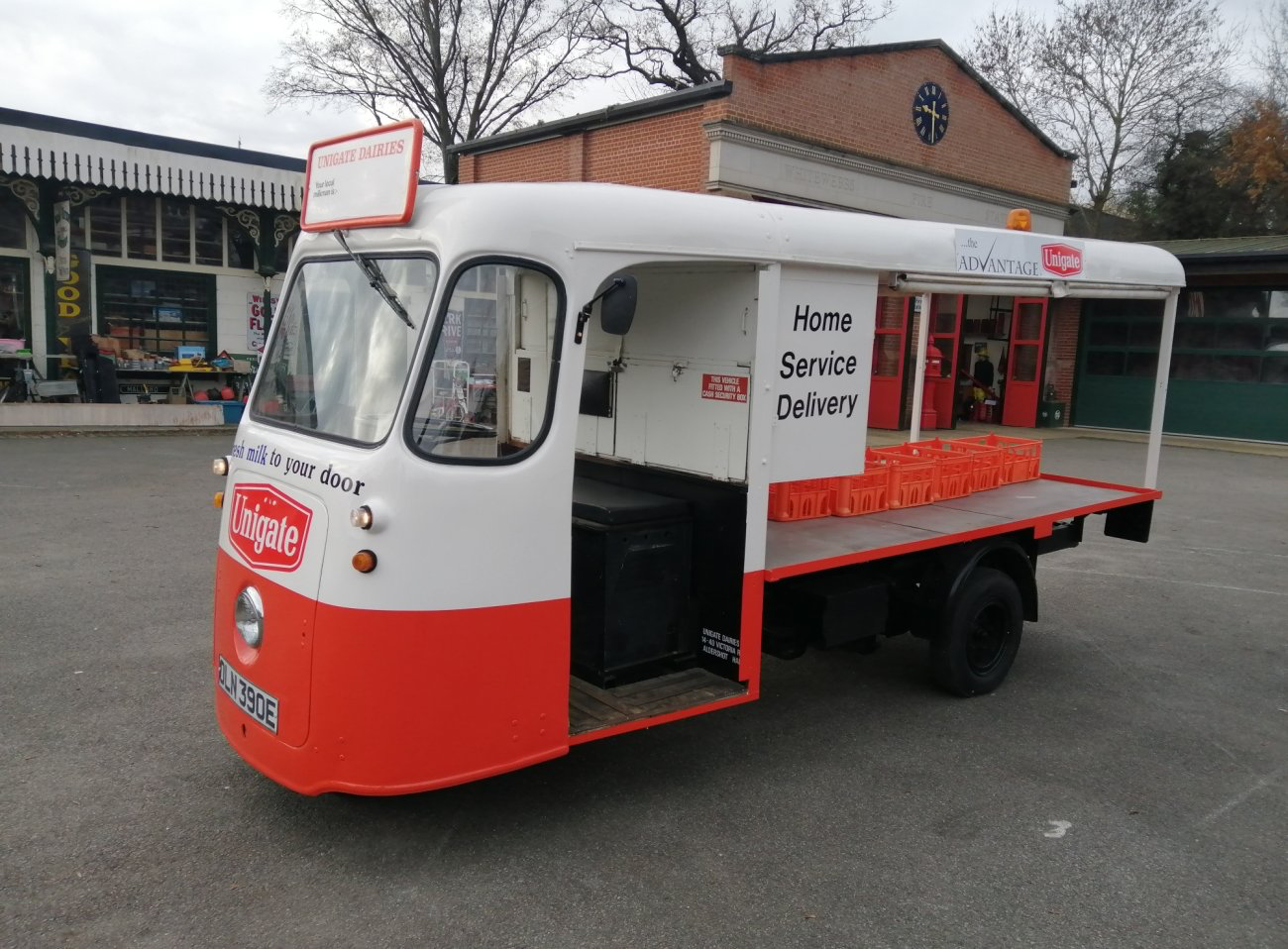
Three-wheeld Milk Float downloaded from, and on display at, the Whitewebbs Museum of Transport
So when someone tries to dismiss EVs by calling them milk floats, I just smile. They’ve accidentally pointed at one of the most successful, practical and quietly revolutionary electric vehicles Britain ever produced. They were the original last-mile delivery EVs, decades before the phrase existed. They kept a whole country in fresh milk with almost no noise and no fumes. And for a few mornings in the 1980’s, a kid got to sit in one next to his dad and steer that single front wheel around the streets.
Modern eVs? Well, they’re not bad for a “milk float.”
