
Nio Hands Battery Swap Stations to the State – But Keeps the Keys
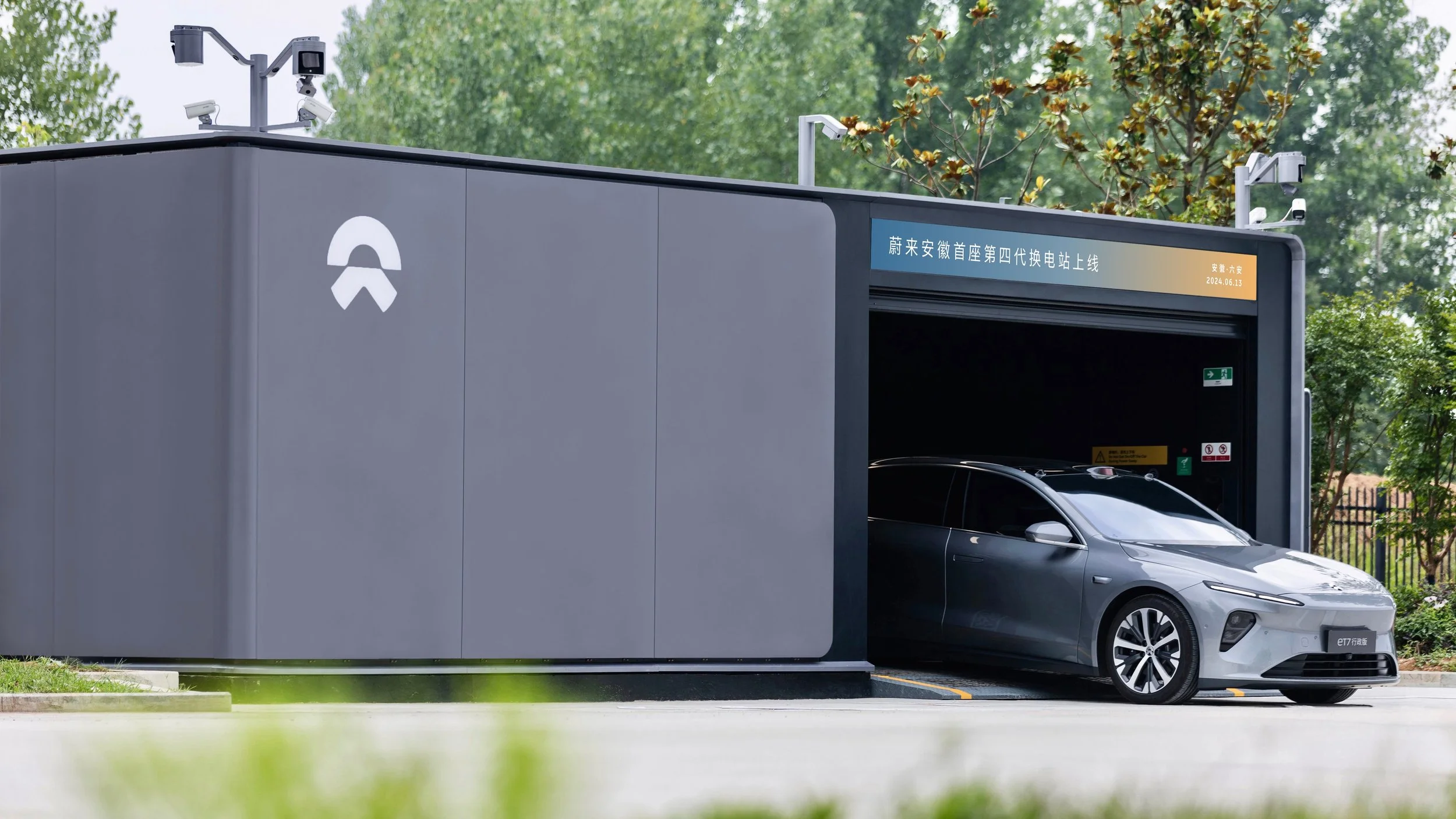
A Nio Battery Swap Station
Nio is transferring ownership of its battery swap stations to state-backed partners while retaining full operational control.
In Wuhan, the first 36 stations have been handed over to state-owned Optics Valley Traffic Company. Every existing swap asset in the city is now held by state capital. Nio Power continues to run the stations, the software, the robotics, the customer experience, the lot.
This is not a new thing: Nio has already worked with more than 40 state-owned platforms and financiers across 25 provinces, transferring ownership of over 800 stations under the same model-the state now owns the assets, but Nio operates them.
So how come? Why?
Battery swapping has always been capital intensive. Nio has put more than RMB 20 billion (around £2.2 billion) into the network. First-generation stations cost roughly RMB 3 million each (about £327,000). Later generations have come down to RMB 1.5–2 million (£164,000–£218,000). By shifting ownership, Nio lightens its balance sheet, reduces depreciation, and frees up all-important capital and management attention for the core business of designing and selling cars. Perhaps this news will also do something for the long-floundering share price.
No public figure has been given for any cash paid for the stations. The arrangement is presented as a long-term partnership rather than a straight sale.
The network now stands at 4,017 swap stations, 5,181 charging stations and 29,875 piles.
More than 120 million swaps have been completed! Stations in high-traffic cities such as Shanghai are approaching break-even. Nio itself posted its first quarterly profit in late 2025 and has kept operating profits positive into 2026.
It’s fair to say that the swapping model has many doubters-particularly in the west, but looking ahead, this move seems to strengthen, rather than weaken the case for battery swapping.
Nio has spent the best part of a decade building the technology, the stations, the battery standards and the user-base.
Dropping the model now would throw away one of its clearest advantages over pure charging competitors. The fact that state capital is prepared to own the physical infrastructure suggests Chinese industrial policy still sees value in swapping- perhaps mainly with regards to energy security, grid flexibility (the swap stations also store and give back power to the grid when required) and in supporting their domestic EV brands of course. That makes a retreat from the battery-swap model even less likely.
Instead, expect Nio to keep expanding the network, but with partners funding more of the physical infrastructure, while pushing multi-brand access and keeping the customer experience tightly linked to its own cars. Power becomes a more capital-efficient operation rather than a pure cost centre.
In short, Nio has found a way to de-risk one of its biggest historical financial burdens, without abandoning the strategic long-term bet. If the operating side continues to improve, both margins and flexibility should benefit over the next few years.
Sources: CarNewsChina and the original Jiemian News reporting.
Graeme diving in here with a counter thought, albeit it has no factual basis, but my concern for Nio would be the loss of their proprietary charging solution, and Nio’s unique selling point.
