ZEV Mandate is Designed to be Flexible and Periodically Reviewed
The Government is reviewing the ZEV Mandate again which makes great headlines suggesting that it’s retreating, or backtracking from its commitments to an all electric future with some publications demanding a change to the mandate. The reality is, the Government is keeping it’s promise that it made to the industry to commit to periodic reviews to examine the efficacy and effectiveness of the mandate. Any tweaks made to the mandate aim to support the industry as it transitions during turbulent times.
This is a Government pledge that keeps its side of the deal, whilst manufacturers aim to keep their side of the deal and deliver the cars needed, and this review is something the Government and Industry will do every year.
What is the Government considering?
Government begins review of electric vehicle (EV) sales targets to back jobs, investment and maintain a competitive UK automotive sector.
The industry is invited to help shape the pathway to the 2030 phase-out of new petrol and diesel cars and 100% zero-emission new car and van sales by 2035
Two metrics are static; the 2035 deadline for 100% zero emissions cars and vans and the 2030 deadline for the phase out of pure petrol and diesel cars, meaning hybrids, plug-in hybrids, range extenders and electric cars will be manufactured from 2030 only.
It may sound like there’s little room to compromise, but the ZEV Mandate – and its flexibilities – provide a framework and timescales, but “how” the results are achieved can alter, and this is what the government is reviewing.
Key Flexibilities
Credit Trading and Banking: Manufacturers can earn credits for selling zero-emission vehicles, then bank, borrow, or trade them with companies that need them.
Borrowing Mechanism: The system lets carmakers borrow allowances from future years out to 2029 (subject to caps), provided they repay them by 2030.
CO2 Savings Transfer: Companies can transfer CO2 savings from non-ZEV sales to ZEV compliance until 2029 under specific caps.
Car-Van Transfer: A bidirectional transfer mechanism exists with set exchange rates to balance out the targets.
Hybrid and Small Maker Rules: Qualifying hybrid cars remain permitted for sale until 2035, and small-volume manufacturers (under 2,000 cars annually) get specific exemptions.
Small-Volume Exemptions: Micro and small-volume manufacturers (such as specific specialist sports car makers) receive exemptions or relaxed requirements from particular targets.
Reduced Penalties: Non-compliance fines have been adjusted and reduced to £12,000 per non-compliant car and £15,000 per non-compliant van.
Progress
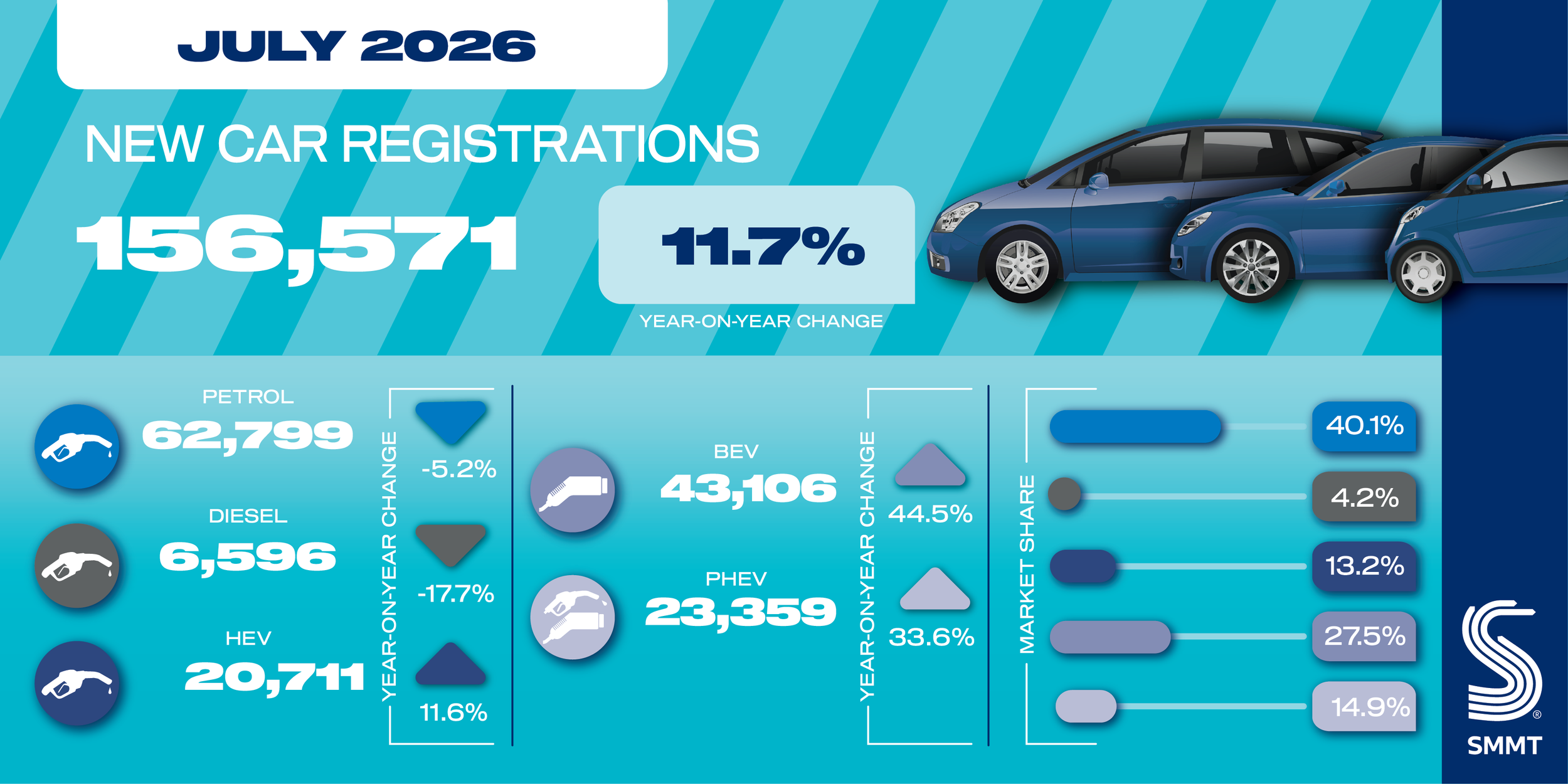
The Society of Motoring Manufacturers and Traders (SMMT) has been showing some positive results lately. July recorded the strongest new car market since 2019, driven by growing demand for electric vehicles with a consistent quarter of all new car sales being electric. More recently, EV sales were up 45% on July last year.
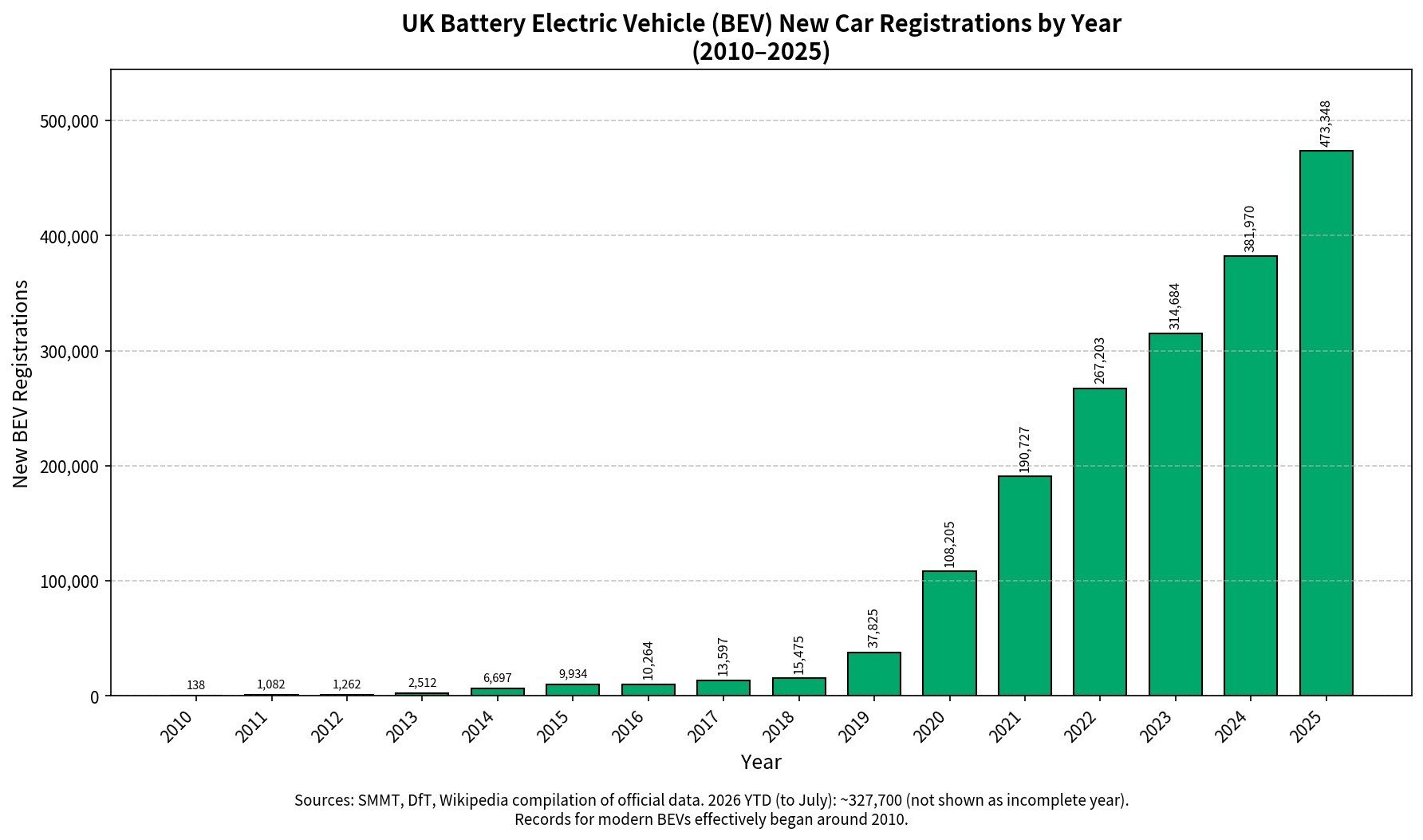
And the data now shows there are approximately 2.2 million electric vehicles registered and roaming the U.K.’s roads, compared to 1 million in 2023 and compared to their first records in the early 00’s. The accelerated up-take is here and showing no signs of slowing.
The SMMT also pointed out that the sale of pure petrol and diesel cars are in decline, and have been for a while, with petrol market share at 40% and diesel at 4% in July. So, by all accounts, the ZEV mandate is working and the U.K. is heading in the general direction of decarbonising the fleet, as you can see with the graph below showing the upward growth trajectory of its ‘S’ shaped market disruption curve.
Incentives
Currently, the government’s Electric Car Grant - which offers up to £3,750 off the cost of a new EV for Band 1 cars and £1,500 off for Band 2 cars - has already helped over 160,000 drivers buy an EV since it launched last July.
There’s also incentives for company car drivers, plus the Salary Sacrifice scheme remains in tact, where employees can lease EVs via their payroll and lose the tax on the value of the lease. It saves the company and employee money and is a good incentive to grow the EV market.
And whilst the Government is keen to point out that drivers who make the switch can save up to £1,400 on running costs each year, adding in multiple taxes sends conflicting messages, given the negative attention it found from certain quarters of the media.
Headwinds
In 2025, just after the Electric Car Grant was launched, the Chancellor oversaw the introduction of Vehicle Excise for the first time applied to EV’s, and made announcements that the Expensive Car Supplement was being introduced to EV’s (initially levied at the £40,000 threshold, and later changed to a £50,000 threshold and applied retrospectively) costing qualifying owners thousands in additional taxes from years 1 to 6. But, the tax that caused the most controversy was the proposed Pay-per-Mile tax, or eVED, that will tax electric car drivers for the miles travelled each year from April 2028 on top of VED, and on top of the Expensive Car Supplement, if applicable.
These taxes are meant to plug holes in the Treasury’s finances as the uptake in electric vehicle ownership gathers pace and disrupts liquid fuelled cars. Initially, it seemed to be more damaging with sales of EV’s impacted late last year and in the first two months of 2026, showing zero growth. This alone would have caused a panic within the industry, because just as the Chancellor dangled a few juicy carrots, she then taxed owners heavily for taking the carrots. It was confusing, badly executed and badly timed, and it fed the press negatively.
Only the conflict in the Middle East and problems with energy distribution from the Straight of Hormuz saw petrol and diesel prices soar, and remain high, since it started back in February. This caused many people to switch to alternatives fuels, such as hybrid, plug-in hybrid and battery electric cars, all showing a surge in demand in order to reduce recurring high fuel costs. It’s even evident on the used market, too.
However, the Middle East issues also brings higher energy costs, higher manufacturing costs, and a disruption to some supply chains that all pile additional pressure onto manufacturers in tumultuous times.
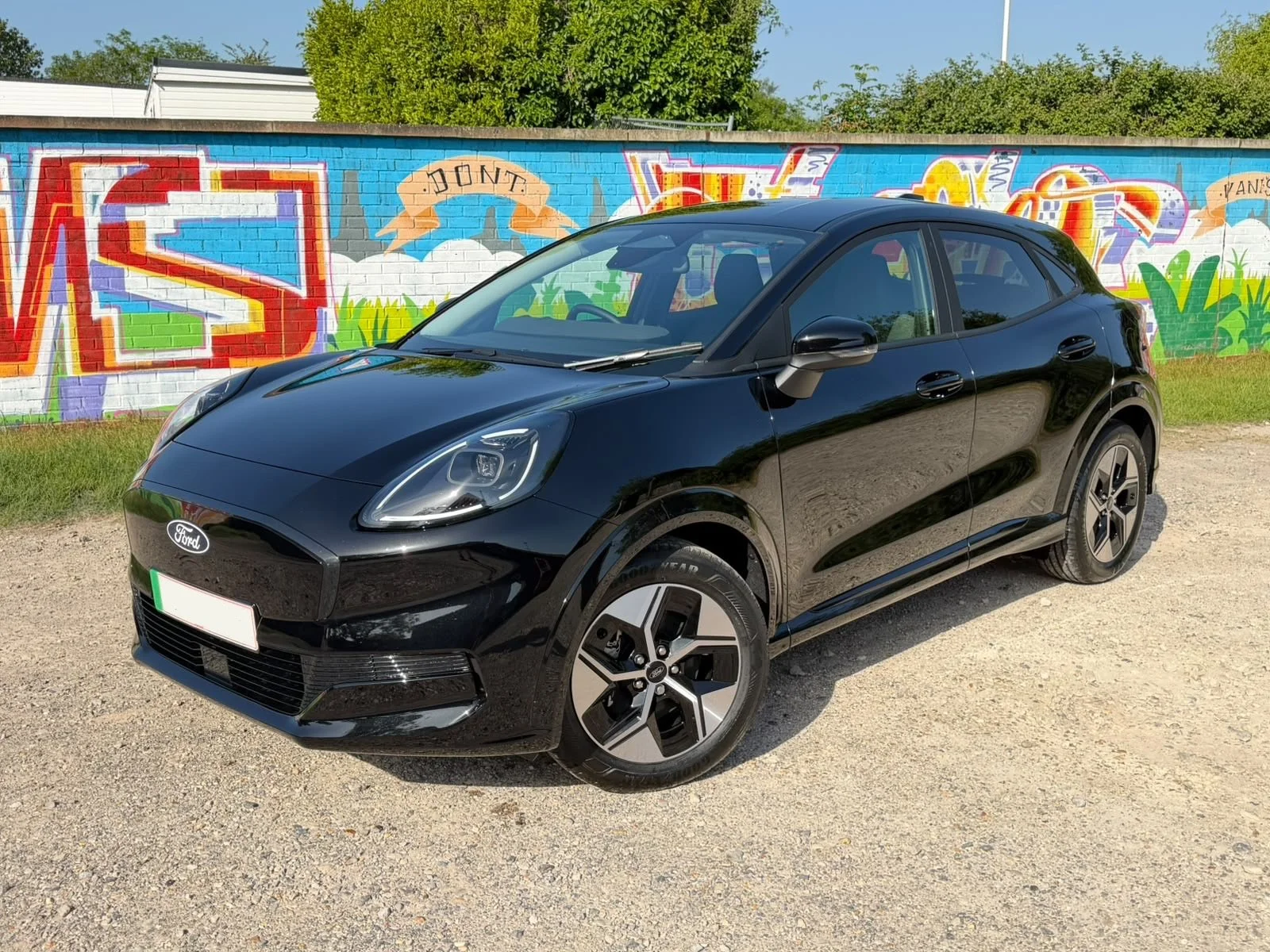
Best Seller: Ford Puma Gen-E attracts the EV Car Grant and helps Ford to meet its ZEV Mandate target.
Unmovable Targets
The mandate is designed to help drivers find savings with EVs by increasing their availability at more competitive prices with industry data demonstrating that new electric car models are reaching, or nearing price parity to petrol and diesel vehicles.
It’s also designed to steer the industry towards two targets: 2030 for the end of pure petrol and diesel cars and 2035 that ends the sale of cars with an internal combustion engine.
Transport Secretary, Heidi Alexander, said: “The UK EV market is strong – sales are up, British manufacturers and charge point operators are investing billions, alongside our backing of £7.5 billion, including our Electric Car Grant that has helped over 160,000 people make the switch.
It’s right we keep targets under review to ensure they’re practical and back British industry. The end goal hasn’t changed – but we need to take business with us on the journey and that’s exactly what we’re doing today by making sure industry has the chance to shape how we get there.”
The Government assures us that manufacturers are currently on track to meet their 2025 targets, albeit there is little public transparency about how they have met that because built-in flexibilities enable them to do so even if they have no EVs on sale, but at a cost.
The Unmovable Commitments and What Might Shift
The baseline percentages required escalates annually up to the 2030 milestone, concluding with a 100% target by 2035 (shown below). And its evident that the government has yet to fill out the 2031 – 2034 section (see TBA below), and this is potentially a deliberate act. Given the headwinds manufacturers are facing, the government can pull out its “stretch lever”, and slow down the rate in which uptake must occur, whilst maintaining existing deadlines and flexibilities.
For example, since the start of the ZEV mandate, annual increments have been 5-6% each year, up to and including 2027, but they leap to 14% in 2028, a further 14% in 2029 and another 14% again in 2030 hitting that 80% marker for all cars sold to be EVs (with flexibilities).
By following this trajectory, sales of EVs should hit 100% by mid-2031, but we know at this stage, the deadline is 2035. This illustrates that the government has the flexibility to maintain a slower growth in EV sales if it extends the 80% marker to 2033, for example, and this is where the next tranche of ZEV Mandate assistance may lie.
This is my educated guess, and I have no inside information, but the evidence is there within the ZEV mandate already, so this will not be a U-Turn, or backtrack, or a retreat from EVs if this is what the Government will announce following its review.
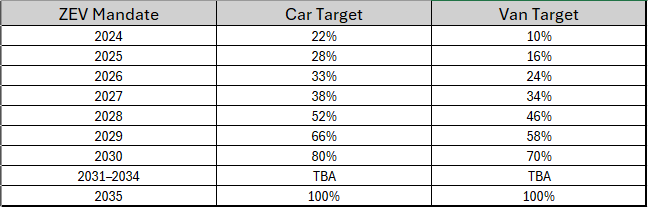
ZEV Mandate Targets 2024 - 2035
What we know is that the UK Government is reviewing targets to ensure they remain pro-business and grounded in the real world, given the challenges faced by manufacturers, whilst the government continues to support industry with the transition.
Business, Innovation, Science and Trade Secretary, Jonathan Reynolds, said: “The UK’s automotive sector is vital to our economy and future growth and we’re determined to keep it that way as we get on with reindustrialising Britain to deliver good growth in every postcode.
This consultation is about listening to industry, examining the evidence and making sure the mandate continues supporting investment, innovation and competitiveness, so Britain’s car sector can thrive.”
The government is committed to investing £7.5 billion to grow the market, boost EV manufacturing, increase sales and build up the UK charging network. This includes £4 billion for DRIVE35 projects and £3.5 billion for van, truck and car grants, the Electric Car Grant and EV charging infrastructure.
They state that new petrol and diesel cars will be phased out by 2030 and all new cars and vans will need to be fully zero emission by 2035 with the latest consultation asking for views on how the UK gets there and whether the existing annual targets for manufacturers remain appropriate.
Mike Hawes, SMMT Chief Executive, said: “The automotive industry is fully committed to a zero-emission future, investing billions in new technologies, products and incentives. However, with the ZEV Mandate conceived under vastly different conditions, this welcome review is a timely opportunity to adjust the transition so it works for all. That means a commercially sustainable transition which supports UK competitiveness, investment and jobs whilst delivering greater choice and affordability for motorists – the sooner, the better.”
To support the growing number of EVs on UK roads the government is also investing £600 million to roll out more charge points, building on the 120,000 already available on the public network and over a million in homes and workplaces. This builds on the £400 million already being used to deliver more than 100,000 more public chargers across the UK.
The ZEV Mandate review consultation, launched by the UK and devolved governments, will run until 23 October 2026.