
North Sea Oil: Why We Can’t ‘Just Do a Norway’
Britain has loads of oil in the North Sea right? We should just drill it, sell it, or keep it for ourselves like Norway does.” It sounds appealing, but it is also mostly nonsense and misleading at best.
Despite the populist vote-winning headlines, the easy oil is mostly gone and the model and reality is deliberately different to what many of you will think is the case. Read on and we’ll explain why.
Politicians, commentators and online voices love the simple stories and also love an easy "just do this and everything will be fine” line, like it’s a get rich quick story-like so many we see on the socials promising untold wealth- but there is always a catch.
Such ‘throw-away’ lines are often just a vote /populist winner headline, and yet the true winner are those with a vested interests in companies that are in the Big Oil game.
Reality Check
The UK does not have vast, untapped, easy access reserves just sitting there waiting for a quick national effort and a huge nationwide-wide windfall, because the UK North Sea Basin is already mature.
Most of the high-volume, low-cost fields were licensed and produced decades ago. What remains is a much smaller pool of technically difficult, expensive fields. And even if we extracted every last drop, the governance model THE UK CHOSE LONG AGO, means the benefits would still flow mainly as some tax revenue to the Treasury, not as direct state ownership or cheap domestic fuel.
We won’t /cant (well not easily or even with a giant legal struggle) directly extract OUR oil and use it ourselves/send it to our refineries
What Actually Happened to ‘Our Oil’?
Exploration in the UK North Sea began in earnest in the 1960s and 70s. As a country still suffering with a post-war downturn, we didn’t really have the technical knowhow skill or the cash to find and extract the oil, so we went for the easy and quick-buck approach of selling off, or licensing the exploration, development and extraction rights mostly to companies who did have the funding, expertise and skill to do so.
The big discoveries and the bulk of production came from private international oil companies operating under licences granted by the UK government. Companies like BP, Shell, Exxon and others led the development. They took the exploration risk, raised the capital, built the platforms, and extracted the oil and gas which they sold on the global markets.
In 1975 the Labour government created the British National Oil Corporation (BNOC), later Britoil, to give the state a direct stake and some participation rights. It was never a full national oil company on the scale Norway built. But, in the early 1980s - as part of the wider privatisation drive - the Thatcher government sold off BNOC/Britoil and the state essentially exited direct equity participation in North Sea production.
The sell-off raised relatively modest sums at the time, around £1.2 billion in current prices for the main assets. In return, the UK moved to a pure licensing-plus-taxation model. Private companies (and later private-equity-backed firms) own and operate the fields. The government’s main ongoing benefit is tax: corporation tax, supplementary charges, Petroleum Revenue Tax where it still applies, and occasional windfall levies.
The result was the UK received significantly less per barrel over the decades than Norway did. Independent analyses have estimated the UK may have missed out on many hundreds of billions in potential revenue by forgoing direct state ownership and higher effective capture of resource ownership.
The North Sea Today
Today, major operators in the UK North Sea include Harbour Energy, Perenco, BP, Shell, and these are via partnerships and recent structures like Adura with Equinor, with TotalEnergies, and various private-equity-backed players. Some foreign state-owned companies also hold interests.
The important bit: Any oil and gas produced is sold on International Markets, and most UK-produced oil is exported. The UK imports crude oil and this is refined into various products as needed.
There is no mechanism for the government to direct “our oil” to UK refineries or consumers at below-market prices.
Norway took a Completely Different Route, and Started Early
Norway discovered oil around the same time as UK, but they made fundamentally different (and in hindsight) very smart choices from the outset, that have benefited them and their people directly:
The Norwegian state asserted strong ownership from the beginning.
It created Equinor (formerly Statoil) as a majority state-owned national oil company.
It also established the State’s Direct Financial Interest (SDFI), which is a direct state holdings in fields and infrastructure, managed by the state-owned Petoro.
The state shares investment costs and receives a direct share of revenues:
Taxation is very high: a combined marginal rate of around 78% (ordinary corporate tax plus a special petroleum tax).
Surplus revenues are channelled into the Government Pension Fund Global (commonly called the Oil Fund), the world’s largest sovereign wealth fund.
As of 2025/2026 the Norwegian sovereign wealth fund is worth approximately $2 trillion+, equivalent to well over $390,000 per Norwegian citizen!
The fund invests globally and provides long-term returns for Norwegian society rather than being spent immediately. Critically, Norway produces more oil and gas than it consumes domestically and exports the surplus. The model treats petroleum as a national resource whose value should largely benefit current, and future, generations through high state capture and prudent investment.
This combination, early and sustained state equity participation, plus very high taxation, is why Norway captured far more VALUE than the UK could or can.
It is also why Norway could build a massive sovereign wealth fund while the UK did not. It is also worth us referencing Norway’s current sate-of-play regarding its rate of electrification. As anyone who has been to Norway will tell you, eVs are everywhere, as is the very impressive and ubiquitous charging infrastructure.
Why the UK Cannot ‘Just Do a Norway’ Now
The ‘just copy Norway already’ argument collapses for several hard reasons:
The resource base is fundamentally different now. Norway is still a major producer with large remaining reserves in a less mature basin.
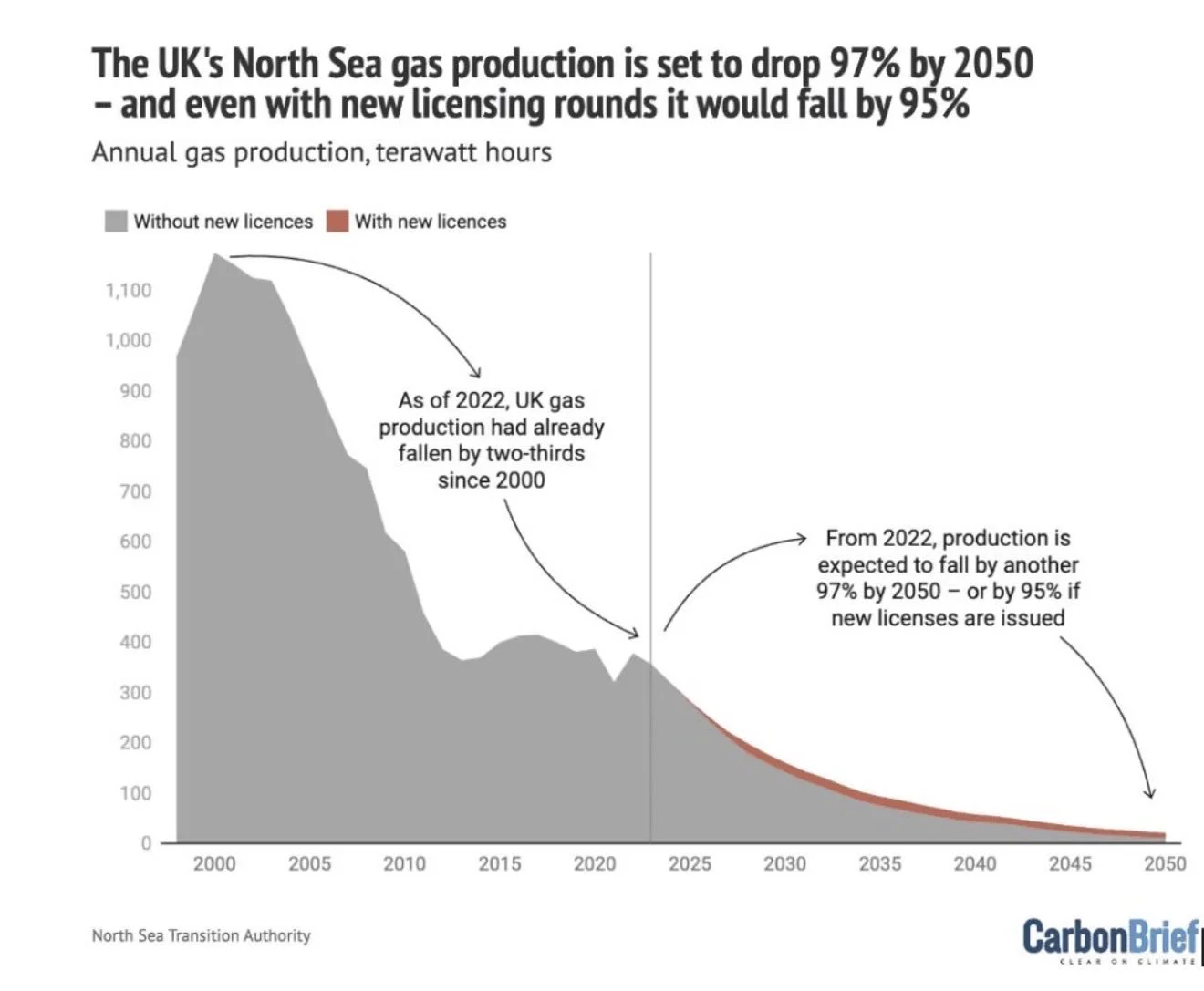
In contrast, the UK North Sea has already yielded around 90–93% of its ultimately recoverable oil and gas. Remaining volumes are smaller, more fragmented, and far more expensive to extract with deep water, high-pressure, high-temperature reservoirs, and an ageing infrastructure.
Licences have already been granted, and most prospective and contingent resources sit under existing licences held by private companies. The state cannot simply step in and take over without massive legal and financial consequences, such as compensation claims, investor flight and potential treaty issues.
The window for the Norwegian model has closed. Norway built its system when the industry was young, discoveries were large, and the state could negotiate strong terms from the start. The UK chose - and then doubled down on - a private-sector-led model in the 1980s. Reversing that decades later, creating a new state company, renegotiating hundreds of licences, and injecting billions in capital, would be extraordinarily complex, expensive, and politically fraught.
Scale and economics don’t work the same way. Even if the UK somehow clawed back greater control, the remaining barrels are not numerous enough to replicate Norway’s per-capita windfall or fund a multi-trillion-pound sovereign wealth vehicle. Development costs are high, as are decommissioning liabilities which are large, and tax reliefs already mean we, THE PUBLIC, often shoulder a big share of costs on marginal projects.
In short, Norway could do what it did because it acted early with a coherent long-term strategy and retained direct ownership. The UK made much different political choices at the time and is now dealing with a depleted, mature basin under a long-established private licensing regime.
Pretending we can simply flip a switch and ‘become Norway’ ignores geology, history, contracts, legalities and basic economics.
Could the UK Theoretically Extract and Sell the Oil Itself?
In pure theory, yes. A sovereign state can always change its laws and renegotiate (or in extreme cases, nationalise) resource rights, subject to legal and compensation constraints. The UK has the technical expertise, engineering capability, and regulatory framework to develop fields.
In practice today, it would be extremely difficult and probably not worth it for the remaining relatively small volumes for the following reasons:
Existing licence holders have contractual rights. Forced changes would trigger expensive disputes and damage the UK’s reputation as a stable place to invest.
Developing the remaining difficult fields requires enormous capital. Private companies and investors are already selective, and a state entity would need to fund or guarantee similar sums while bearing the risks.
The volumes left are modest in global terms. They would not deliver transformative national revenue on the scale some headlines imply, and that the public at large wants to and seems to believe from those emotive ‘headlines’
Current government policy is for no new exploration licences, and to focus on energy transition which reflects the reality that the big prize has already been taken.
The Bottom Line
The UK could have structured things more like Norway from the 1970s onward, but it chose not to. That choice had consequences, both the missed long-term revenue and the current situation where benefits are mostly minor tax-fiscal rather than direct ownership.
The simplistic narrative that ‘we just need to drill more and sell it like Norway’ misunderstands both the geology and the history and the ‘ownership’. The easy, high-volume oil was largely extracted by private companies under the licensing system the UK put in place. What’s left is smaller and harder. The governance model we adopted means the state’s main lever is taxation, not ownership.
Norway built a world-class sovereign wealth fund because it retained direct participation and high capture from the start. The UK cannot rewind the clock and do the same with what remains. Recognising these realities is not defeatism. It is the starting point for honest policy on energy security, tax design, decommissioning, and the transition away from oil and gas.
So, next time you see headlines promising that more North Sea drilling will magically solve bills or recreate a Norwegian-style windfall, remember the numbers: most of the prize is already gone, the licences are spoken for, and the model was deliberately set up differently.
--ENDS--
Sources and Further Reading
• Energy & Climate Intelligence Unit (ECIU): “Around 90% of UK North Sea oil and gas ‘already drained dry’” (March 2026) — Official data showing ~93% of ultimately recoverable resources extracted. eciu.net
• North Sea Transition Authority (NSTA): Reserves and Resources Report 2024 — Detailed UKCS production history, remaining reserves, and projections. nstauthority.co.uk
• Norwegian Petroleum Directorate / Norges Bank Investment Management: Government Pension Fund Global value and Norway’s petroleum tax system (~78% marginal rate, SDFI/Equinor model). nbim.no and norskpetroleum.no
• Resource Governance Institute / historical comparisons: UK vs Norway revenue capture per barrel. resourcegovernance.org
