
Before the LEAF: the Electric Cars You’ve Probably Never Heard Of.
Think the electric car story starts with the Nissan Leaf in 2011? ‘Th!nk’ again!
Electric cars are as old as cars themselves. I previously wrote about how EVs Were Tried at the Turn of the Century - And Failed!
But let me take you on a bit of a historical (and perhaps hysterical) stroll of the more modern EV history …..
Here are a few of the interesting ones, in something like chronological order: Long before the LEAF, a small collection of battery cars and vans were already on the roads. Some were even British and home-grown. Others were odd imports that found a niche, especially in London once the congestion charge arrived. Most people have forgotten them, or never knew they existed.
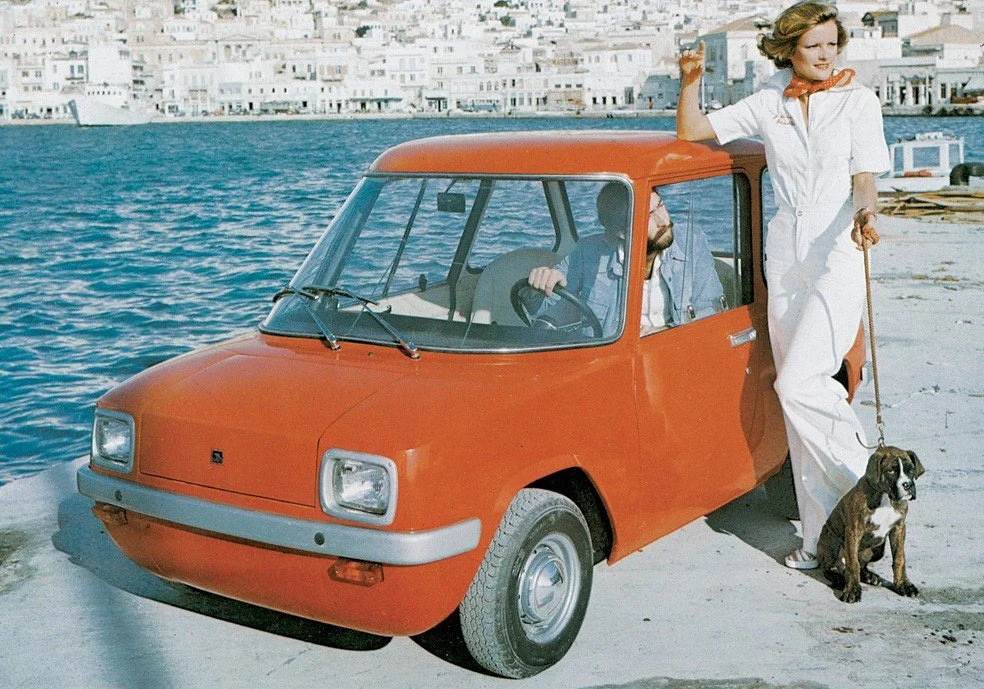
Enfield 8000 (1973–1976)
Built on the Isle of Wight, of all places. The Enfield 8000 was a two-seater aluminium city car designed in Britain and first assembled near Cowes. Some later production moved to the Greek island of Syros after labour trouble. It used lead-acid batteries and an 8 bhp electric motor. Claimed range was about 40–56 miles. Real life was often 25–40 if you hurried it. Top speed sat around 48 mph.
Price was roughly £2,600 to £2,800. That bought you a couple of Minis then! So, it was ‘not cheap’.
Only around 120 were built. The Electricity Council and various boards took a decent chunk for staff use-which is how the numbers stayed as high as they did. It was one of the few electric cars of that era to pass proper British safety tests, including a 30 mph barrier crash. Quiet, simple, and properly engineered for its time. It just never found enough private buyers to survive the decade.
A handful of survivors still turn up at classic events. Seeing one in the metal is a reminder that the practical electric city car is older than the Leaf, and older than most of the people arguing about them on the internet.
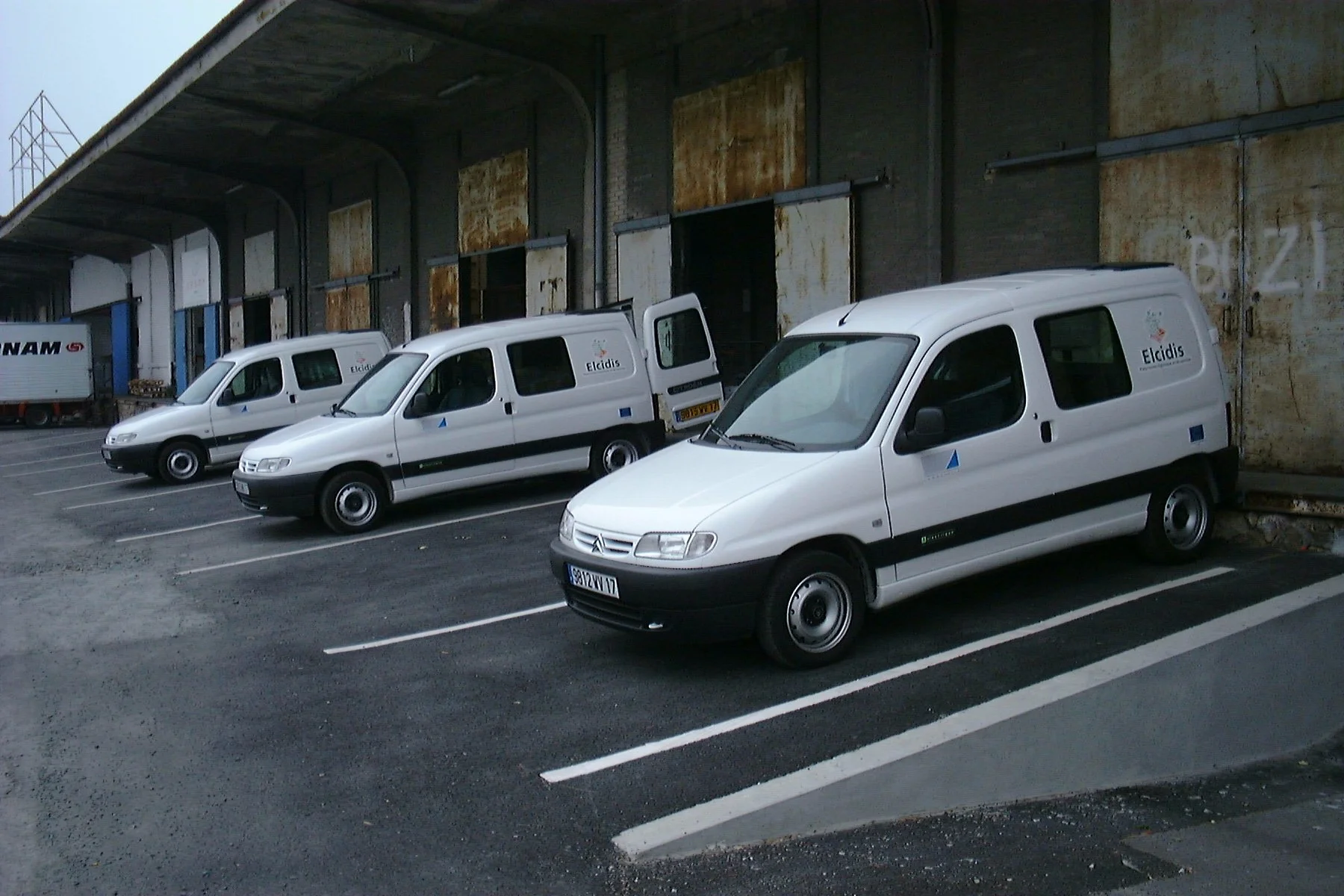
Electric Berlingo https://commons.wikimedia.org/wiki/File:Elcidislarochelle.jpg
Citroën Berlingo Electrique (late 1990s–mid 2000s)
While the early fuss stayed on tiny passenger cars, Citroën quietly sold a battery Berlingo. The Peugeot Partner Electric was the same van underneath. Nickel-cadmium pack, modest power, enough range for urban drops and short local runs. It reached the UK in limited numbers from the late 1990s, with the thin slice of sales coming in the early 2000s.
UK volumes were tiny. A few dozen, if that. Most people never saw one. It still matters, because it shows a mainstream maker putting battery vans with real customers years before the Kangoo Z.E. and the modern e-Berlingo. French postal fleets kept the idea alive on the continent, which is why the model lasted longer there than it did here.
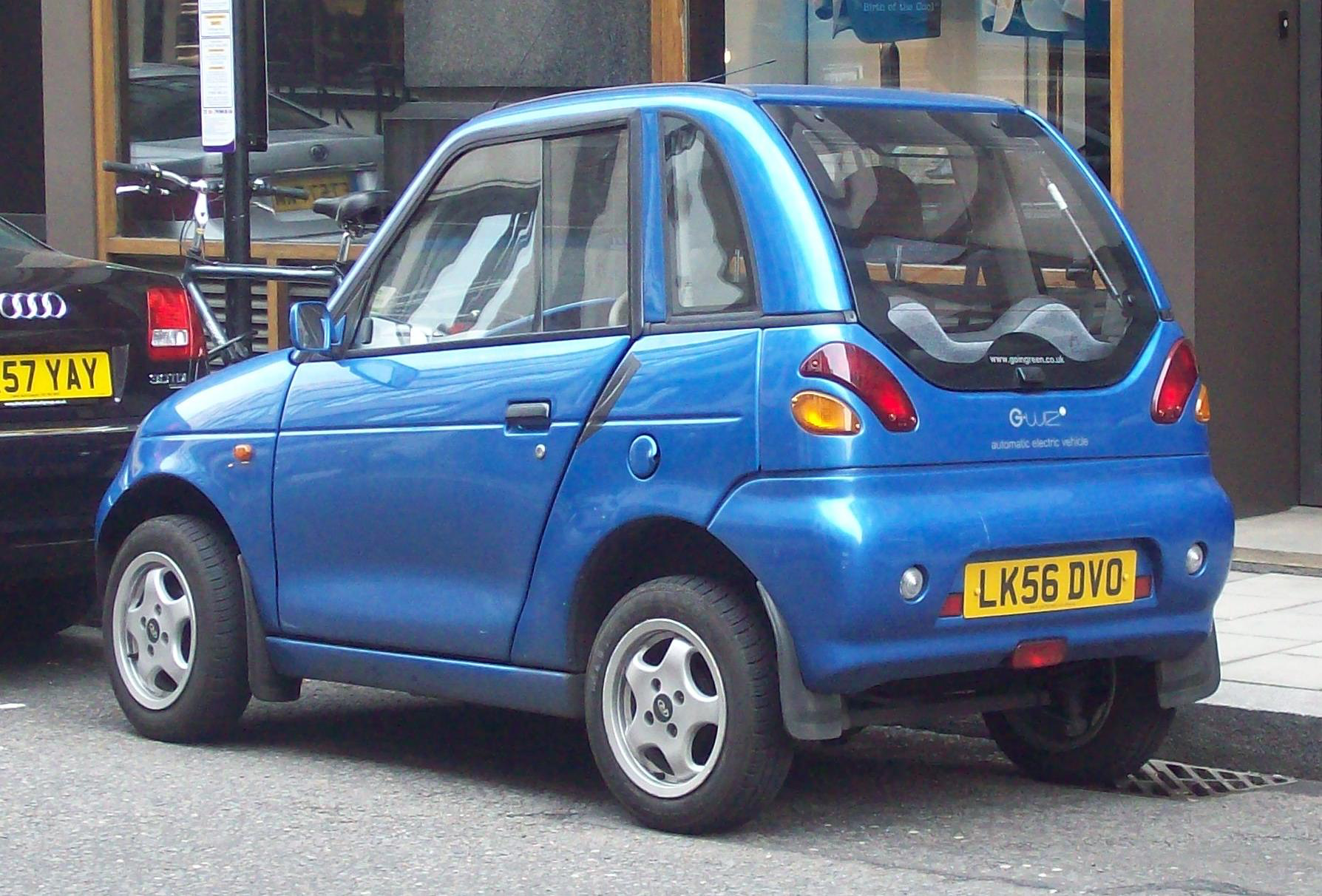
REVA G-Wiz (2001–around 2012)
This is the one you’ll probably remember Clarkson mocking on Top Gear. The Indian-built REVA, sold here as the G-Wiz, was a plastic microcar classed as a heavy quadricycle. Early cars used lead-acid batteries, offered around 40–50 miles and a top speed of about 40 mph. Later AC-drive and lithium-ion versions claimed closer to 75 miles and were a bit less tragic on hills.
Early prices sat around £8,000 to £10,000. The lithium cars drifted towards £15,000. Congestion charge exemption and free parking in some central boroughs did more for sales than the styling. Jonathan Ross owning one did not hurt. Or maybe it did? 🤔 It looked odd, felt flimsy, and took a beating over crash safety after a few ugly tests. For a two-mile hop across London traffic, it was quiet and cheap.
Around 1,100 were sold in the UK. A few hundred are still taxed, almost all in London. Spotting one now is like finding a Nokia 3310 in a drawer. You smile, then remember why we moved on.
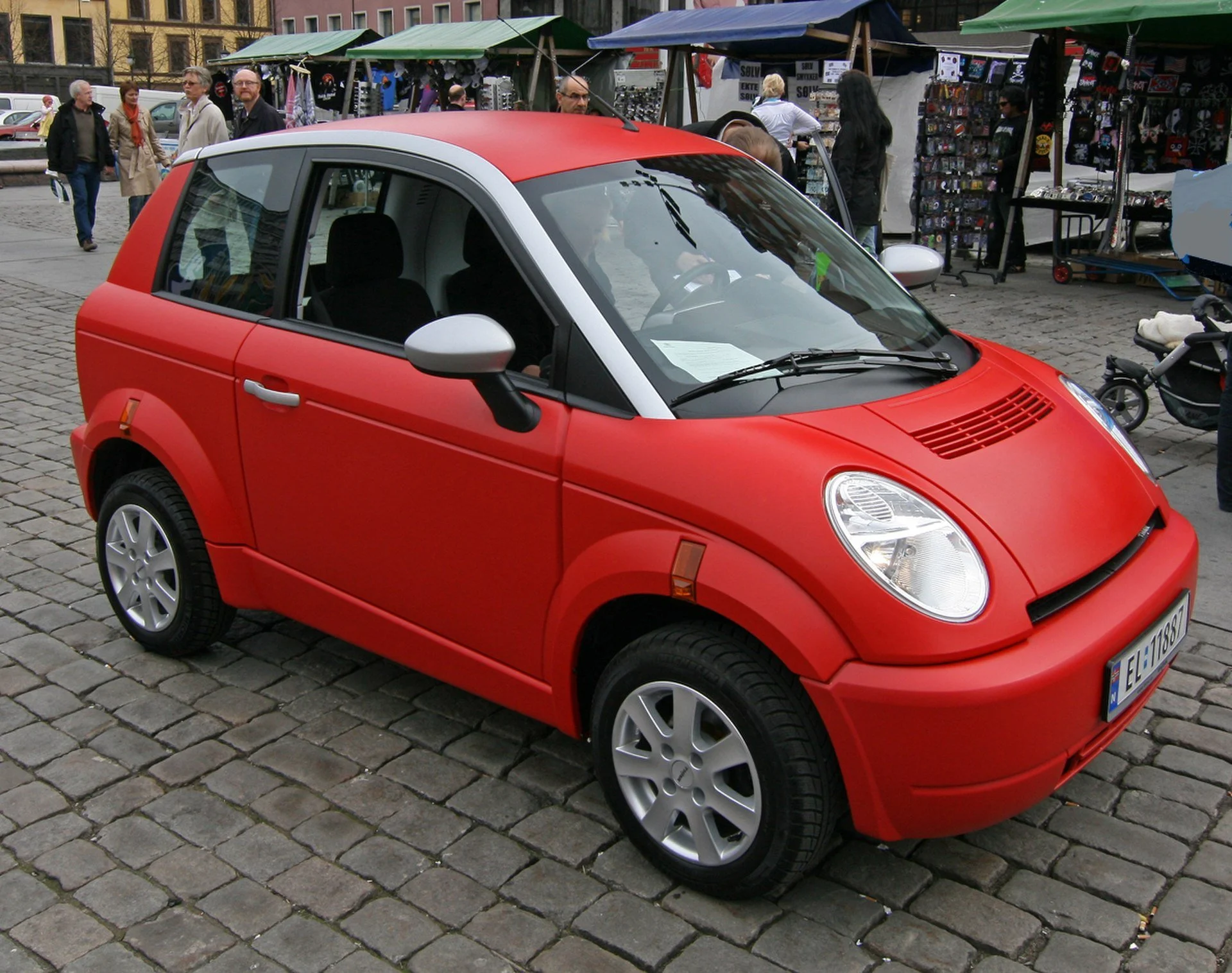
Th!nk City -WIKIMEDIA COMMONS license free.
Th!nk City (London trials in the early 2000s, UK sales from around 2009)
This is one of my favourites, and I’m yet to ever actually see one in real life: Norwegian plastic city car with a proper crash structure, which already put it ahead of the G-Wiz. Ford owned the firm for a spell and ran fleet trials in London around 2001–2002 on nickel-cadmium batteries. Real-world range on those early cars was about 50 miles. After Ford sold it, the company came back with better batteries and put the car in UK showrooms from 2009 at roughly £14,000.
It was one of the first modern electrics to meet full European safety rules, so you could register it as a car rather than a limited-use quadricycle. Production never scaled and the company kept falling over financially. A few hundred found homes across Europe, including a small number here.
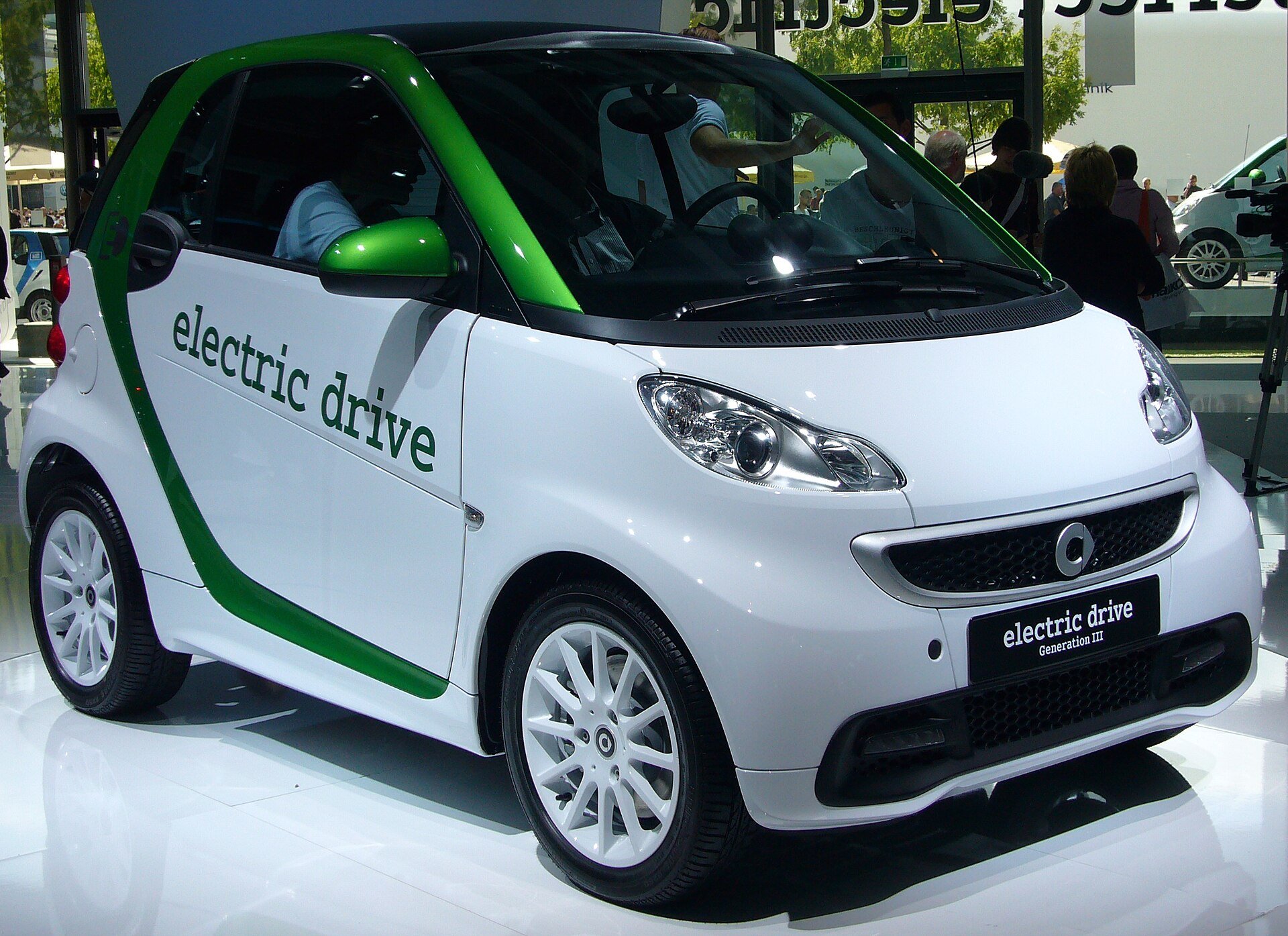
Gen 3 Smart. Wiki commons.
The Smart-e one!
Yes, as far back as 2007 Smart had an electric version of its Smart Four Two. The Smart Fortwo Electric Drive (Smart ED) first appeared as a London pilot with 100 units. These used 13.2 kWh ZEBRA batteries and offered about 68 miles of range; they were lease-only to corporate clients.
A second generation launched in 2009 (production from late 2009) with Tesla lithium-ion batteries of 16.5 kWh, and up to ~80 miles of range, and more than 2,000 units were built for leasing and car-sharing (never sold privately).
True public retail sales began with the third generation, with deliveries starting in 2013.
It used a 17.6 kWh lithium-ion battery (Deutsche ACCUmotive) and offered a claimed range of about 90 miles. Improvements over the second generation included a stronger motor (peak ~74 hp / 55 kW vs. 40 hp), quicker acceleration (0–60 mph in about 11.5 seconds), a higher top speed of ~78 mph, an optional faster charger.
Roughly 16,000 units were built, and I’ve had and sold about half a dozen or so of these plus a few ‘convertibles’ which are utterly brilliant! Production ended in 2015; it was replaced by the fourth-generation EQ Fortwo (on the newer 453 platform) starting in 2017 and the latest incarnation has just been unveiled.
The same arguments?
Look at that lot and the complaints are familiar. Not enough range. Too expensive…. Not ‘real’ cars…. But the tech (particularly batteries) have now moved on considerably. My humble Citroen Ami EV does-very simply-manage to do what a lot of these others struggled with.
What Britain did not have then was a small, quiet city, four seater EV you could actually buy in volume, until the Nissan Leaf smashed the doors in ~2011. The range was still a concern. That is the bit that has changed. Things like the BYD Dolphin Surf (200 miles WLTP) as well as the new Nissan Pixo / Twingo are chasing the same job as the Enfield, with a 27.5 kWh battery and about 160 miles claimed, at a price that should start under £20,000. The Dacia Spring and Leapmotor T03 are in the same fight and are considerably cheaper too at around £12000.
Fifty years after Cowes, the idea finally is a reality, with lots of choice and even more on the horizon!
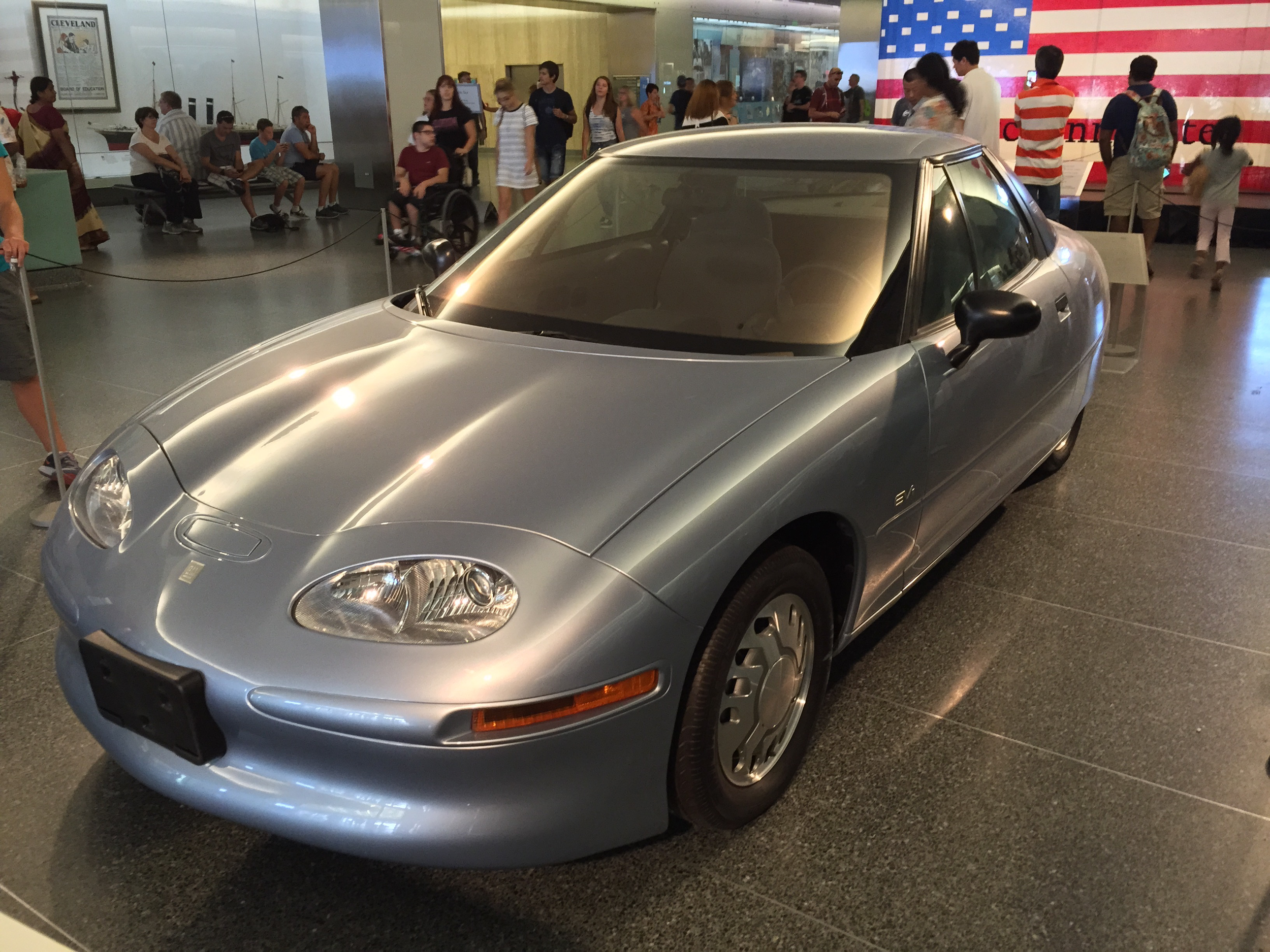
General Motors EV1. Christopher Ziemnowicz https://creativecommons.org/licenses/by/4.0/
Meanwhile, in the US of A: California forced the issue
The early really actually good and serious progress with EVs and the volume (as well as the drama) sat in the United States, and it was not pretty or without a fight.
California’s Zero Emission Vehicle mandate kicked things off and the revolution was looking rosy- until politics meant it wasn’t. The mandate demanded a percentage of new cars sold had to be zero emissions, or face tough restrictions. That produced a short, strange first wave of ‘modern’ EVs in the mid to late 1990s- well before the Leaf in 2011 or the Tesla Roadster (2008)
The star was the GM EV1. Launched in 1996, lease only (*note this would be the literal killer of these cars), in California and Arizona. A purpose-built EV. Early lead-acid cars did 70–90 miles. Later nickel-metal hydride packs pushed that towards 100–140 in kind conditions. It was quick for the time and usable as a daily driver. GM built about 1,100. When the mandate was watered down (because politicians and lobbying from the usual suspects) the leases were cancelled and most of the cars were crushed. Even the owners that loved the cars and wanted to keep them/buy them, were not allowed to). A few reached museums or private hands. The crushers won and it was, and still is, an absolute travesty. The documentary ’Who Killed the Electric Car’ is a great watch if you’d like to know more about the EV1 story
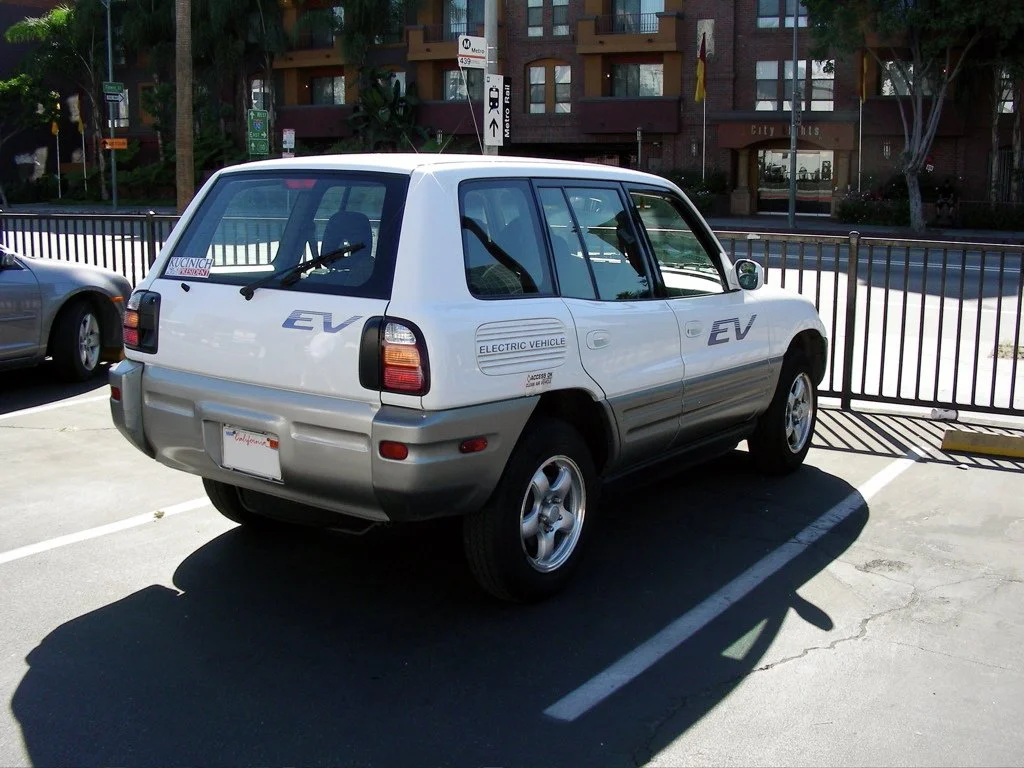
Rav 4 EV. Plug In America WIKIMEDIA Commons
Toyota’s first-generation RAV4 EV (1997–2003) was the practical one. Same NiMH family that later turned up in the Prius. Typical range 80–120 miles, it was a very useful small SUV. A few thousand were built, most leased in California. Unlike the EV1, some reached private owners and a few are still on the road. Fun Fact: Tesla were involved in a partnership with Toyota for later builds and they use Tesla parts- Tesla supplied the electric powertrain: battery pack, motor, inverter, charger, gearbox, and software (tech related to what became the Model S pack). Those parts were built at Tesla in Palo Alto and shipped to Canada.
Other also-rans were:Ford’s Ranger EV and Chevrolet’s S-10 Electric work trucks: short urban routes, fleet and utility use, lead-acid then NiMH and Honda’s EV Plus which was a four-seater with about 100 miles range. Same pattern as the rest. Lease only again, California, then gone.
Token Greenwashing Efforts, or genuine desire to push zero-emissions transport?
The lease only route was the tell-tale point for me. The makers kept the cars and could take them back when the legal pressure eased. Not that GM particularly didn’t make a very good effort. They for sure pushed the tech and made a really decent product and many of the team involved in the EV1 project were and are very sad that it was pulled.
However, by the early 2000s most of the programmes were finished. The batteries were expensive, the infrastructure was just a dream (until Elon said “we’ll just build it”) and petrol was cheap again. The mandate had forced real electric cars into existence years early. When the laws and political desire relaxed, the first modern wave ended almost as fast as it started. Until the Roadster.
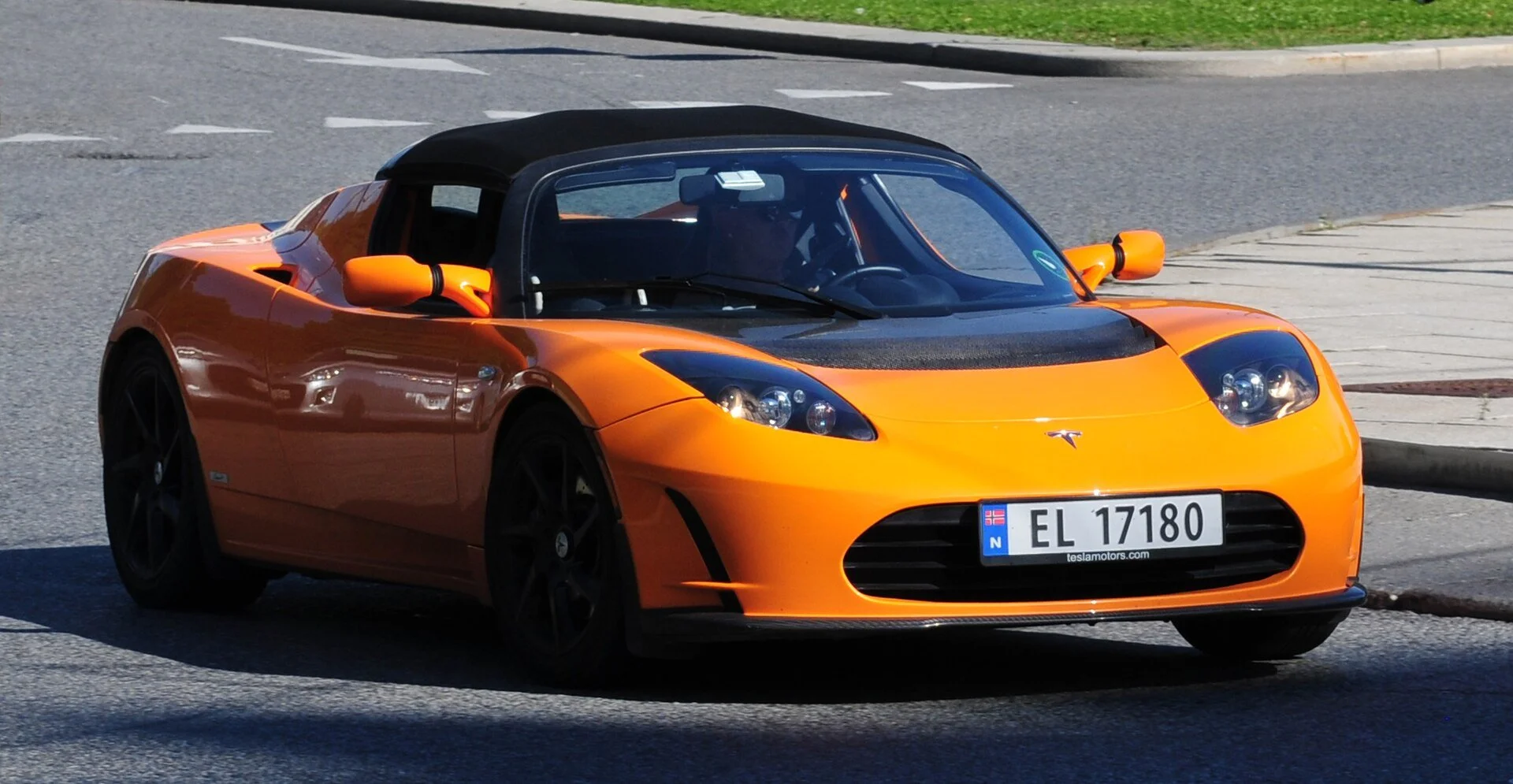
Tesla Roadster 2008-2012
A heavily modified /re-engineered Lotus Elise using new-fangled laptop batteries- thousands of small 18650 lithium-ion cells. It’s no secret that getting this car designed and built and out to customers, had many pain points, and only around 2400 cars were ever built. They were and are, a marvel. And the world is still waiting for the next-gen Roadster, which should be ‘any day now. Two weeks’
Now finally, we’re on to 2011 and the LEAF. An actual, mainstream car for the masses, that you could buy. The difference this time was ownership and, cost. Nissan put the Leaf on sale in 2011 as a normal car you could buy, tax and keep. (There was also a short-lived battery lease option).
Tesla’s Model S followed in 2012 and made the first truly capable (imho) electric car. It was something people wanted rather than something odd and quirky.
Everything else in this piece was a trial, a lease or a mad curiosity. Those two were proper products. The early Leafs are still mostly going strong and have shown just how robust the technology is.
These pre-Leaf older cars that escaped the scrapyard are a useful reminder that the current boom is not the first attempt. It is just the first one that has, or has been allowed to, stick.
Which of the above pioneers would you like? I’d love to have one of the RAV4 EVs-and there’s a fair few still going strong in the US. I have heard of one or two RHD cars being here in the UK.


