
Acres of Power, Nowhere to Go: Why Britain’s Green Energy Grid is Stuck in Traffic
Picture this: hundreds of acres of solar panels gleaming under a brilliant West Country sun, quietly soaking up loads of clean energy. Down the road thousands of households and businesses are ready to use it, as is the rest of The Grid.
The catch? Not a single watt of that solar energy is making it onto the network. Instead, high-profile projects like this massive Derril Water solar farm in Devon have found themselves abruptly ordered to shut down, leaving panels and inverters ready, and the potential electricity wasted with nowhere to flow to.
It sounds like a bad joke, but it is the cold, hard reality of Britain’s energy grid infrastructure and queue for connections.
Inside the Derril Water Debacle
What Went Wrong? Derril Water, nestled near Pyworthy in North Devon, is a landmark project for British green energy, and it is the UK’s largest community-owned solar park.
The Scale and Cost spans roughly 165 acres with over 68,000 panels. The 42MWp project was backed by a heroic co-operative share offer that raised over £20 million from nearly 10,000 ordinary households and small businesses.
After surviving the collapse of its original management firm (Ripple Energy) and finally starting generation, the site hit a brick wall. The Derril Water co-op board sent an urgent notice to its members revealing an unexpected shutdown order. Other generators connected in the same North Devon area were hit by the same restriction too.
The Root Cause
The National Energy System Operator ordered a vital super-grid transformer at the Alverdiscott substation to be turned OFF for the summer. But why? Well, and I quote: “because a surge of decentralized local generation combined with local network constraints threatened a thermal overload and voltage spikes that could destabilise the transmission network.”
I’ll explain as best I can as to what a super-grid transformer does, so think of the electricity grid like a road network. The local roads = the lower-voltage distribution network (the wires that serve houses, solar farms, etc. in North Devon).
Motorways = the high-voltage transmission network that carries huge amounts of power around the country.
A super-grid transformer is the big junction that connects the local roads to the motorway. It steps the voltage up or down so power can flow safely between the two systems.
What was going wrong was that there was so much solar (and other local generation) pouring into the North Devon network that:
1. The local wires and equipment were getting dangerously hot (thermal overload).
2. Voltage was spiking too high.
3. That excess power was trying to push onto the national transmission network in a way that risked destabilising it.
In short-too much electricity was being generated locally for the existing kit and infrastructure to handle safely.
Why turn the transformer OFF?
By switching off that particular super-grid transformer, the network operators temporarily disconnected part of the local network from the national transmission system.
That stopped the excess local power from flooding onto the high-voltage ‘motorway’ and creating bigger problems further afield. It was a safety measure-better to curtail the local generators (including Derril Water) for the summer than risk damaging equipment or causing wider instability.
Once the planned upgrades (extra voltage-control equipment) are finished in September, they can switch the transformer back on and allow full export again.
Turning the transformer off was the emergency “valve” they closed to protect the wider system.
The Current Status & Cost
The park has been forced offline for the duration of its peak summer generation window, costing the co-op’s members an estimated £2 million in lost revenue. Specialist voltage-management equipment that should have been installed by network operators to fix the bottleneck was delayed, with fixes pushed back to September. Once those upgraded connections clear, the site is slated to resume normal operations, pumping out enough clean power for roughly 14,000 homes.
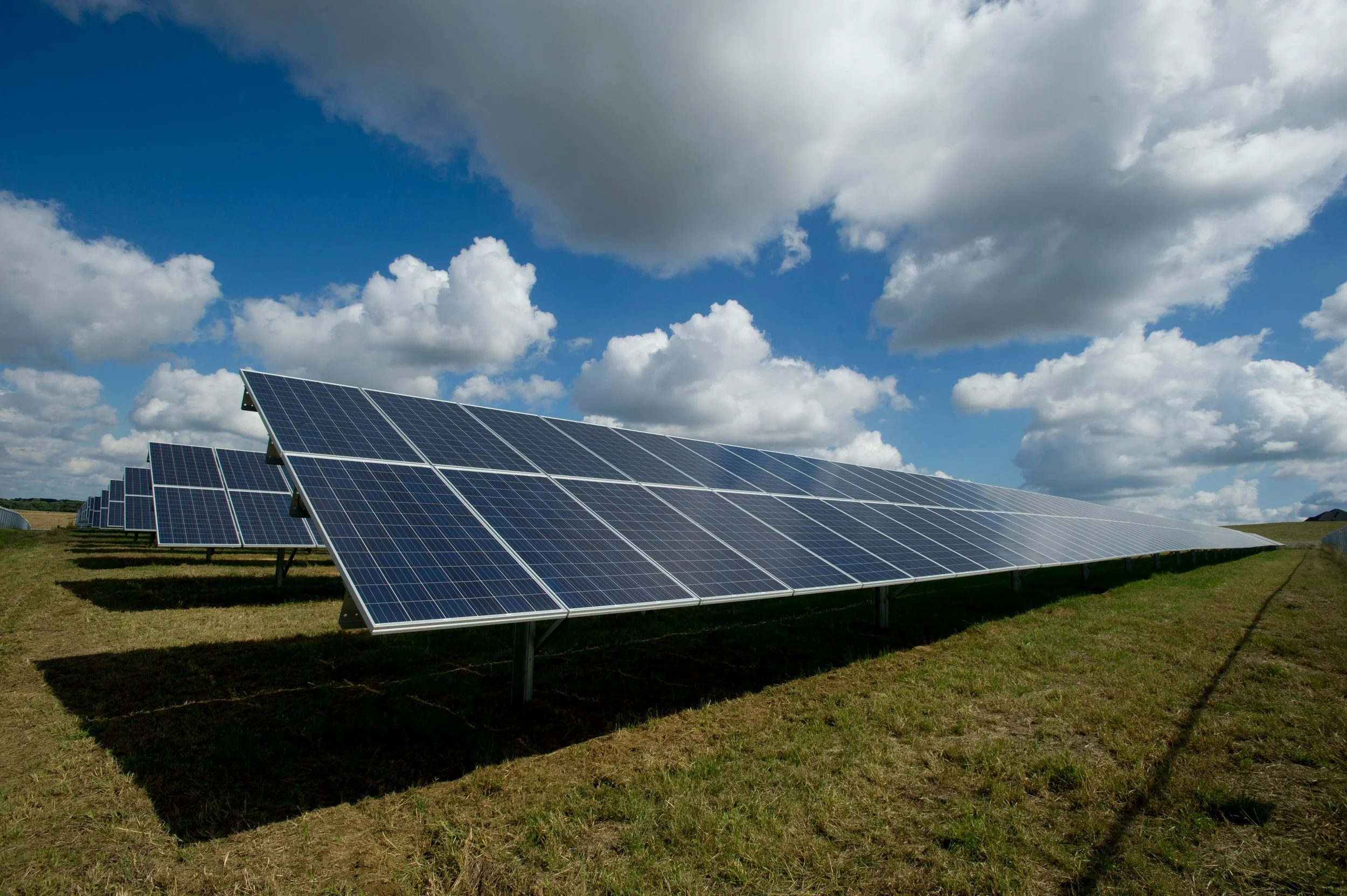
Image of a Solar Farm (photo credit to American Public Power Association)
Our Current Grid & How Did We End Up in ‘Gridlock’?
Derril Water is far from an isolated casualty. Across Britain, hundreds of gigawatts worth of fully funded, ready to go new green energy projects have been trapped in a massive holding pattern.
Some history: For years, getting a connection to the National Grid operated on a chaotic first-come, first-served free-for-all. Anyone with a laptop and a vague idea could submit a grid application.
This created a colossal backlog of speculative schemes, often dubbed ‘zombie projects’ that clogged up the queue. At its peak, this national queue bloated to a staggering 700 gigawatts. That’s roughly four times the total generation capacity the entire country will actually need by 2030.
Because the system was processed sequentially, ready to break ground ventures like the community-backed Devon solar farm or fully funded wind farms in Scotland found themselves stuck behind speculative paper-shuffling applications that had no funding, no planning permission, and no intention of being built anytime soon.
To make matters worse, when clean energy does get built, local distribution networks often throw their hands up. Built decades ago to handle a handful of massive, centralised coal and gas power stations, local grids simply weren’t designed to cope with thousands of hyper-local, decentralized solar and wind inputs pushing power back upstream all at once.
When generation outstrips local capacity and the grid threatens to overload, system operators do the only thing they can: they force renewable sites offline.
Is the New Government Clearing the Red Tape?
Recognizing that the system was actively sabotaging the transition to net zero, (a weaponised term I personally now dislike using so let’s just say ‘renewables’) the regulators and the government have started swinging the axe at the bureaucracy.
The National Energy System Operator completely overhauled the connection process, ditching the outdated first-come, first-served model in favour of a first ready, first connected framework.
Under the reformed rules, speculative applications are being aggressively purged from the queue. Projects must now prove they are genuinely viable, possess proper planning permission, and have secured land rights before they get a golden ticket to the grid. So, ready to go projects are being fast-tracked, while daydreamers are being thrown out.
On top of that, planning rules and red tape surrounding green energy infrastructure have been relaxed to speed up vital network upgrades. Ministers are leaning heavily into fast-tracking pylons (sorry London Engineer) ‘Towers’ to give them their correct name, substations, and local grid reinforcement so that generation sites aren’t finished years ahead of the cables required to carry their power.
So, Is there a better way?
Well, there are other ‘hacks’ yes, such as the Plug-and-Play Solution, by reusing Abandoned Power Stations, for example.
While regional grid upgrades crawl forward, there is an obvious, elegant solution that some energy experts have been championing. And that is plugging new renewable projects directly into the sites of retired coal and gas power stations and the like.
Old fossil-fuel power stations were originally built where they were because they already possessed massive, heavy-duty high-voltage transmission connections capable of shifting gigawatts of power directly into the national transmission backbone.
Those massive substations, heavy-duty copper lines, and industrial land access points are already sitting there. Instead of building brand-new transmission lines across pristine countryside or waiting a decade for rural network upgrades, siting solar, wind, and massive battery storage arrays around decommissioned industrial energy sites utilizes pre-existing grid capacity.
This is already happening. The former Ferrybridge and Fiddler’s Ferry coal stations in Yorkshire and Cheshire are being turned into large-scale battery storage projects for exactly this reason. The heavy grid connections were already in place, cutting years off development timelines.
Other brownfield and colliery sites are following the same path. While developers and regional operators are slowly waking up to this brownfield-first logic. Hilariously, legacy planning frameworks have historically treated every new project as if it were starting from a blank sheet of paper in the middle of nowhere.
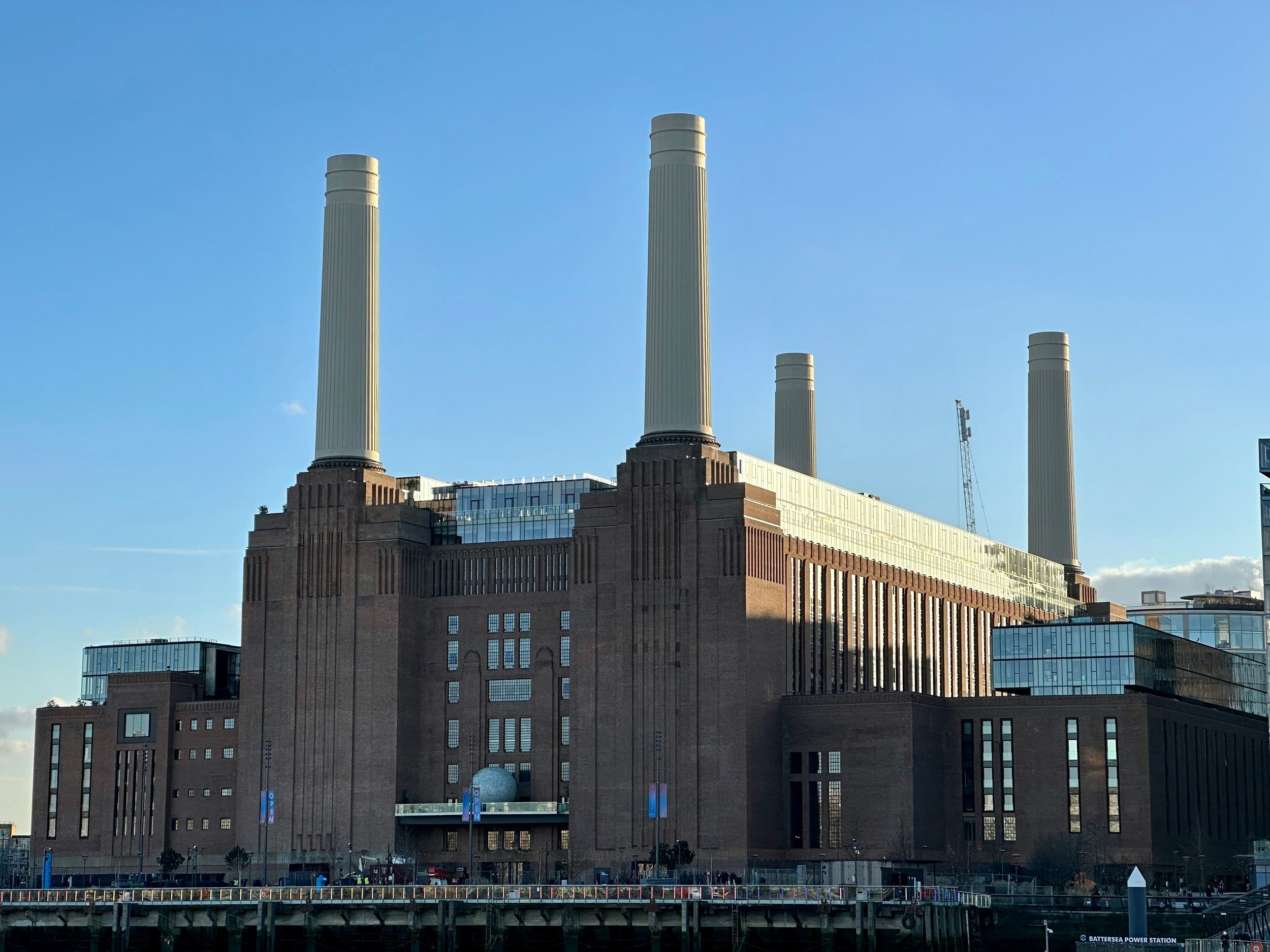
Battersea Power Station (photo credit to @gabrielkraus)
Can the Grid Handle All This Extra Juice?
This brings us to the billion-dollar (well, trillion-pound) question. If we clear the backlog, hook up all these solar and wind projects, and support the exponential growth of electrification and renewables, can the physical grid handle the strain?
The short answer is not yet, but it has to obviously - but it doesn’t need to overnight. Right now, the network is experiencing severe growing pains though. We are trying to run a 21st-century digital economy on a Victorian-era plumbing system.
However, the solution isn’t just about throwing more wire and towers at the problem. It is about making the grid smart.
Battery Storage Boom
Britain is quietly building in utility-scale battery storage. When renewables generate more power than the local network can swallow, instead of switching them off, those electrons are increasingly being diverted into massive local battery banks to be sold back to the grid during the evening peak.
Flexibility and Smart Tariffs
Smart meters, automated EV charging, Virtual Power Plants and demand-flexibility schemes are changing how we consume power. Instead of upgrading every single wire in the country to handle absolute peak load, smart technology encourages us to use electricity when it is abundant and cheap.
Those millions of electric vehicles parked on driveways overnight are both part of the demand pressure and a huge potential flexibility resource. When plugged in, they can soak up surplus solar or wind and push power back when the grid needs it most.
The Bottom Line
Leaving acres of solar panels or nice shiny wind-farms sitting idle whilst keeping expensive Gas Peaker Plants on, all while consumers face high energy bills is an institutional failure we can no longer afford.
The good news is that the bottleneck is finally being acknowledged, and the rules of the game are changing. But until the steel, cables, software and our habits catch up with our green ambitions, Britain’s energy revolution is going to keep hitting road blocks.
As of late July 2026, the outlook remains that Derril Water will stay offline (or heavily constrained) through the peak summer period and is expected to resume normal export around early September.
